
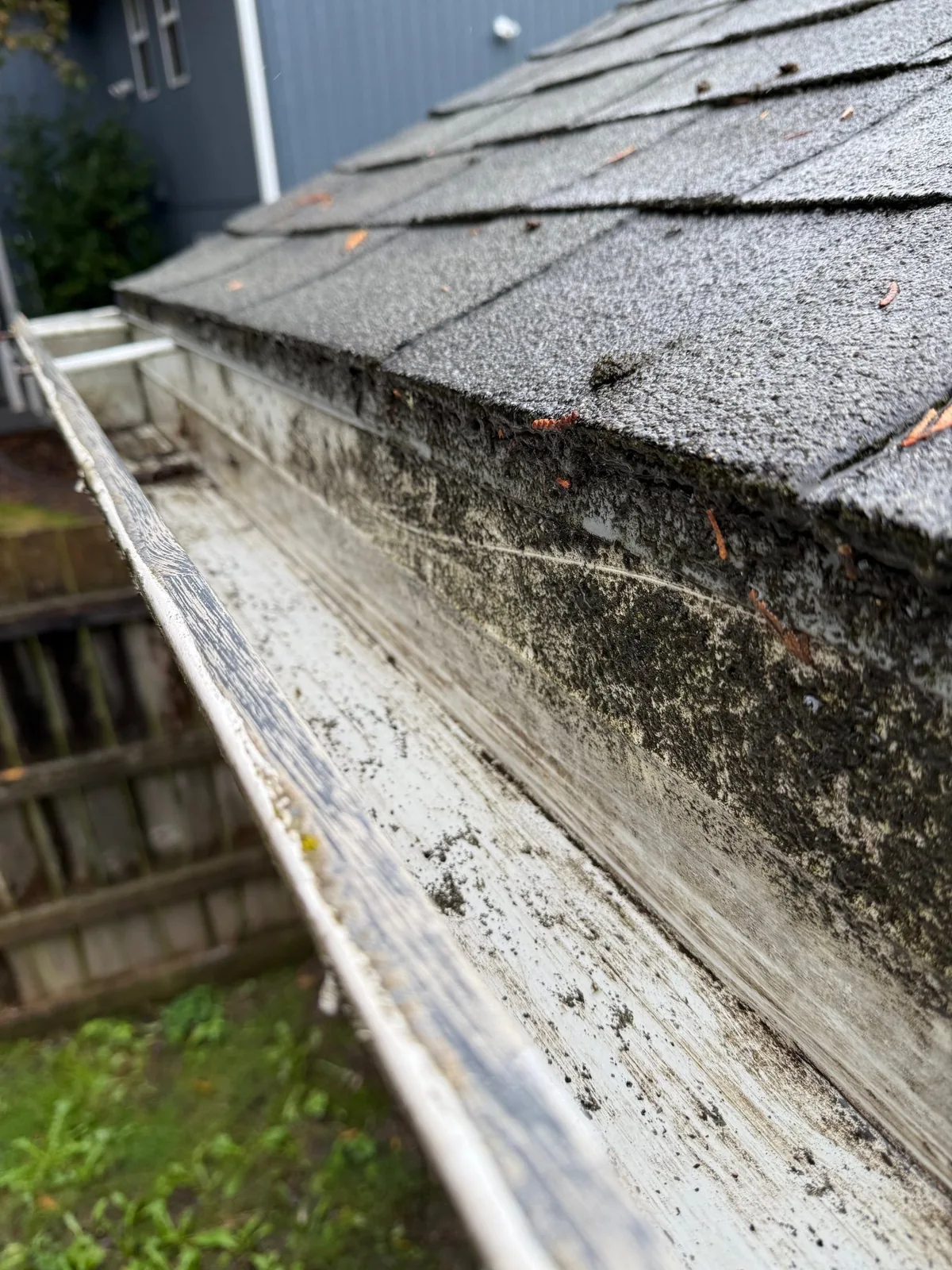
Gutter cleaning in Beaverton removes leaves, fir needles, moss, roof grit, and downspout blockages so Oregon rain can move away from the roofline, siding, landscaping, and foundation more reliably.
Gutter Cleaning photo for Suds Doctor in Beaverton, Oregon.
Service Guide
Gutter Cleaning for Beaverton Homes and Properties
Clogged gutters can overflow during heavy rain, push water behind fascia, dump runoff onto siding, and create messy water around entries, patios, landscaping, crawlspace vents, and foundations. In Beaverton, gutter cleaning is simple maintenance that matters because long rainy stretches can expose small drainage problems quickly.
Suds Doctor clears gutter channels, removes leaves and needles, checks downspout flow where accessible, and pays attention to roof debris that may keep feeding the gutters after a stormy season. Homes near mature trees often collect fir needles, maple leaves, moss pieces, roof grit, and small branches that slow water even when the gutter does not look completely full from the ground.
Beaverton homes near Tualatin Hills Nature Park, Commonwealth Lake, Hyland Forest Park, and older tree-lined neighborhoods around Cedar Hills and Vose often need gutter cleaning before and after the wettest part of the year. A shaded roof with moss can also send loosened material toward the gutters, so gutter cleaning often pairs well with roof cleaning or roof moss treatment.
We keep the service practical: remove the debris, improve flow where we can, and help you understand whether the issue is normal seasonal buildup, roof debris, downspout blockage, or a gutter system that may need repair by a gutter specialist.
Oregon rain does not need a completely packed gutter to create problems. A small mat of fir needles at the outlet can slow down a whole run. Leaves can bridge over the downspout opening. Moss pieces and roof grit can settle into elbows. When rain comes hard, that restriction can turn into overflow along the fascia, front entry, or foundation planting beds.
Gutter cleaning near me searches usually happen after a homeowner sees water pouring over the edge during a storm. We can help at that point, but the better maintenance window is before sustained fall and winter rain. If your roof also has moss or debris, our guide on what moss does to your home explains why the roof and gutter system should be treated as connected parts of the same drainage path.
See where Suds Doctor serves Beaverton and nearby Washington County neighborhoods.
Warning Signs
Signs Your Gutters Need Cleaning
Overflow during rain is the most obvious sign. Other warning signs include plants growing in gutters, water spilling over corners, dark streaks on fascia, damp siding below roof edges, mulch washed out below downspouts, and downspouts that make little or no sound during heavy rain.
Sometimes the gutters look fine from the driveway but are packed near the downspout outlet. Fir needles are especially good at forming mats that slow water. Moss from the roof can also collect at elbows and strainers. If one side of the home overflows while the other drains normally, the issue may be localized blockage rather than the entire gutter system.
Beaverton's wet season makes timing important. Cleaning before sustained fall and winter rain helps reduce surprise overflow, while a second cleaning may make sense after heavy leaf drop or roof cleaning. Tree-covered lots often need more attention than open lots.
Other warning signs show up away from the gutter itself. Look for muddy splash marks below roof edges, mulch washed out under downspouts, damp siding below corners, peeling paint near fascia, or water pooling where it should not. Those symptoms help identify which run, outlet, or downspout may be blocked.
If you hear water rushing over the gutter but not through the downspout during heavy rain, do not ignore it. The gutter may be clogged, the downspout may be blocked, or the lower drainage line may be overwhelmed. Cleaning the accessible gutter and downspout sections is the first step in figuring out whether the problem is debris or a bigger drainage issue.
What We Clean
Gutters, Downspouts, Roof Edges, and Debris Types
We remove common gutter debris such as leaves, fir needles, moss pieces, roof grit, twigs, seed pods, and mud-like organic material. Where accessible, we check downspout flow and clear obvious blockages that keep water from moving away from the roofline.
Gutter cleaning debris along a roof edge.
Different homes collect different debris. A ranch home under maples may fill with leaves quickly. A two-story home near firs may have needle mats that settle around outlets. A roof with moss can shed small pieces into the gutter system over time. Homes with gutter guards may still collect debris on top of the guards or at valleys and corners.
Gutter cleaning does not replace gutter repair. If gutters are sagging, improperly pitched, leaking at seams, pulling away from fascia, or undersized for the roofline, cleaning may improve flow but not solve the underlying issue. We can point out obvious concerns when we see them.
Downspout cleaning is part of the conversation because a clear gutter run still fails if water cannot leave the system. Where accessible, we check flow and clear the obvious blockages that sit near outlets or upper elbows. Underground drains, buried pipe, crushed extensions, and hidden drainage failures may require another specialist, but the first question is whether roof runoff can get out of the gutter.
Homes with gutter guards need realistic expectations too. Guards can reduce some debris, but Oregon leaves, fir needles, roof grit, and moss can still collect on top, around corners, and at valley discharge points. If water sheets over the guard during rain, the system still needs cleaning or inspection.
Cleaning Process
What Happens During Gutter Cleaning
The estimate starts with roofline height, access, slope, gutter length, tree cover, gutter guards, and the symptoms you have noticed during rain. Photos are especially helpful for second-story runs, steep grades, additions, and areas where a ladder cannot be placed safely.
During service, accessible gutter channels are cleared of leaves, needles, moss, roof grit, and other loose debris. Downspout flow is checked where the setup allows it, and obvious outlet blockages are addressed within the agreed scope. Debris is collected rather than deliberately pushed into underground drains.
Afterward, we point out visible conditions that cleaning alone cannot solve, such as sagging runs, separated seams, damaged fascia, poor pitch, or buried drainage problems. Gutter cleaning restores a clearer water path; it is not a repair service or a guarantee that an underground system is open.
For homes with second-story rooflines, steep grades, or limited ladder access, it helps to share photos and access notes before the visit. That lets us plan the job more accurately and keep the estimate realistic.
For homes with active roof moss, gutter cleaning may only be one piece of the maintenance plan. This documented Beaverton and Aloha roof project shows gutters being addressed after roof moss and debris work.
Answers for Beaverton homeowners dealing with clogged gutters, downspouts, overflow, and Oregon rain.
How often should gutters be cleaned in Beaverton?
Many Beaverton properties need gutter cleaning once or twice a year, with tree-covered lots often needing attention before and after the rainy season. Homes under firs, maples, and other mature trees may need more frequent checks because needles and leaves can collect quickly. The right schedule depends on roofline, tree cover, gutter guards, and how often overflow shows up during rain.
Do you check downspouts?
We check downspout flow where accessible and look for obvious blockages that could cause overflow. Some blockages are easy to clear from the gutter outlet or upper downspout. Others may be hidden underground or inside a drainage system, which can require a different specialist. We focus on the gutter and accessible downspout sections tied to roof runoff.
Can gutter cleaning be bundled with roof service?
Yes. It often makes sense to clean gutters after roof debris or moss has been addressed because loosened material can move into the drainage system. If you are scheduling roof cleaning, roof moss treatment, or heavy debris removal, ask whether gutter cleaning should happen the same day or shortly after.
What happens if gutters stay clogged?
Clogged gutters can overflow, stain siding, soak fascia, dump water near the foundation, damage landscaping, and create slippery areas below roof edges. Cleaning does not guarantee there are no repair issues, but it is the first step when water is not moving through the system correctly.
Do gutter guards mean I can skip gutter cleaning?
Not always. Gutter guards can reduce some debris, but leaves, needles, moss, roof grit, and organic buildup may still collect on top of guards, in valleys, at corners, or around downspout openings. Guarded systems still need inspection, especially on Beaverton homes with heavy tree cover.
Can clogged gutters stain siding?
Yes. Overflowing gutters can send dirty runoff down fascia, trim, and siding. If staining or algae has already built up below the gutter line, gutter cleaning may stop the overflow, while house washing can clean the visible exterior staining.
Should gutters be cleaned before the rainy season?
Yes, before the rainy season is a smart time for Beaverton homes. Cleaning before sustained rain helps reveal downspout issues, reduce overflow, and keep roof runoff moving before storms are doing the testing for you each week.
What if water still overflows after gutter cleaning?
If water still overflows after debris is removed, the issue may be gutter pitch, sagging sections, undersized gutters, a hidden downspout blockage, or an underground drain problem. Cleaning is the first step, but some drainage problems need gutter repair or another specialist.