Our Process
Dry, Low-Impact Cleaning With Hands and a Soft Brush
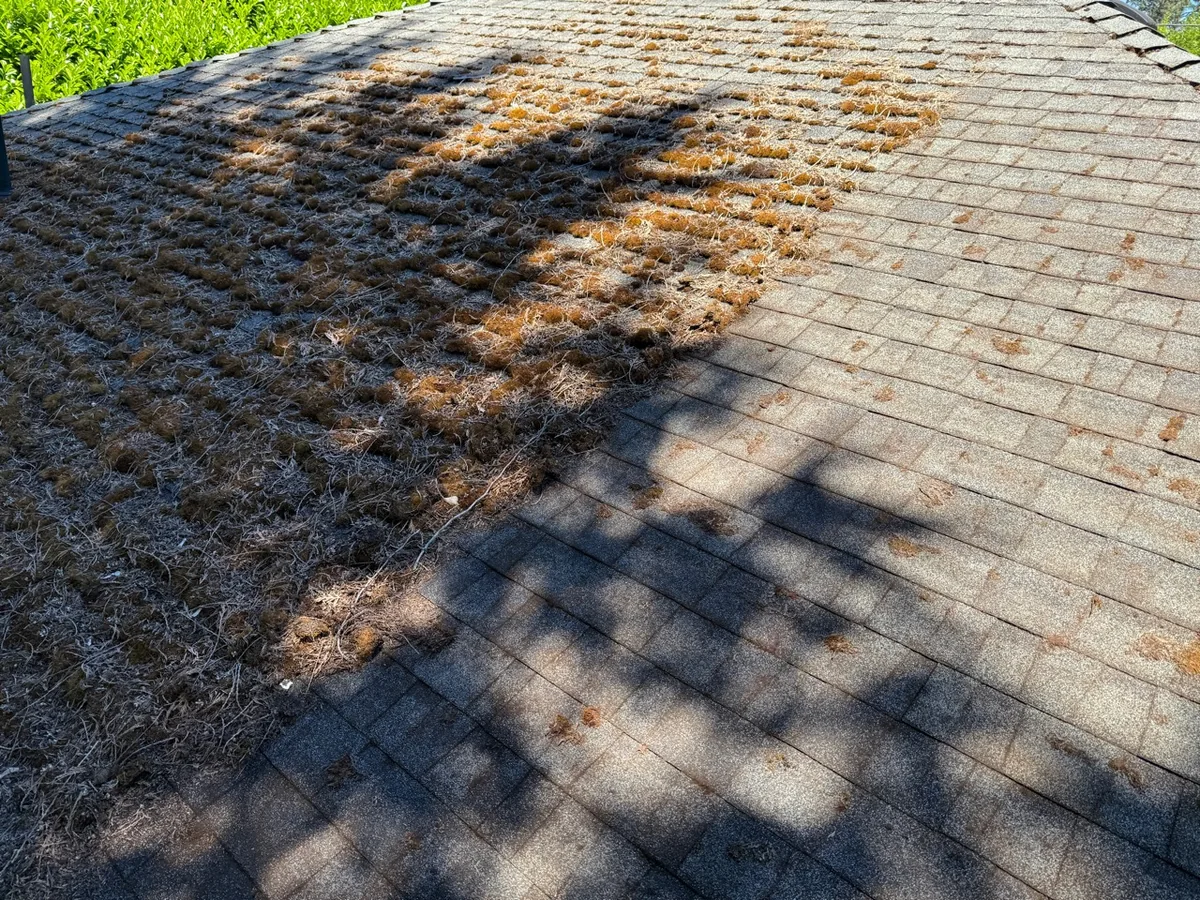
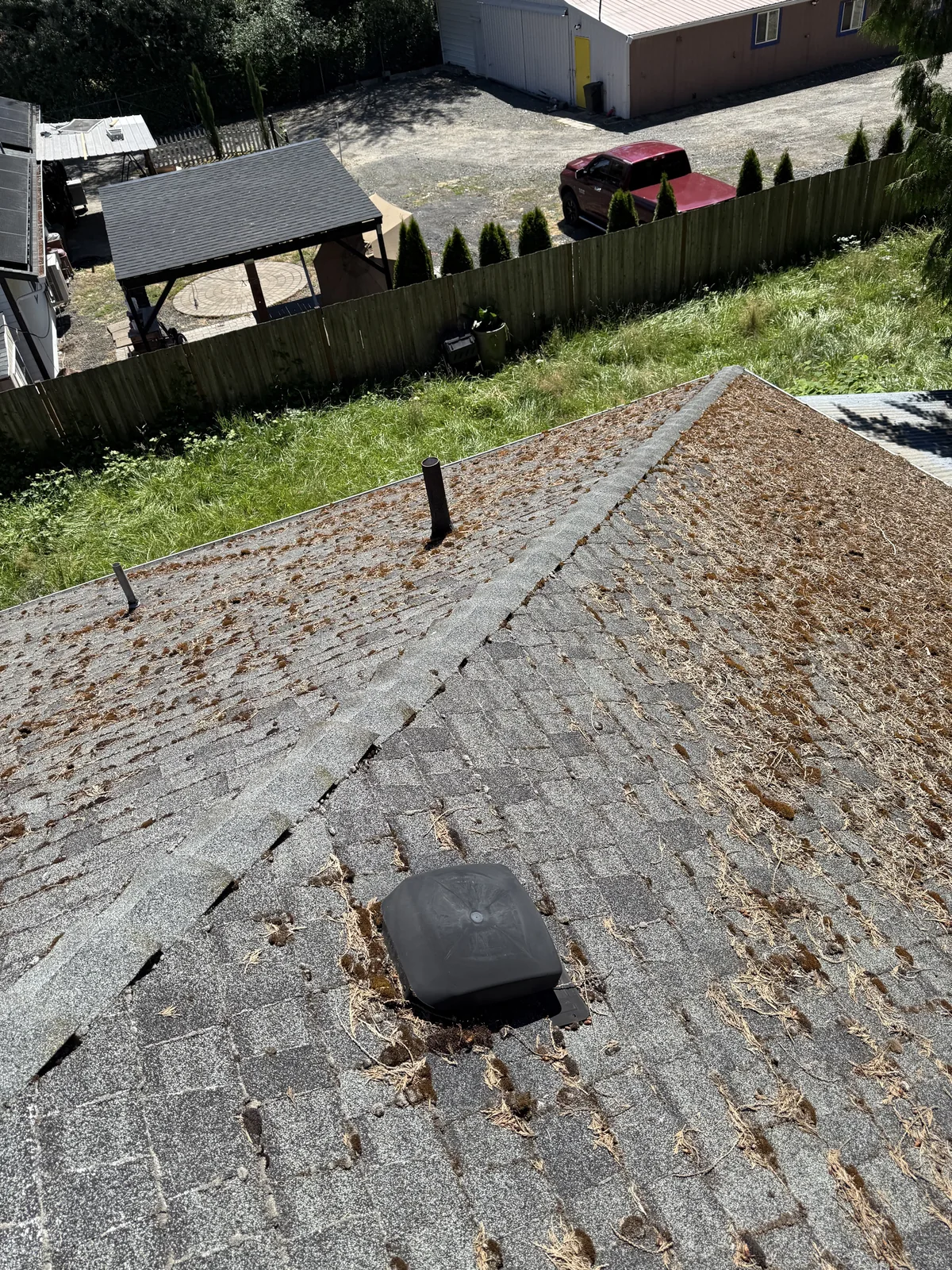
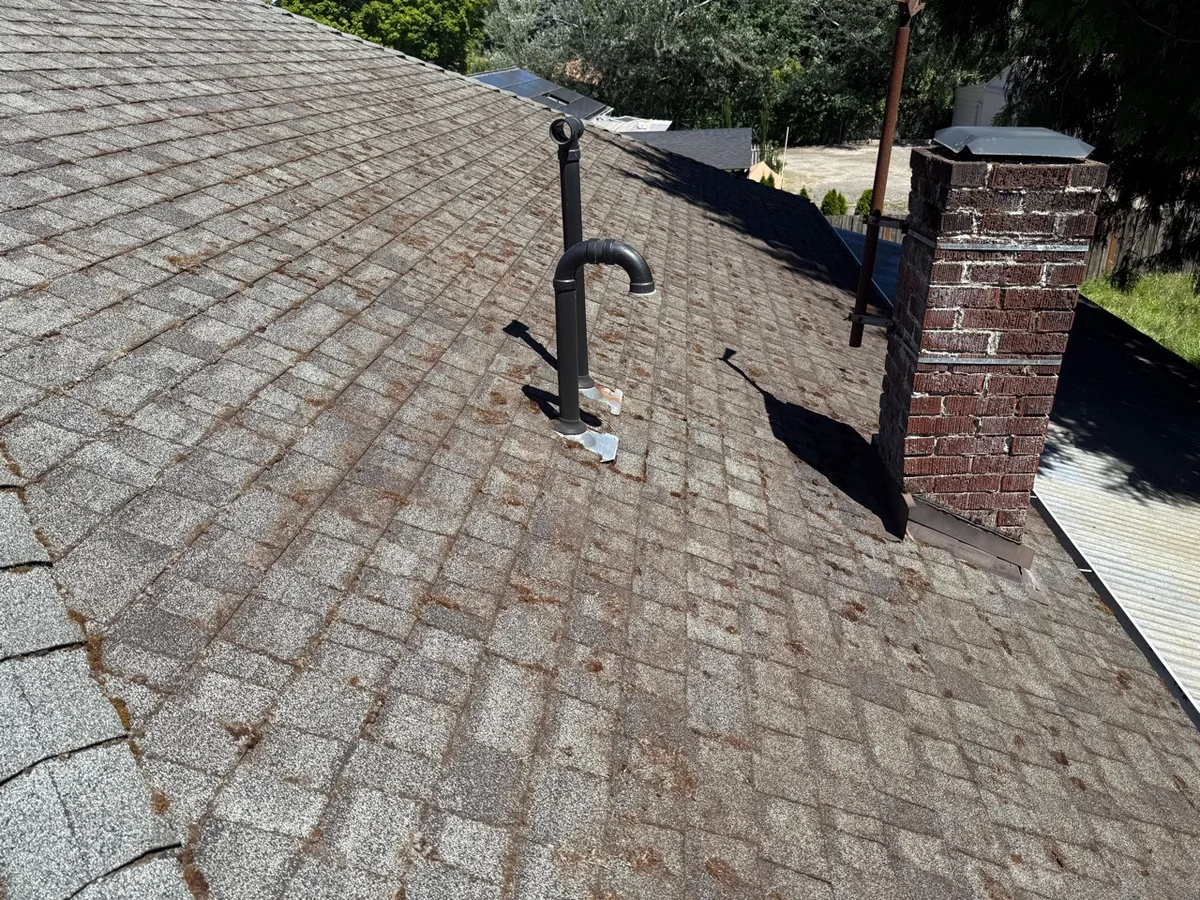
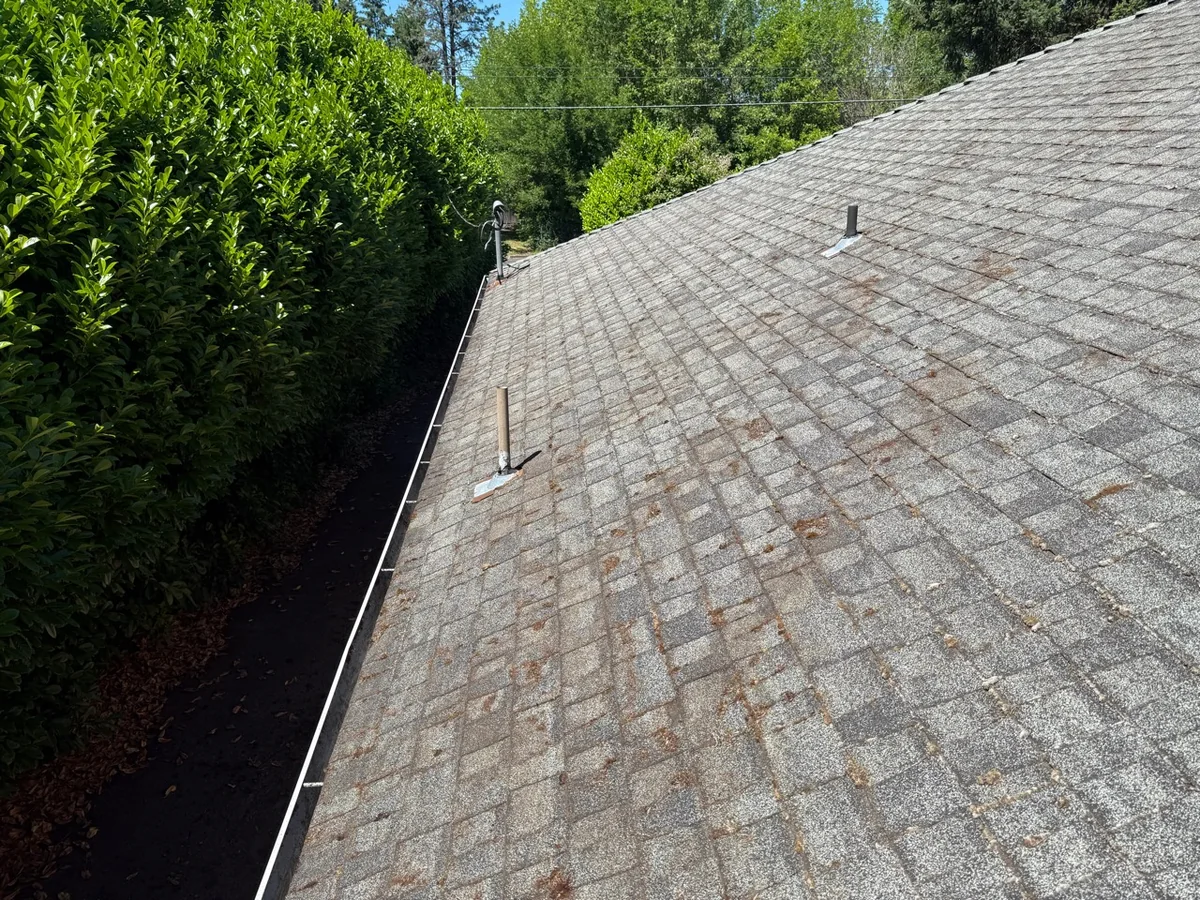
For this roof, Suds Doctor used a dry cleaning approach: no water, no pressure, and no hard scrubbing. We worked with a soft brush and hand removal, taking off only moss that came away easily. If a patch was bonded tightly to the shingle surface, it stayed. That restraint matters because the granules on asphalt shingles are part of the roof's protection.
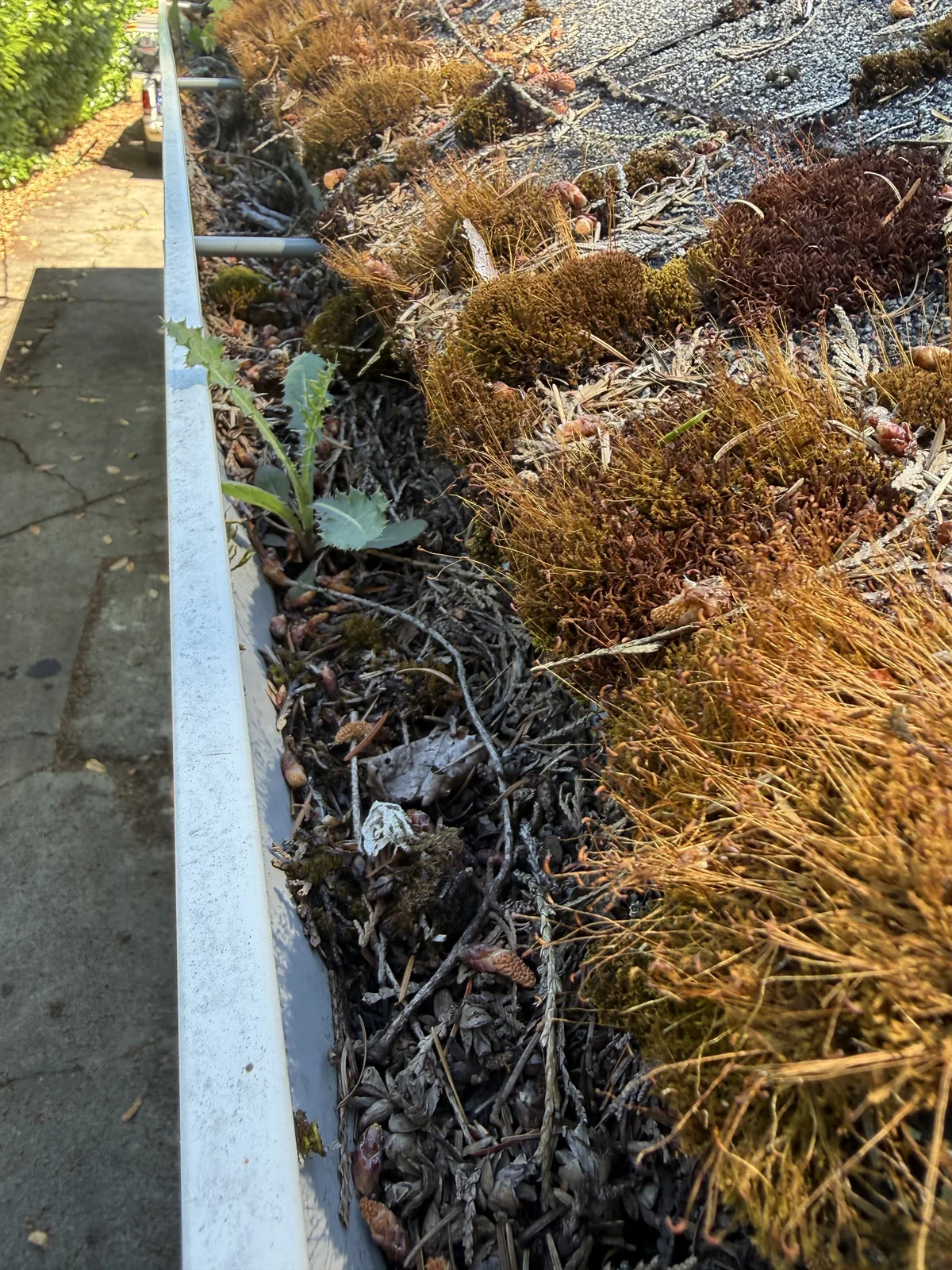
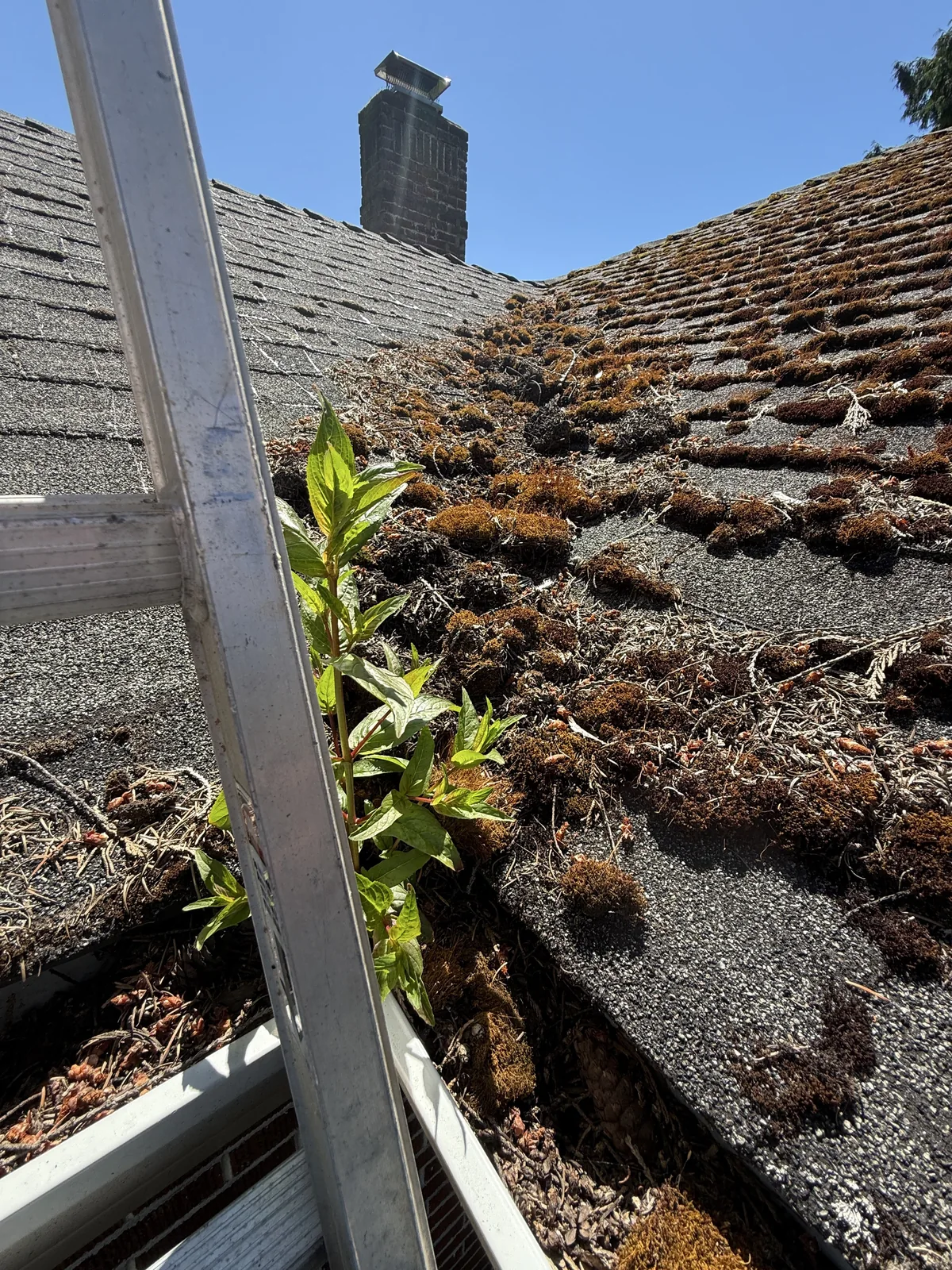
After the roof sections were cleaned, the gutters were cleared of moss, leaves, sticks, and roof debris. The plants growing in the gutters were removed as part of the gutter cleaning. Loose moss and debris were collected, hauled away, and cleaned from the ground so the job did not leave a mess around the house.
This project did not include a roof moss treatment. For some roofs, roof moss treatment is a useful follow-up or maintenance step, but this visit was focused on careful physical removal, gutter cleaning, and cleanup.
Jobsite Detail
The Roof Told the Same Story as the Trees
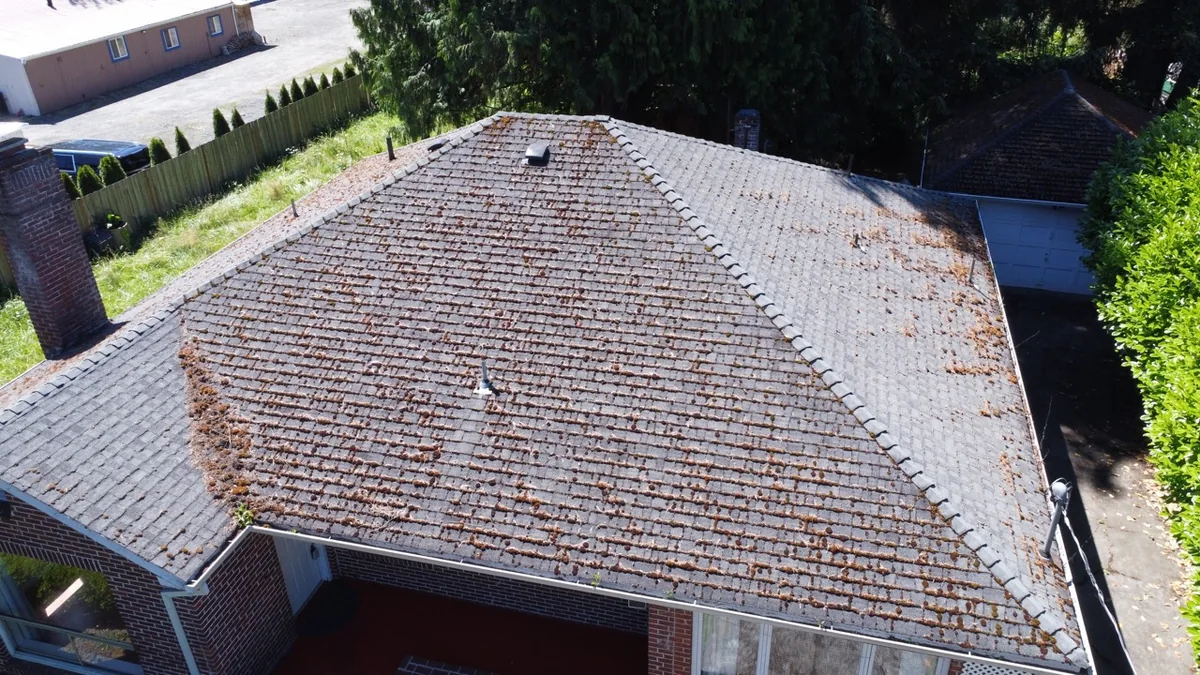
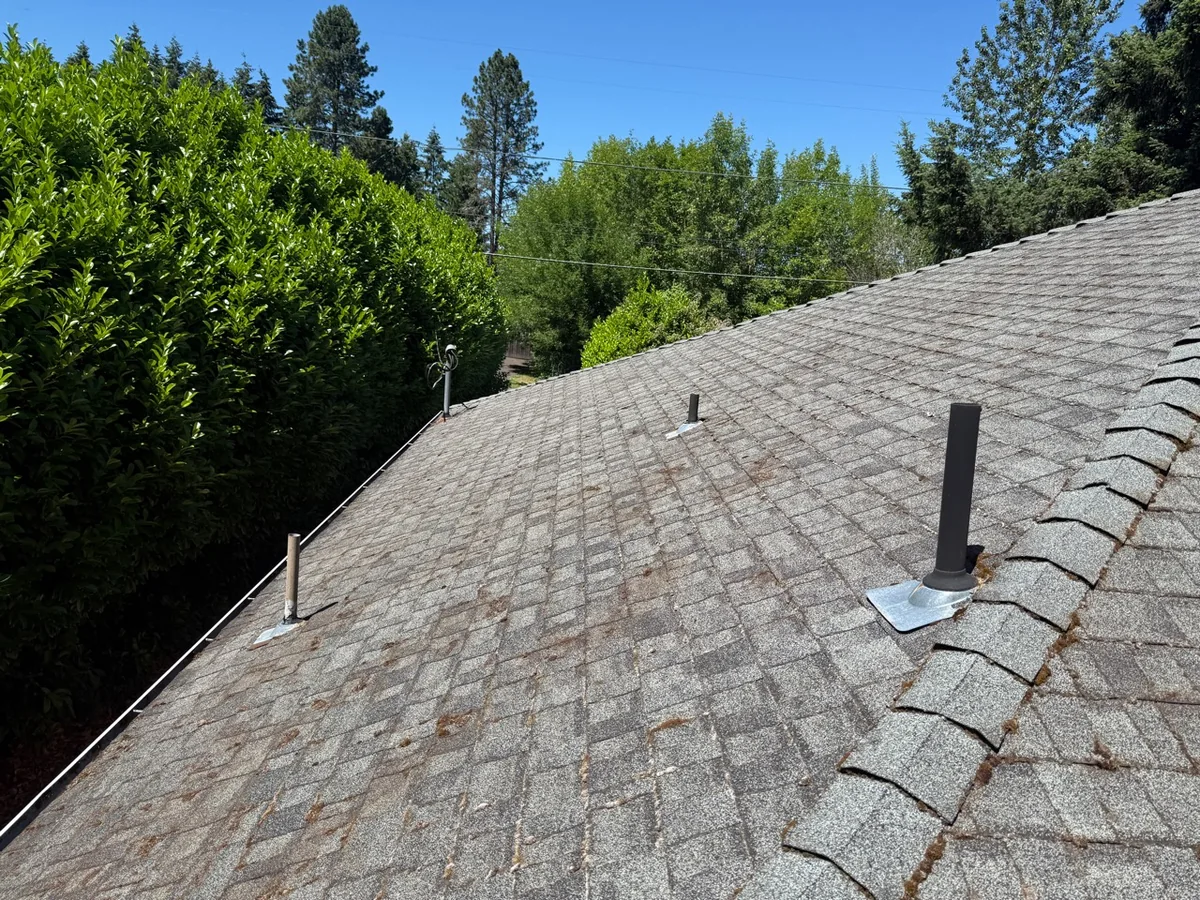
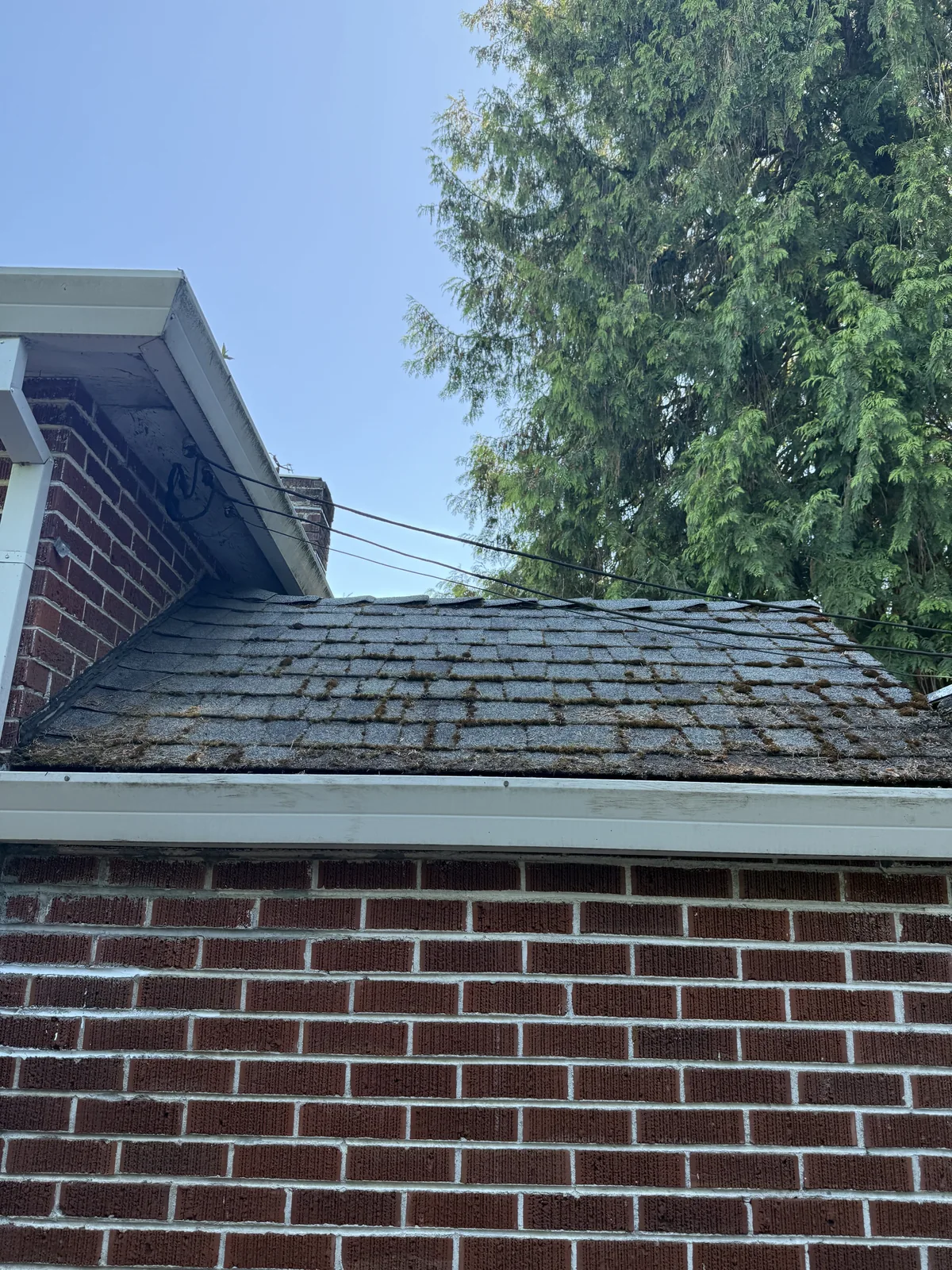
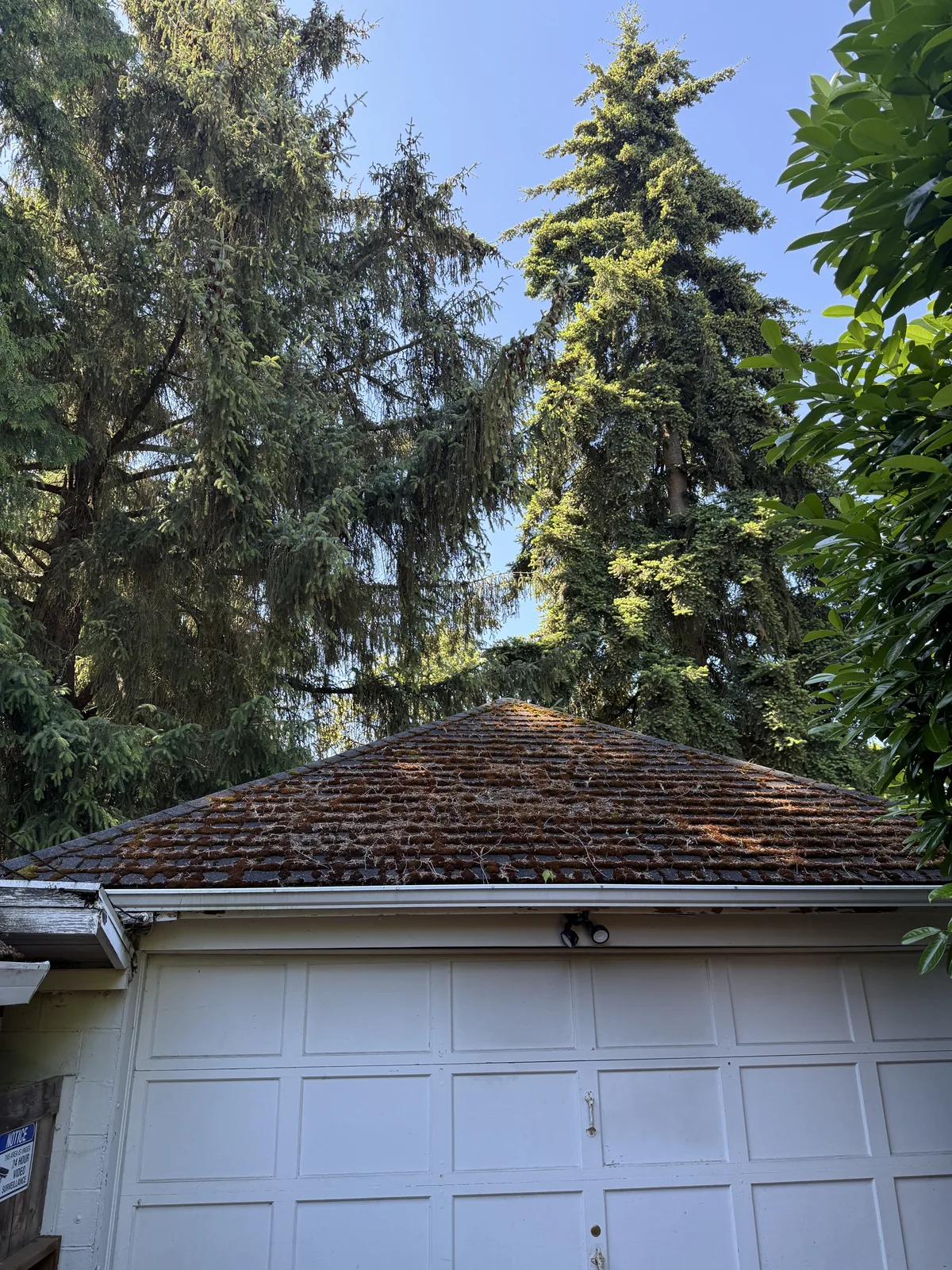
The moss pattern lined up with the site conditions. The roof sections closest to tall trees and dense shrubs had heavier moss and more debris. Those areas were shaded longer during the day, and the nearby branches dropped needles and organic material that collected in the shingle courses and gutters.
Trimming branches back from the roofline would help reduce future debris and give the roof more air movement. Suds Doctor cleaned the roof and gutters, but branch trimming is a separate maintenance item that can make future moss control easier.