Treatment Decision
Why This Roof Was a Better Treatment Candidate
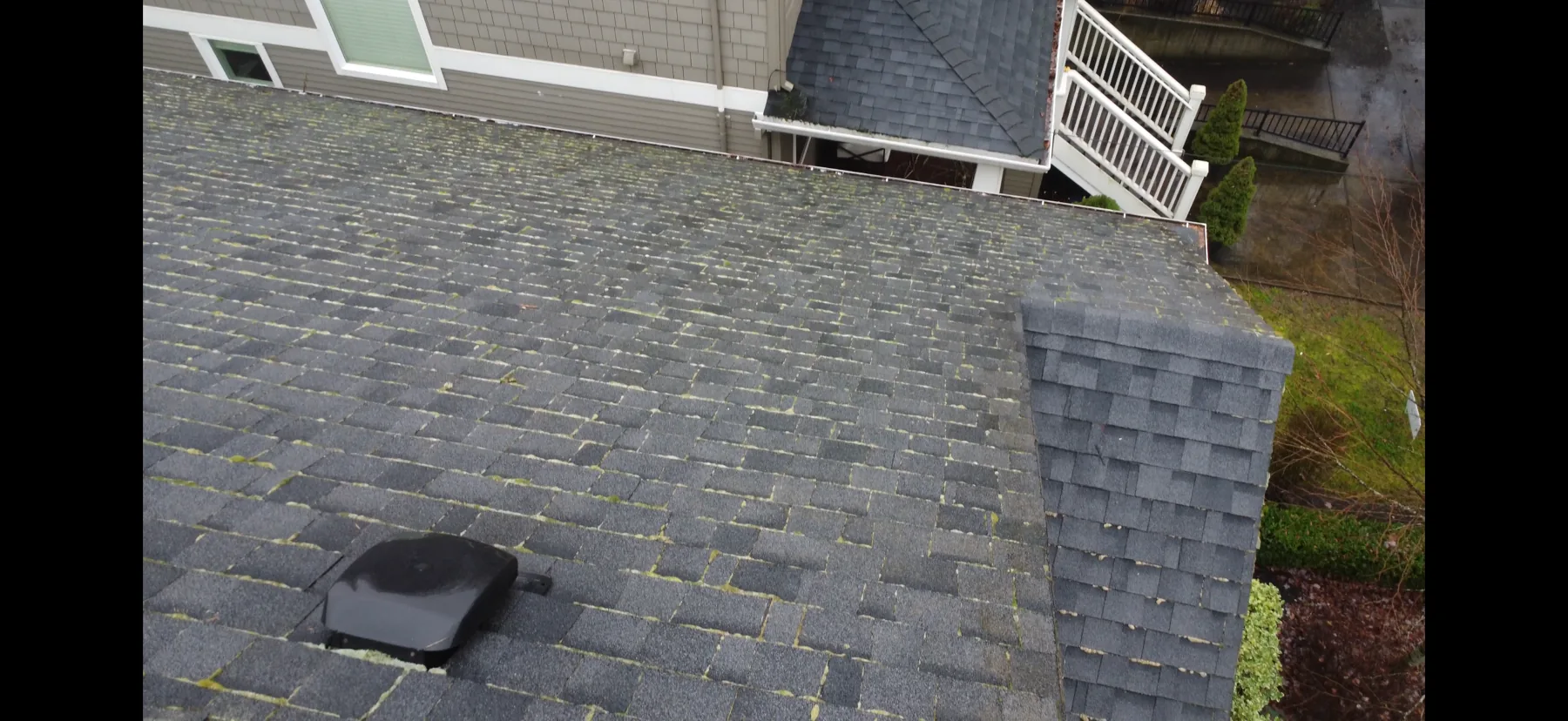
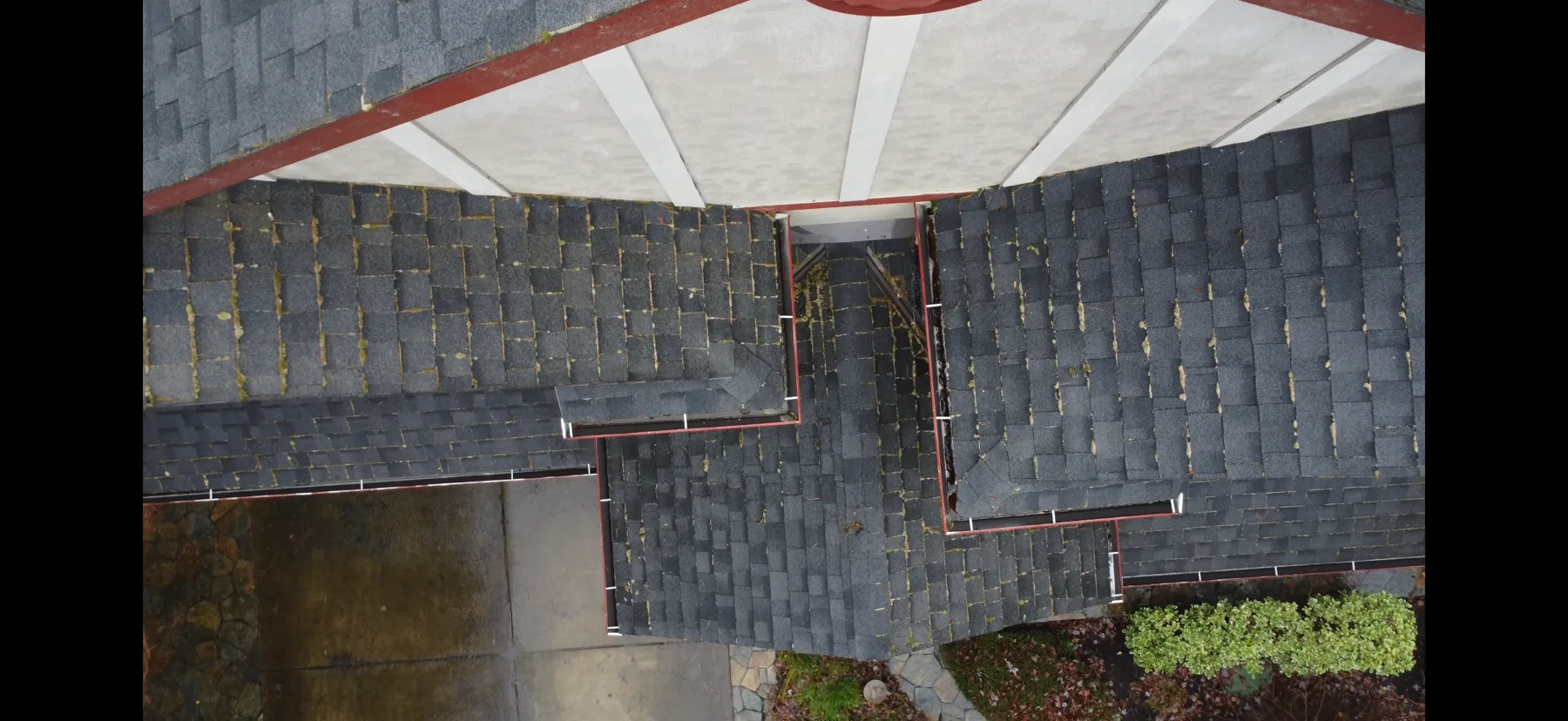
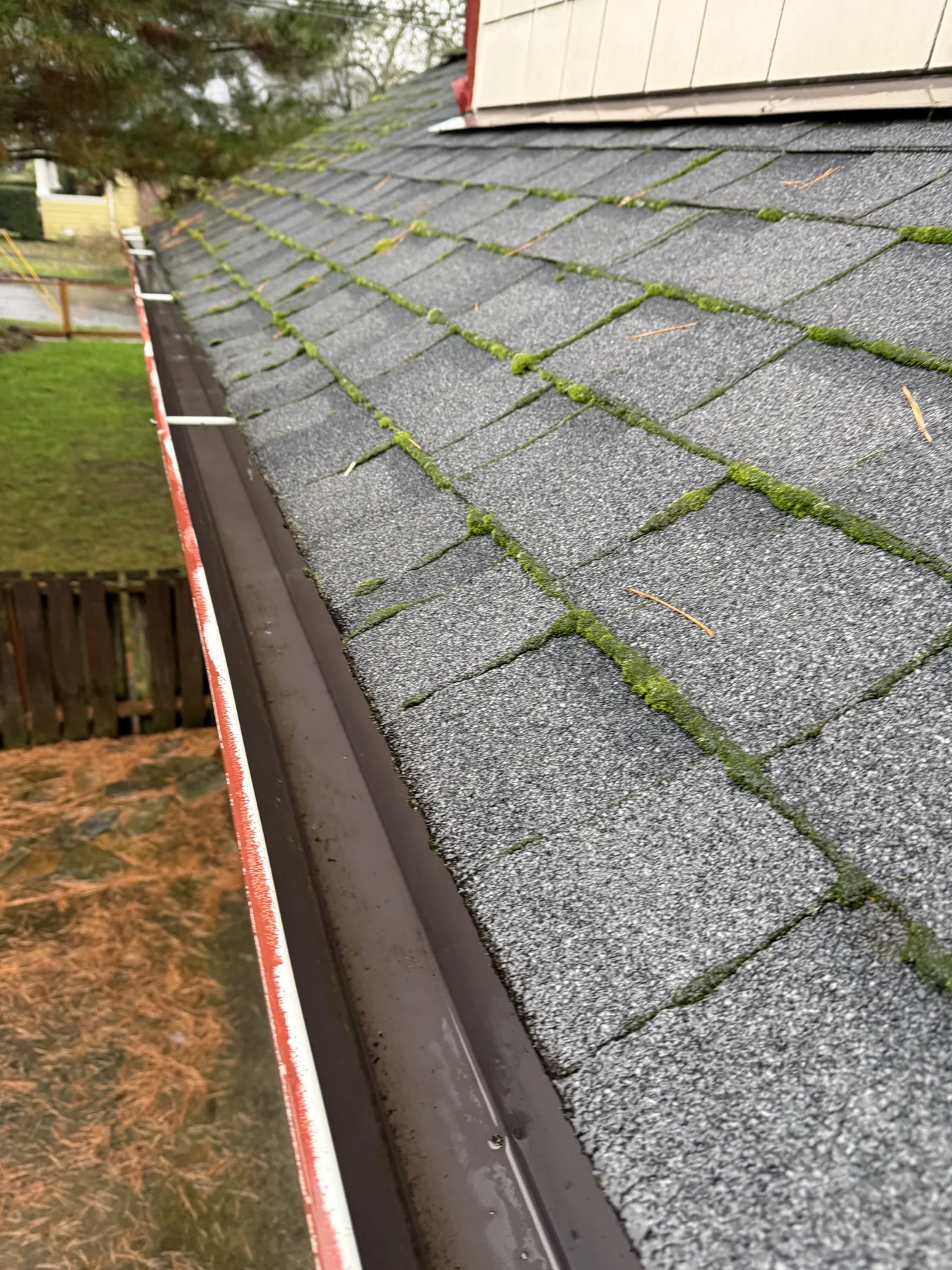
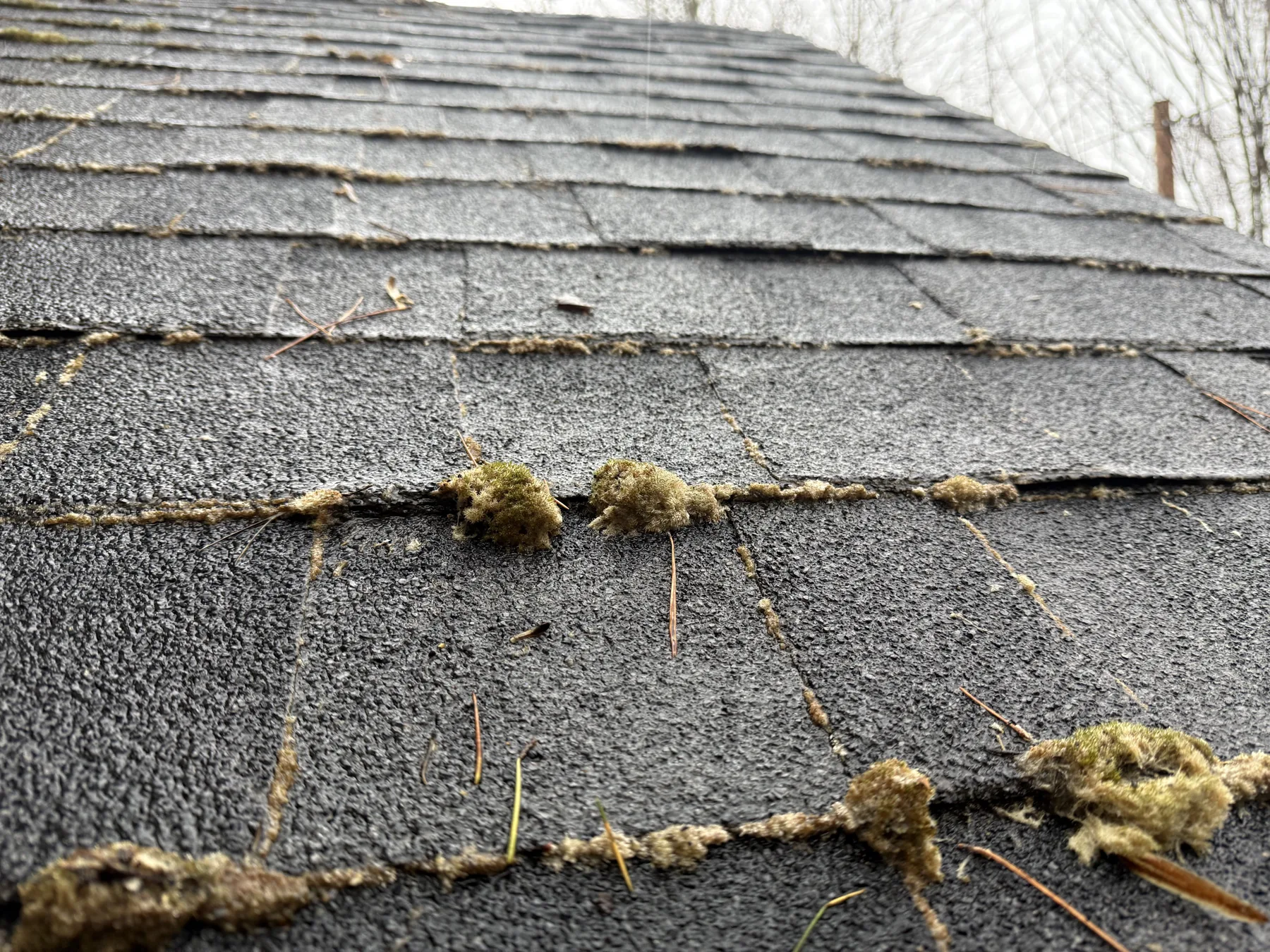
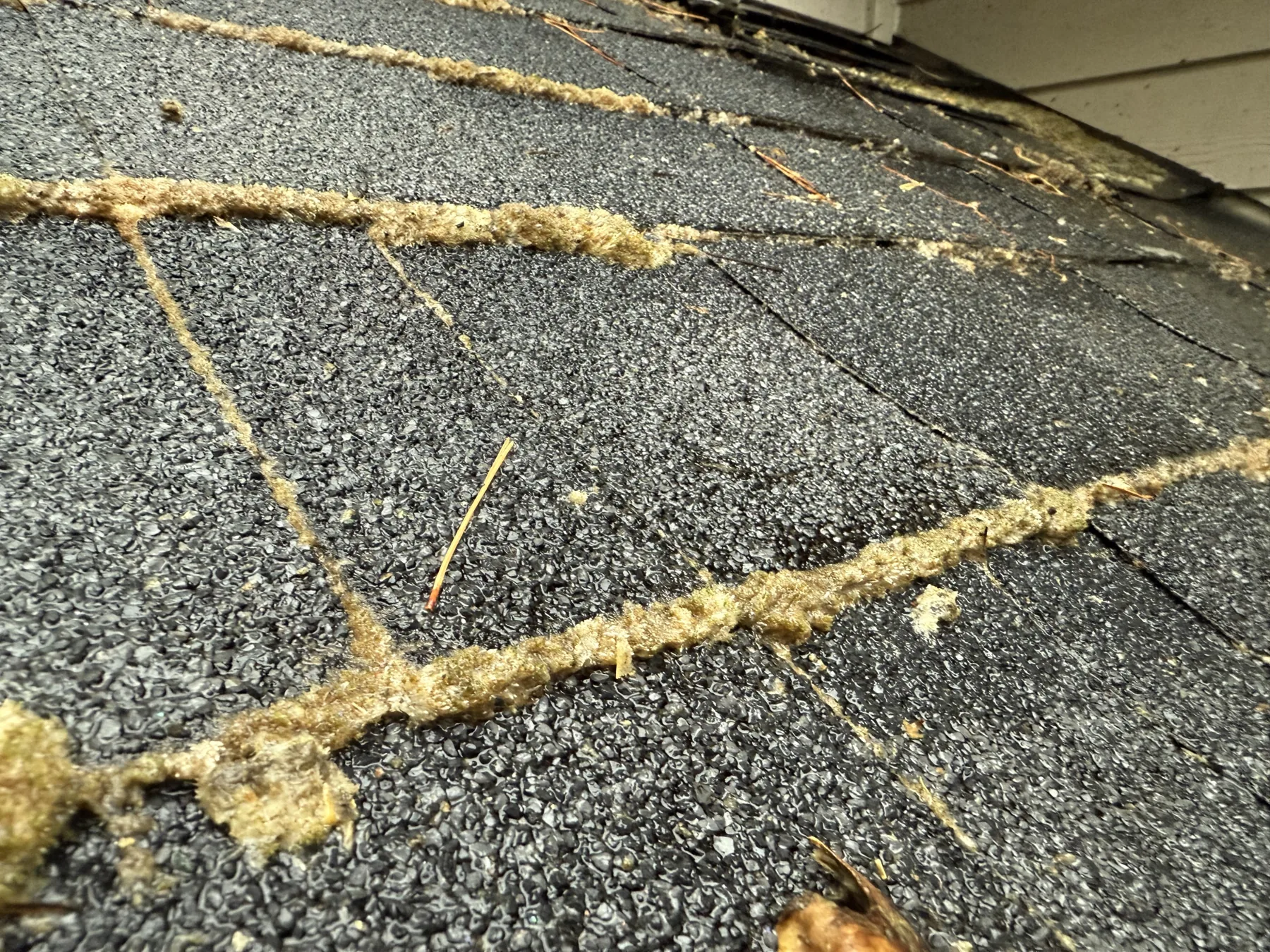
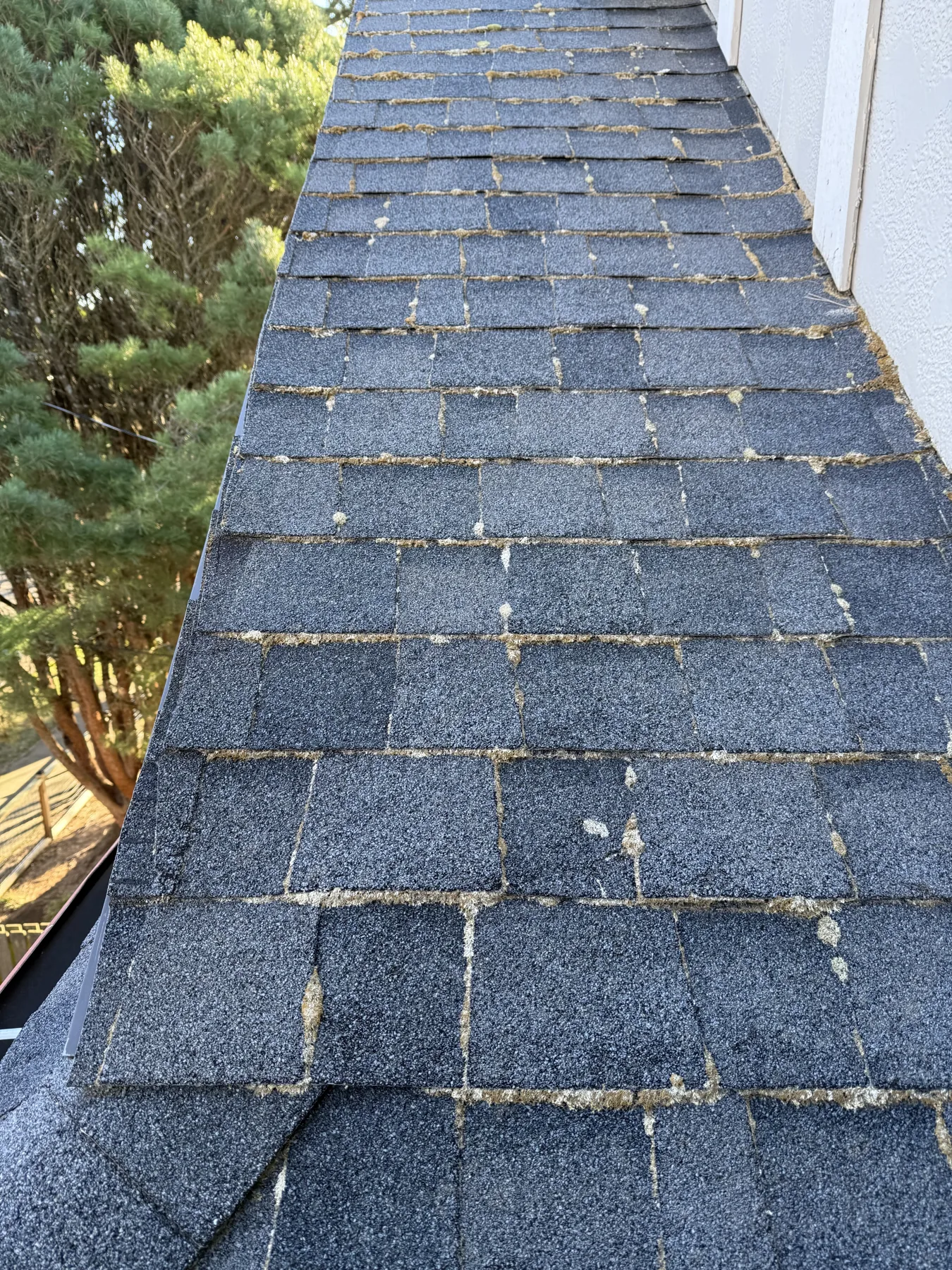
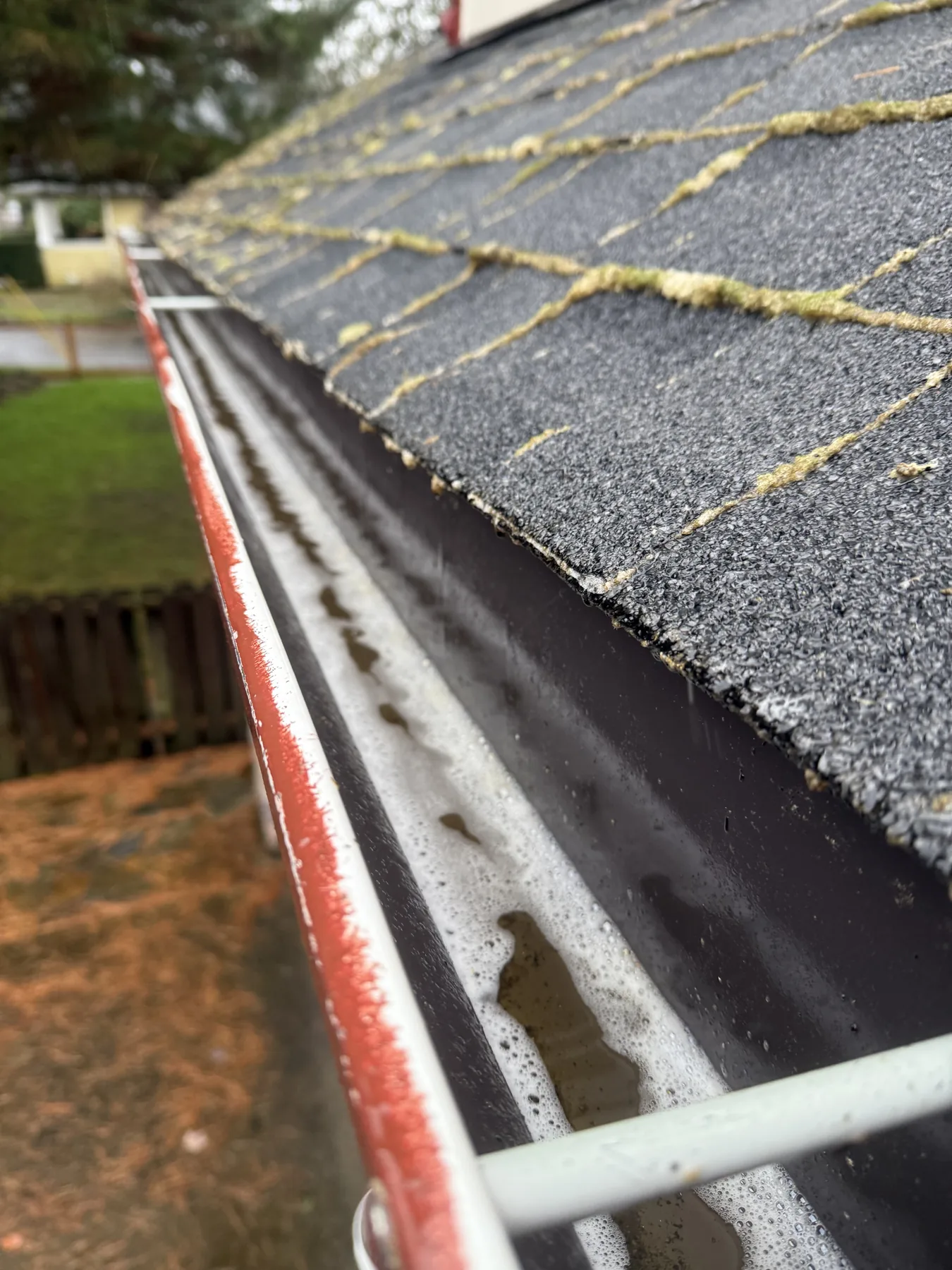
In the closeup photos, the moss is visible between shingle rows and along the edges, but it is not built up into large, heavy clumps across the roof. That matters. Manual moss removal is useful when there is enough material sitting on the roof to hold water, but unnecessary brushing can be hard on asphalt shingles when the growth is still relatively small.
Suds Doctor did not manually remove moss on this project. Treatment was the better fit because the roof needed maintenance, not aggressive cleaning. After treatment, remaining moss and staining should be expected to change gradually with normal weather rather than disappear immediately during the visit.
Contractor Notes
The Gutters Told Us Where the Debris Was Coming From
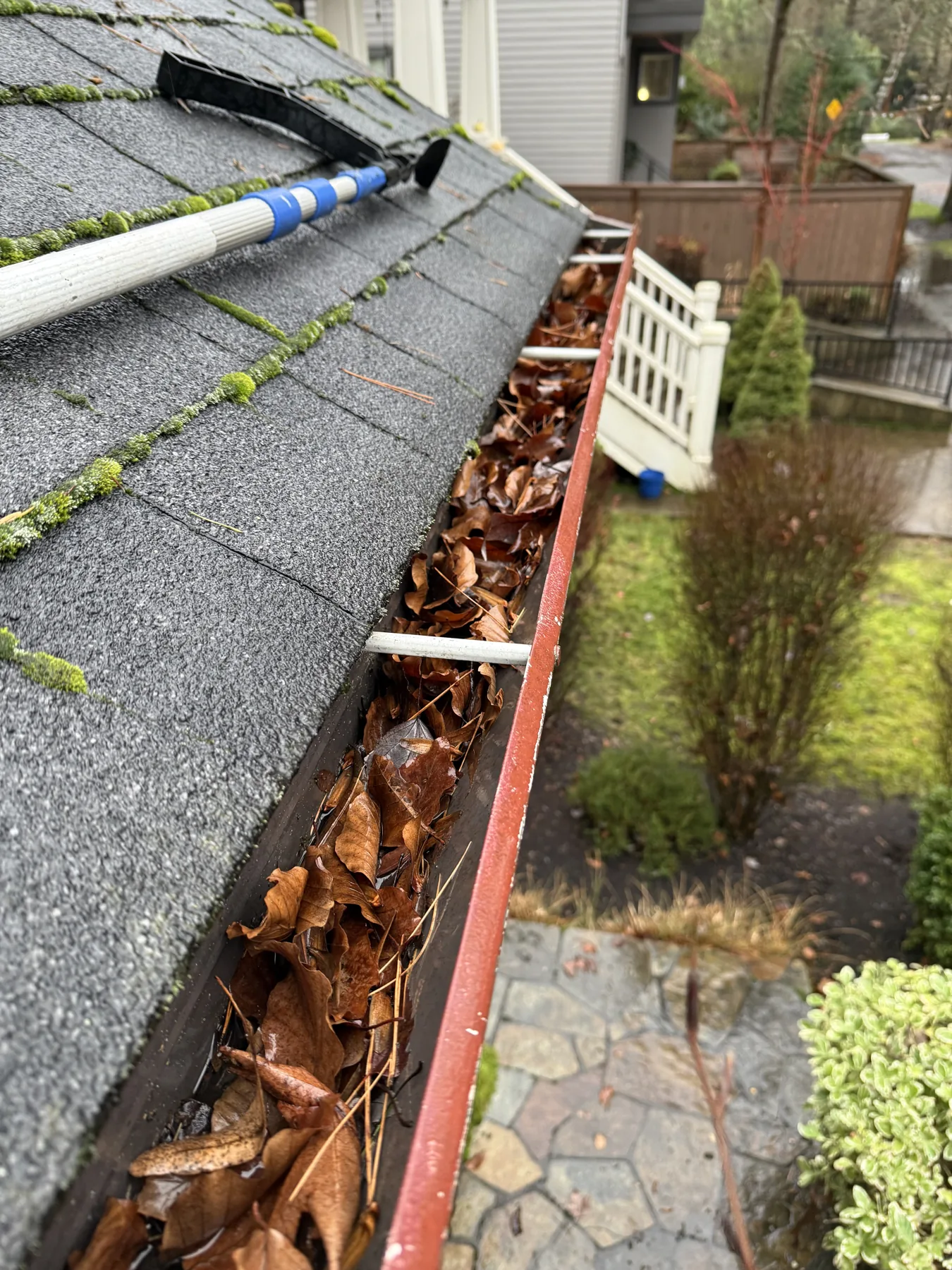
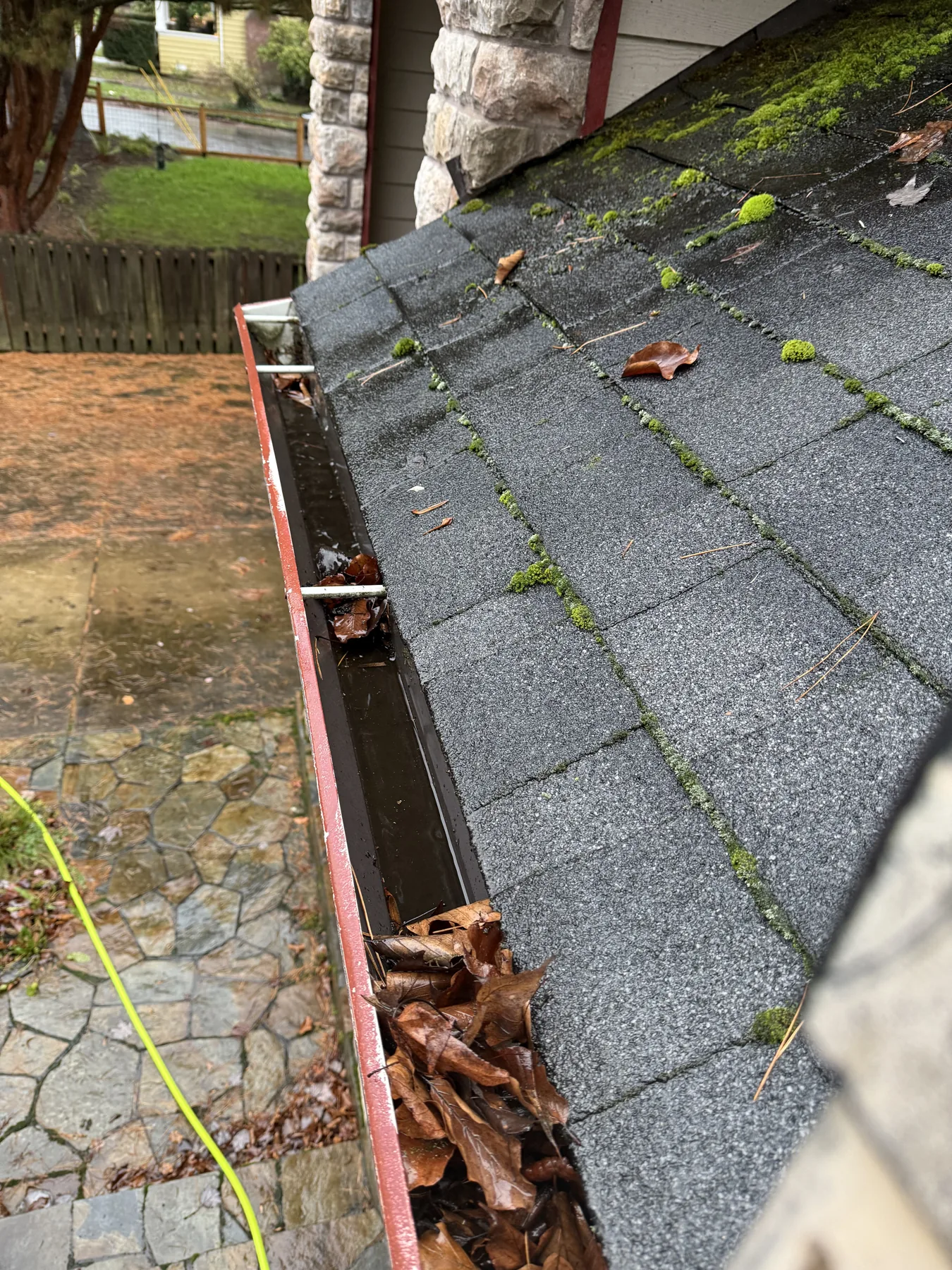
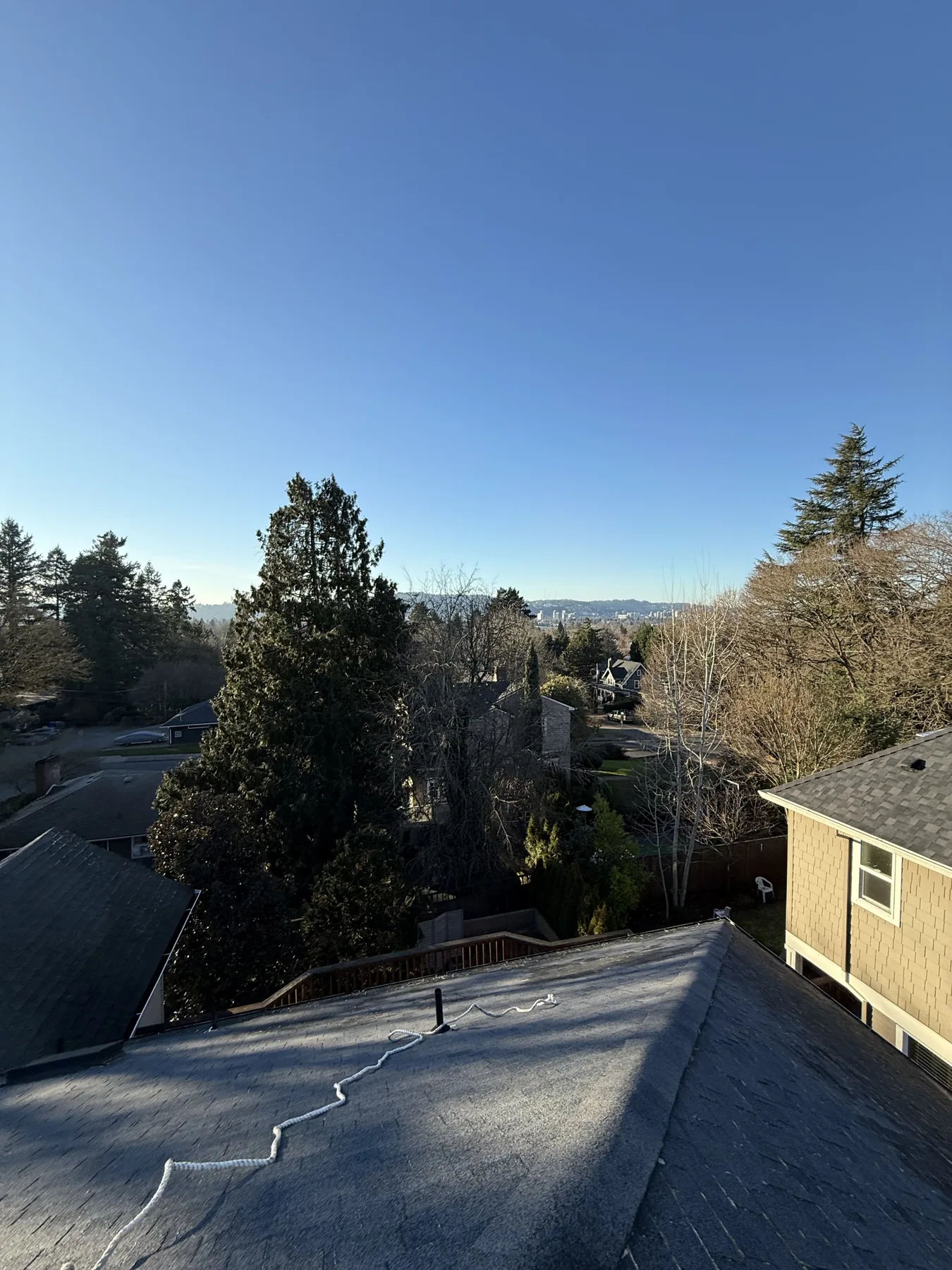
What stood out on this roof was the amount of tree debris sitting right at the gutter line. The roof moss itself was not terrible, but the gutters had a heavy load of pine needles and leaves. Some of that was coming from overhead pine trees on the neighboring property, so the homeowner did not have full control over the source.
That kind of debris changes the maintenance plan. Even when the roof only needs treatment, the gutters may need a more hands-on cleanout because needles and leaves can bridge across the gutter trough, hold moisture, and slow drainage during Portland rain.