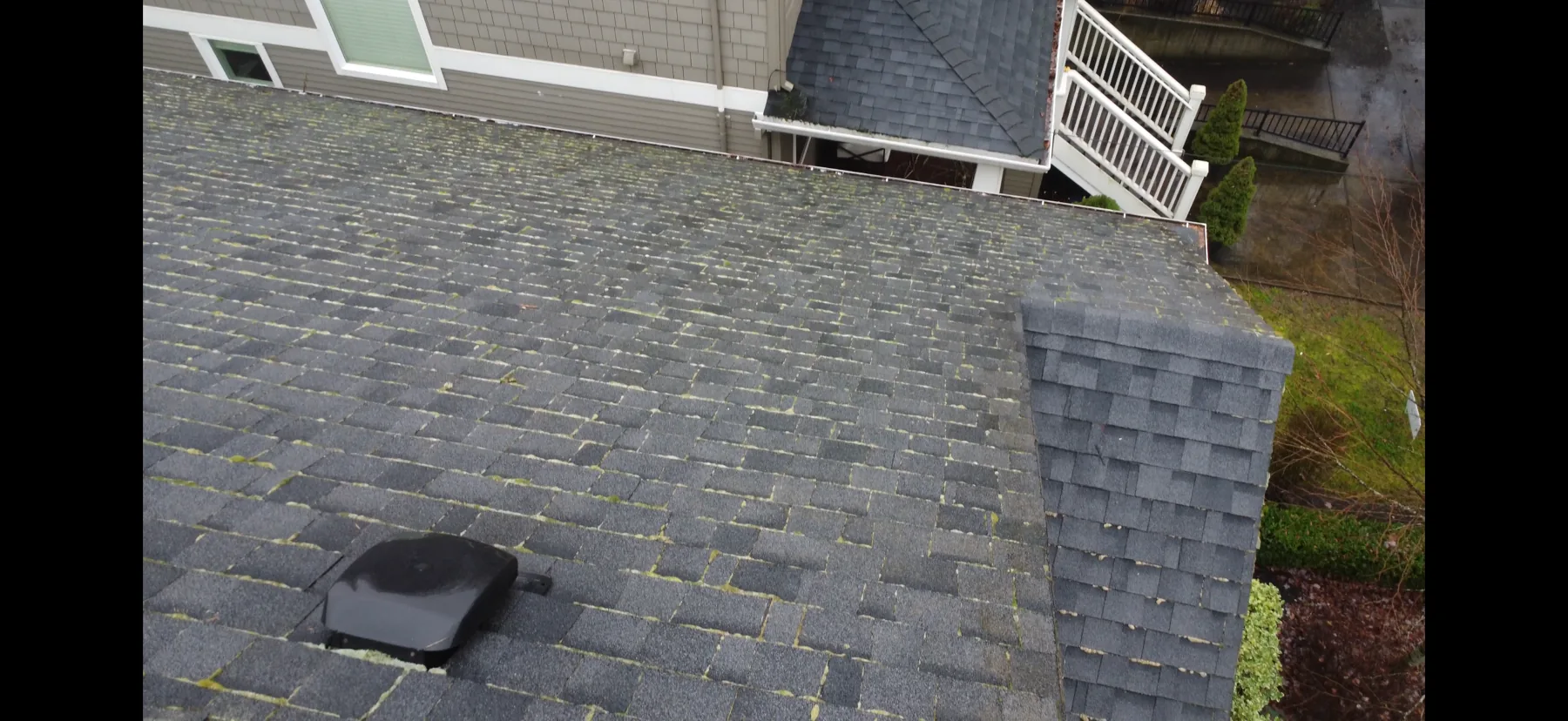
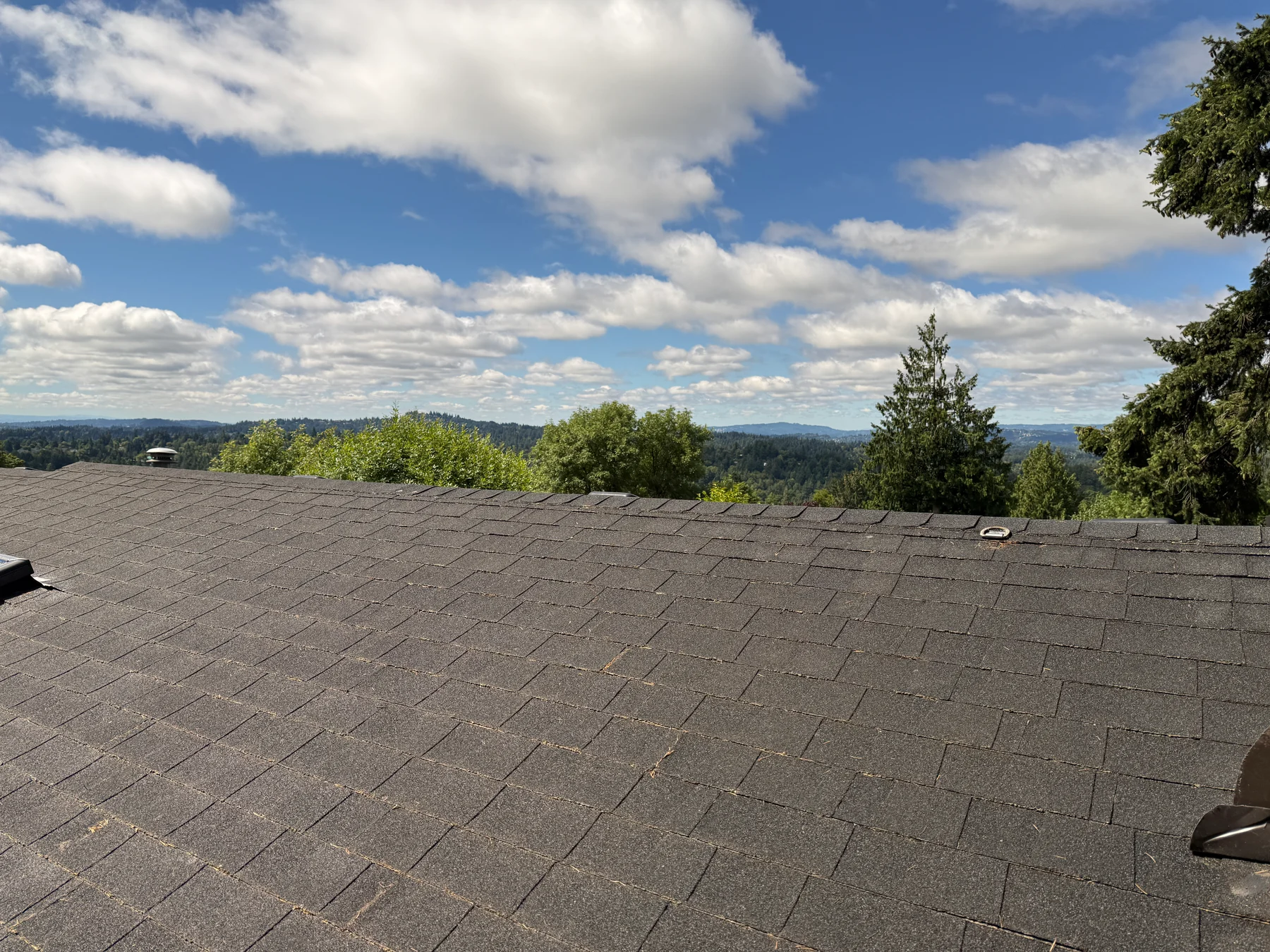
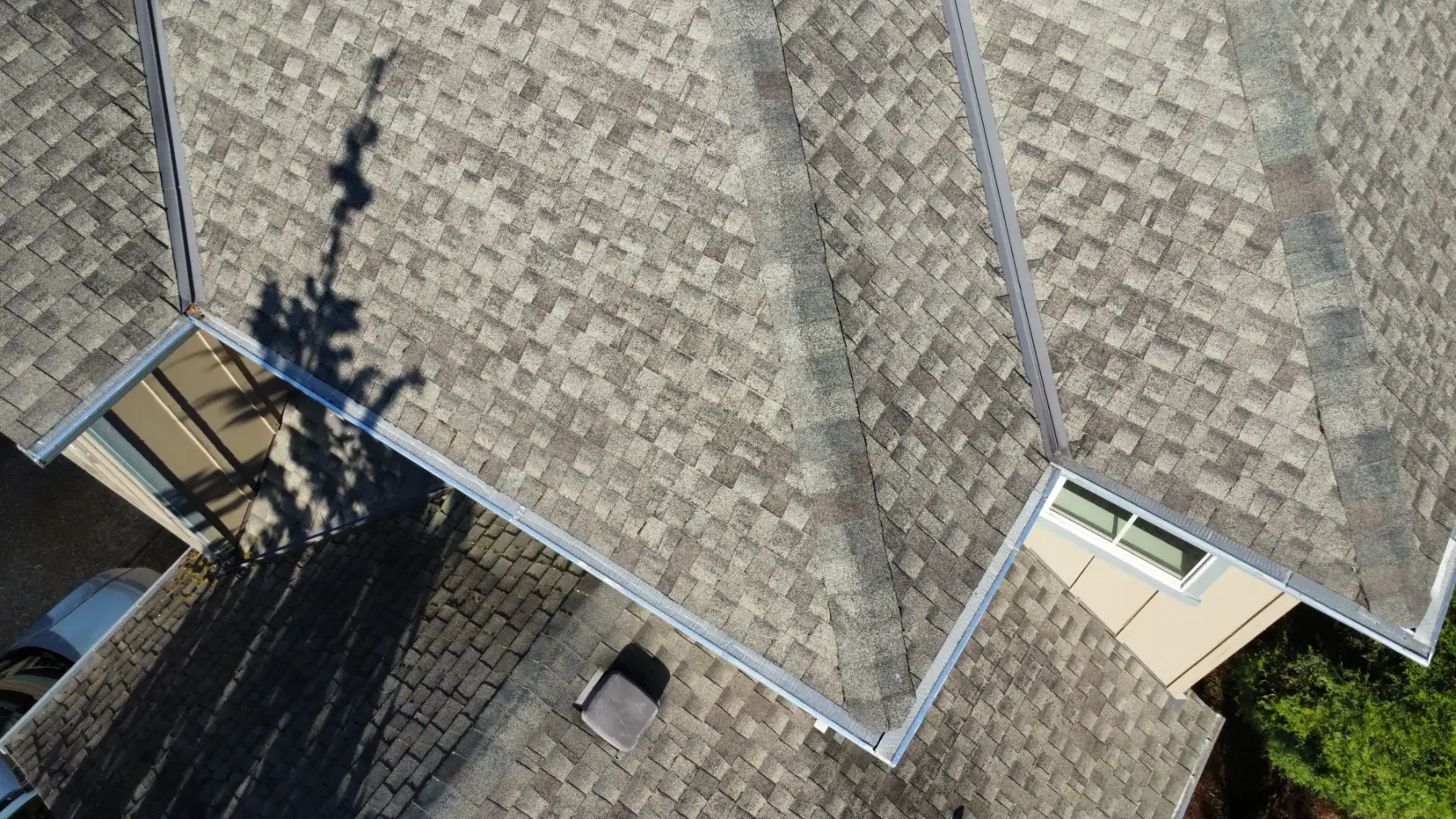
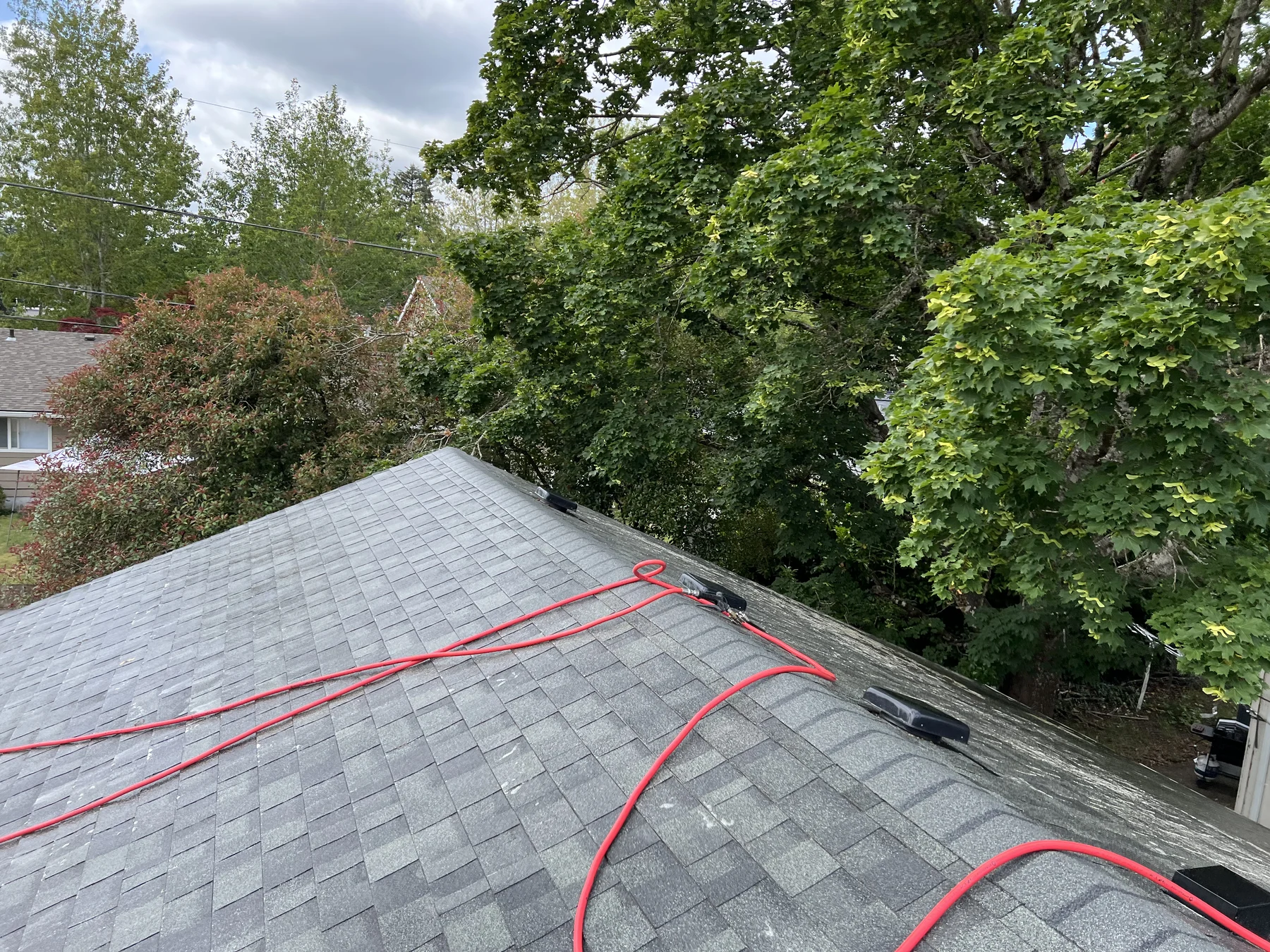
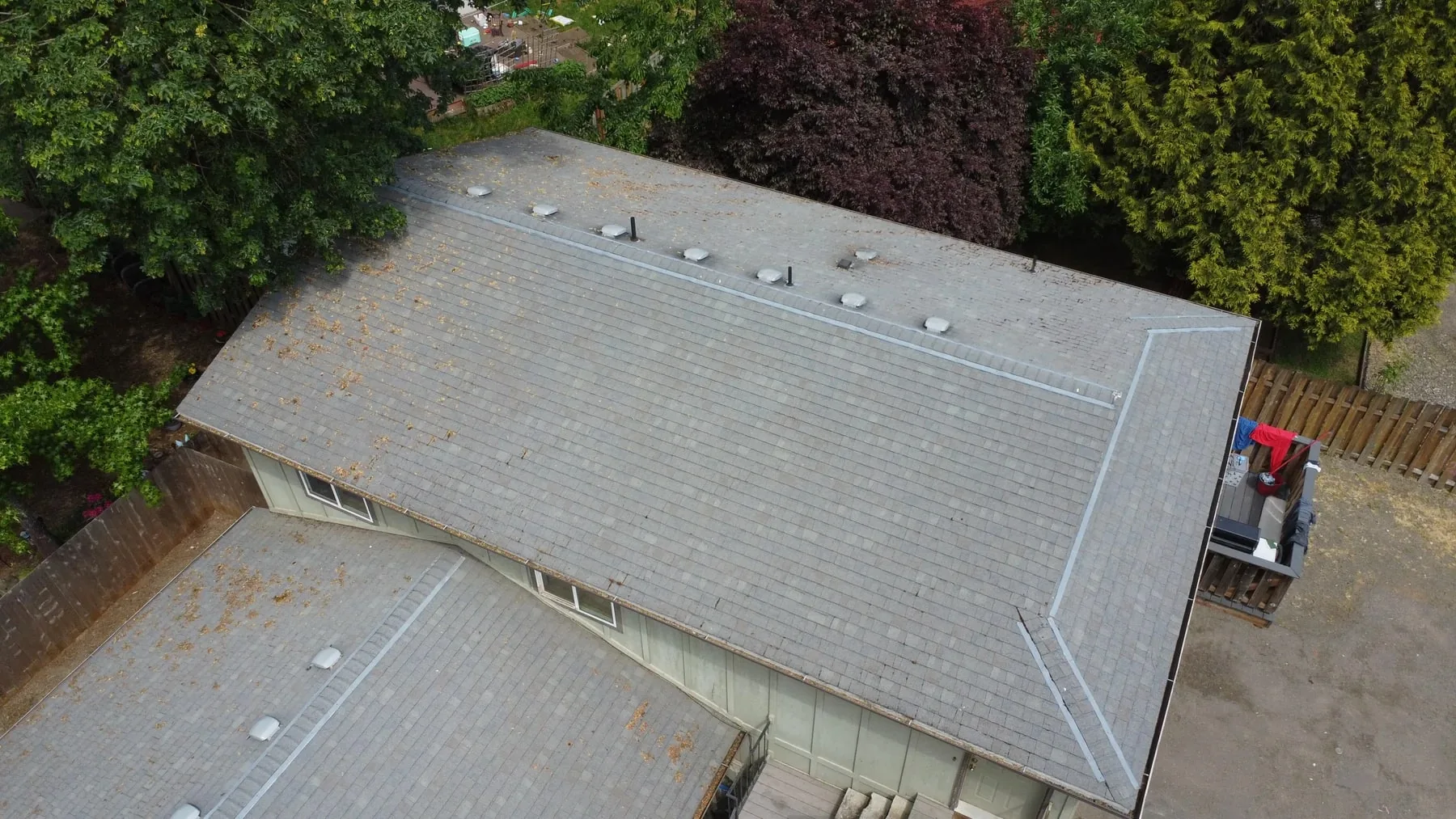
Roof moss treatment in Beaverton is maintenance for asphalt shingles that are starting to show moss, have recurring growth, or need prevention after cleaning. Suds Doctor applies roof treatment across the roof with realistic guidance for Oregon rain, shade, and moss-prone neighborhoods.
Roof moss treatment photo for Suds Doctor in Beaverton, Oregon.
Service Guide
Roof Moss Treatment for Beaverton Homes and Properties
Roof moss treatment is a liquid-applied roof maintenance service for Beaverton homes where moss is light, returning, or ready for prevention. It is not a magic permanent fix. Oregon moisture, shade, and tree cover can bring moss back, especially on north-facing roof sections and areas under firs, maples, and cedars.
Treatment works best when the roof does not have thick moss clumps that need hands-on removal first. We look at roof pitch, shade, moss coverage, shingle condition, valleys, gutters, and drainage before recommending treatment alone. If heavy moss is already sitting on the roof, full roof cleaning followed by treatment is usually the better plan.
Beaverton properties near Cooper Mountain, Sexton Mountain, Hyland Forest Park, and the wooded pockets around Fanno Creek often need recurring roof moss treatment because roof surfaces stay damp longer. Treatment helps address organic growth across the full roof and makes future maintenance easier when it is scheduled before moss becomes thick and rooted.
We avoid pressure on asphalt shingles. Roof treatment is applied as maintenance, not as a forceful cleaning method. That distinction matters because many roofs do not need aggressive work every time; they need the right treatment at the right point in the growth cycle.
The treatment process is meant to reach the roof surface evenly. We look for the places moss usually starts: shaded north-facing slopes, valleys where needles collect, roof edges below trees, and areas behind chimneys, vents, and skylights. A roof moss killer should be used with care, not as a random spot spray, because partial coverage can leave untreated areas that regrow faster.
Preventative maintenance is the main value. In Oregon, moss grows because roofs stay wet, not because a homeowner did anything wrong. A treatment visit can be a sensible step before the rainy season, after a prior roof cleaning, or when light growth starts showing again. If timing is the main question, this guide explains when to treat roof moss in Oregon. If you are unsure whether the roof needs cleaning first, the comparison guide for roof cleaning vs roof moss treatment walks through the decision.
See where Suds Doctor serves Beaverton and nearby Washington County neighborhoods.
Good Fit
Signs Your Roof Needs Moss Treatment
Roof moss treatment is a good fit when moss is just starting to show, when dark organic staining is returning, or when a previously cleaned roof needs a maintenance visit before the next rainy season. Small green dots along shingle edges, light fuzz near ridge lines, and returning growth on shaded roof planes are all signs that treatment may be enough.
Post treated asphalt roof after roof moss treatment.
If moss is growing in thick pads, lifting shingle edges, or collecting in roof valleys, treatment alone may be too little too late. In that case, we usually recommend careful removal before treatment. That keeps heavy organic material from holding water against the shingles while the treatment works over time.
Beaverton roofs with overhanging branches, limited sun, or damp backyard exposures often need a recurring plan. Homes near Tualatin Hills Nature Park and the shaded streets around Cedar Hills can look clean on one side and mossy on the other because sun and airflow vary so much from one roof plane to the next.
Treatment alone is usually enough when the moss is thin, scattered, or just beginning to return after a previous cleaning. It can also make sense for homeowners who want to stay ahead of growth before fall rain settles in. If you can see thick pads of moss from the street, if gutters are catching loose chunks, or if the roof has piles of needles in the valleys, cleaning first is usually the safer recommendation.
Expected maintenance intervals vary. A roof under firs, maples, or cedars may need inspection every year and treatment as growth appears. A sunny, open roof may go longer between visits. For a practical breakdown, see how long roof moss treatment lasts in western Oregon. We try to base recommendations on actual shade, roof pitch, tree cover, and prior moss history instead of pretending every roof follows the same schedule.
Roof Types
Roof Surfaces We Evaluate for Treatment
Most roof moss treatment requests are for asphalt composition shingles. These roofs are common across Beaverton and respond well to a low-impact treatment plan when the shingles are still in serviceable condition. We check for age, brittleness, missing shingles, exposed underlayment, damaged flashing, and heavy granule loss before recommending service.
Cedar, tile, metal, and specialty roofing need a more careful review. Some materials may be treatable, but the process and risk profile are different from asphalt shingles. If the roof material, pitch, or condition makes treatment unsafe or ineffective, we will explain that rather than treating every roof the same way.
We also look at drainage. A mossy roof with clogged gutters has two maintenance issues working together. Pairing treatment with gutter cleaning can help rainwater move away from the roofline and reduce the mess that accumulates after storms.
Roof moss treatment is also affected by roof age. If shingles are brittle, losing heavy granules, or already curling, the roof may need a different conversation than routine maintenance. Treatment can help with organic growth, but it cannot restore worn-out shingles or fix leaks. That is why an honest roof maintenance estimate should include condition notes, not just a price.
For homes with mixed roof exposure, we may recommend a practical maintenance rhythm instead of treating every symptom as an emergency. A shaded back slope may need attention sooner than the sunny front slope. Valleys under trees may need debris management as much as treatment. Those observations help keep the roof care plan realistic and cost-conscious.
Treatment Timeline
What to Expect After Roof Moss Treatment
Treatment is applied to suitable roof areas after condition, access, and moss level are evaluated. It is not an instant cosmetic wash. Moss may lighten after treatment and release gradually as weather works on it, so the roof can continue changing after the service visit.
That slower result is intentional. Suds Doctor does not pressure wash asphalt shingles to force an immediate color change. If moss is already thick enough to hold water or lift at shingle edges, the better scope may be careful roof cleaning before treatment.
The documented Forest Grove fourplex roof project included moss removal, gutter cleaning, and roof treatment. It is a useful example of treatment being one stage in a larger roof-maintenance plan rather than a substitute for removal when buildup is already heavy.
For a lighter treatment-only example, this Portland roof moss treatment project shows a roof where moss was present but not heavy enough to justify manual removal, along with gutter cleaning for pine needles and leaves.
Practical answers for Beaverton homeowners comparing treatment, roof cleaning, and recurring roof maintenance.
How often should roof moss treatment be applied in Beaverton?
Timing depends on shade, tree cover, roof pitch, shingle condition, and how quickly moss returns. Many Beaverton roofs benefit from periodic inspection and recurring treatment because wet weather and shaded roof planes create ideal moss conditions. A roof under trees may need attention sooner than a roof with open sun and good airflow.
Can treatment remove heavy moss by itself?
Treatment can address organic growth over time, but thick moss usually needs careful removal first so the roof is not left with heavy material sitting on the shingles. If moss is already lifting edges or forming dense pads, Suds Doctor will usually recommend roof cleaning before treatment. Treatment is strongest as maintenance or follow-up, not as a shortcut around heavy removal.
Is roof moss treatment permanent?
No. Oregon moisture and shade can bring moss back, so treatment should be viewed as maintenance rather than a permanent cure. The goal is to treat current organic growth, slow regrowth, and keep the roof easier to manage. Regular observation matters most on shaded sides of the roof and under overhanging trees.
Should I treat my roof before or after gutter cleaning?
If gutters are full, cleaning them first or pairing both services can make sense. Roof treatment may loosen organic material over time, and existing debris can already be blocking drainage. We can help decide the order based on how much material is on the roof and whether downspouts are flowing.
Can roof moss treatment be done in rainy weather?
Light Oregon weather is not unusual, but treatment still needs suitable conditions to be applied properly. Heavy rain, strong wind, unsafe roof conditions, or poor access can affect scheduling. We plan around the forecast when needed so the treatment has the best chance to work as intended.
Will treatment make moss disappear the same day?
No. Roof moss treatment works over time. Some growth may discolor first, then release gradually with weathering. If the roof needs an immediate visual reset because moss is thick, cleaning before treatment is usually the better service.
What can I do between roof moss treatment visits?
Keep branches trimmed back where practical, watch shaded roof planes from the ground, and keep gutters draining. Good airflow and less debris help treatment last longer, especially on Beaverton homes under mature trees.
How do I know if treatment alone is enough?
Treatment alone is usually a good fit for light, scattered, or returning moss. If moss is thick, lifting shingle edges, packed in valleys, or shedding into gutters, cleaning first is usually the better recommendation before applying roof treatment.