
Can Pressure Washing Damage Concrete? | Suds Doctor
Concrete Care Guide

Can Pressure Washing Damage Concrete?

Yes—pressure washing can damage concrete when the surface is weak, coated, newly placed, already deteriorating, or cleaned with too much concentrated force. Sound concrete can often be cleaned safely, but the method should follow the slab rather than a one-setting rule.

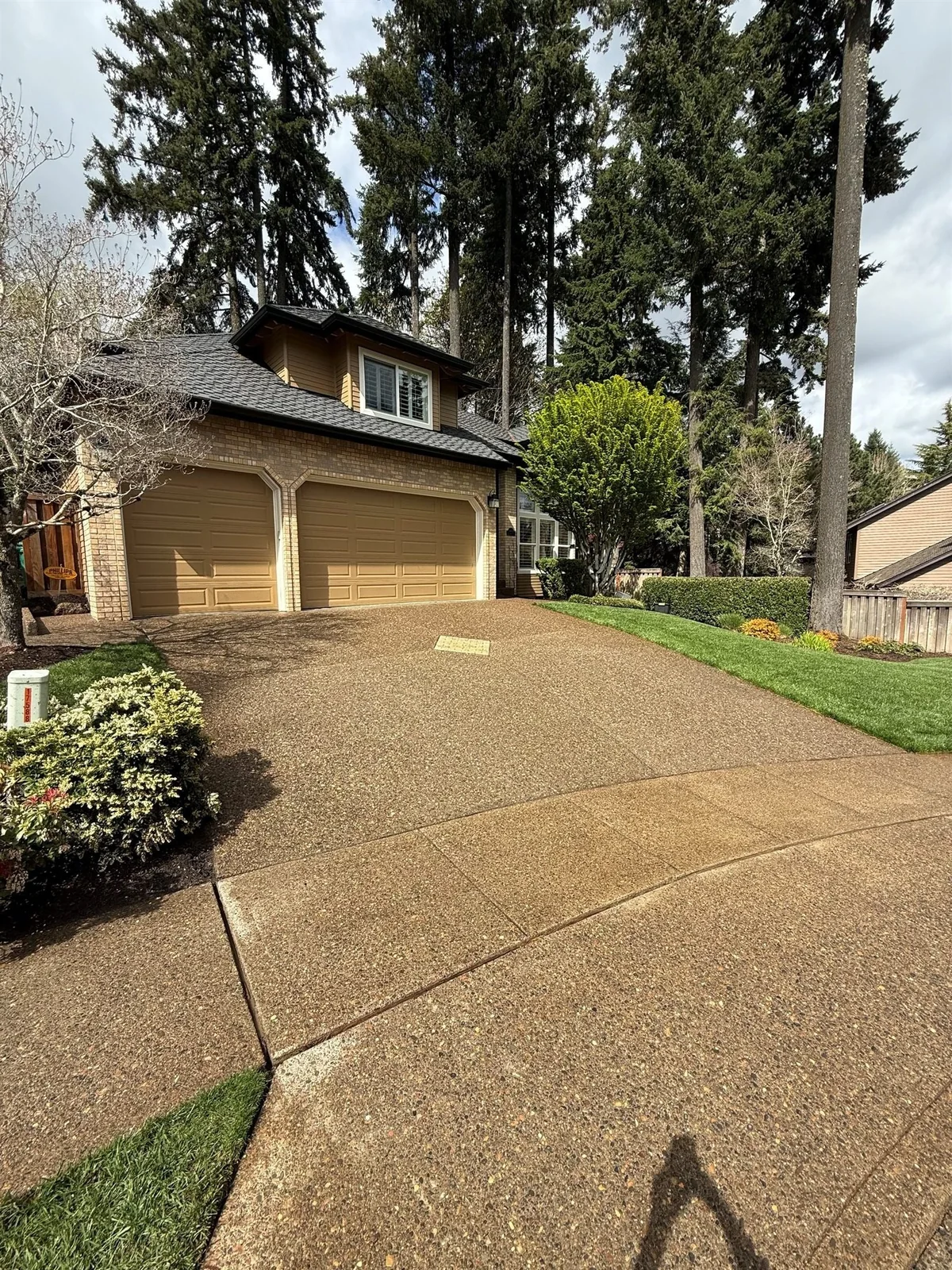
A clean line through mossy exposed-aggregate concrete during controlled surface cleaning
Concrete finish, age, repairs, and condition should determine the cleaning plan before pressure is applied.
Short Answer

Pressure Is a Tool, Not the Whole Cleaning Plan

A pressure washer does not automatically ruin concrete. The risk comes from combining force with the wrong tip, distance, movement, chemistry, or surface. A narrow jet held close to one spot can cut visible lines into the cement paste at the surface. Aggressive washing can also expose more aggregate, lift a weak repair, disturb joint material, or create an uneven appearance that remains after the concrete dries.

The safest question is not “Can concrete handle pressure?” It is “What kind of concrete and finish is this, what condition is it in, and what are we trying to remove?” Broom-finished flatwork, exposed aggregate, stamped concrete, pavers, painted slabs, sealed patios, and patched driveways should not be treated as if they are interchangeable.

Oregon Context

Wet-Weather Buildup Can Hide Existing Wear

In Beaverton and the west Portland metro, shade, long wet stretches, fir needles, leaf tannins, moss, and algae can make a slab look uniformly dark. Once that layer is removed, old etching, aggregate exposure, rust, patchwork, or sealer failure may become easier to see. Cleaning did not necessarily create every visible flaw; sometimes it reveals the surface that was already underneath.

That is why good documentation matters. Photograph the slab dry before cleaning, especially repairs, cracks, scaling, coated areas, edges, and places that stay wet near downspouts. Set expectations before the clean surface changes the contrast.

Risk Guide

Where Pressure-Washing Damage Usually Starts

Most avoidable damage comes from excessive concentration or from overlooking a vulnerable surface condition.

Concrete conditions and pressure-washing concerns
ConditionWhat Can Go WrongBetter Decision
New or recently placed concreteThe surface may not be ready for aggressive mechanical cleaning.Follow the installer’s curing and care instructions; postpone if readiness is uncertain.
Spalling or scalingLoose surface material can break away and enlarge a worn patch.Evaluate whether repair should come before cleaning.
Exposed aggregateExcess pressure can remove paste around stones or change the texture unevenly.Use a condition-based test area and even technique.
Sealed, painted, or stained concreteThe finish may haze, peel, or strip in patches.Identify the coating and follow its manufacturer or installer guidance.
Cracks and repairsWater can enter gaps or loosen weak patching and joint material.Avoid directing force into edges; repair unstable areas first.
Pavers and sanded jointsJoint sand can be displaced and loose edges can move.Use a paver-specific plan rather than a concrete-slab assumption.
What Damage Looks Like

Etching, Striping, and Aggregate Exposure Are Different Problems

Wait until the surface is fully dry before deciding whether the finish is even. Wet concrete hides contrast and can make both dirt and damage difficult to judge.

Wand Lines or “Writing”

Thin pale lines, curves, or stop marks often follow the operator’s movement. They appear when a concentrated spray is held too close, moved inconsistently, or paused over one area. More washing may make the surrounding slab lighter, but it cannot put removed surface material back.

Uneven Surface-Cleaner Rings

Circular bands or alternating light and dark passes may come from moving too quickly, overlapping poorly, clogged nozzles, or uneven equipment height. Some variation is remaining soil; sharply roughened areas may be physical alteration.

Newly Exposed Stones

Concrete contains aggregate, but an unexpected increase in exposed stone can indicate lost surface paste. Existing weathering and exposed-aggregate finishes complicate the diagnosis, so compare the cleaned area with protected edges and before photos.

Coating or Sealer Failure

A wash may leave patchy gloss, peeled paint, or a cloudy sealer when the finish cannot tolerate the process. The next step may be coating evaluation or refinishing—not stronger pressure.

Safer Method

Cleaning Force Comes From More Than Pressure

Pressure is only one part of the result. Appropriate pretreatment can loosen organic buildup so the machine does not have to do all the work. Nozzle choice, flow, distance, dwell time, temperature, movement speed, and a consistent cleaning pattern all change how force reaches the slab. On broad flatwork, suitable surface-cleaning equipment can provide a more even pass than drawing lines with a wand, but it still requires correct setup and attention to edges.

Begin with the least aggressive practical approach. Test in an inconspicuous place, allow it to dry, and look for texture or color change before expanding the work. Keep the spray moving. Do not chase one dark stain by concentrating force until the concrete changes. Oil, rust, irrigation minerals, fertilizer marks, paint, and old discoloration may require a different treatment or may remain. The oil-stain guide explains why pressure alone has limits.

Before You Start

Inspect the Concrete and the Water Path

  • Confirm the material: poured concrete, exposed aggregate, stamped finish, pavers, or a coating.
  • Look for cracks, scaling, loose repairs, hollow areas, failing sealer, and crumbling edges.
  • Identify the buildup instead of calling every dark mark dirt.
  • Protect doors, painted trim, siding, outlets, plants, and neighboring surfaces from overspray.
  • Trace runoff toward storm drains, soil, foundations, garages, and public sidewalks.
  • Move vehicles and fragile objects, and keep people and pets away from the work area.

For the full sequence, see how to clean an Oregon driveway. If the main concern is slick organic film, read why Oregon driveways become slippery.

DIY Decision

Stop When the Surface Changes Before the Stain Does

A DIY attempt should stop if the concrete becomes visibly rougher, pale lines appear, stones begin loosening, a coating lifts, joint sand moves, or a repair starts breaking apart. Also stop when the only way to lighten a mark is to hold a narrow stream close to the slab. That is no longer ordinary cleaning; it is trading a stain for permanent surface alteration.

Unknown coatings, recently installed concrete, widespread scaling, unstable repairs, steep or awkward access, contaminated runoff, and large uneven areas are sensible reasons to ask for help. A professional estimate should explain the method, the realistic result, and any areas that may be excluded—not simply promise that higher pressure will erase everything.

Existing Damage

Cleaning Is Not Concrete Repair

Pressure washing can remove surface soil and organic growth from suitable flatwork. It cannot restore cement paste that is already gone, close structural cracks, bond a failed overlay, correct drainage, or make weathered concrete new. If a slab is crumbling, moving, settling, or holding water because of its slope, cleaning may improve appearance without solving the underlying problem.

For a sound driveway, patio, or walkway, professional concrete cleaning can be planned around the surface and surrounding property. For material-specific scopes, compare driveway cleaning, patio cleaning, and the broader pressure-washing service.

A Practical Check

Four Questions Before Pressure Touches Concrete

If any answer is unclear, slow the project down and identify the surface first.

01

Is It Sound?

Loose paste, scaling, failed patches, or crumbling edges raise the risk.

02

Is It Coated?

Sealers, paint, stains, and overlays may need product-specific care.

03

What Is the Mark?

Organic film, oil, rust, minerals, and permanent wear need different expectations.

04

Where Will Water Go?

Runoff planning protects landscaping, buildings, drains, and neighboring property.

FAQ

Concrete Pressure-Washing Damage FAQs

Use the dry surface—not the wet cleaning pass—to judge the result.

Can a pressure washer etch concrete?

Yes. Concentrated pressure, a narrow tip, holding the wand too close, or lingering in one place can remove the surface paste and leave permanent lines or pale marks.

Is old concrete safer to pressure wash than new concrete?

Not automatically. Older concrete may be fully cured, but it can also have spalling, cracks, weak repairs, exposed aggregate, or a failing sealer that requires extra caution.

Can pressure washing remove concrete sealer?

It can damage or unevenly strip some sealers and coatings. Identify the finish and follow its care guidance before washing.

Should cracked concrete be pressure washed?

Minor cracks do not always prevent cleaning, but loose edges, active spalling, hollow patches, or failing repairs should be evaluated before water and pressure are applied. Avoid forcing water directly into openings.

How can I tell whether concrete was damaged?

After the slab dries, look for wand lines, circles, newly rough areas, unexpected aggregate exposure, coating loss, loosened joint material, or a clearly uneven finish. Compare with before photos and protected edges.

Need a Surface-Specific Answer?

Send Photos Before Guessing at the Pressure

Share daylight photos of the full slab and close views of cracks, repairs, coatings, aggregate, and the buildup you want removed. Suds Doctor can explain whether the project looks like routine concrete cleaning, specialty stain work, a lower-pressure approach, or a repair-first situation.

Call Now (971) 777-1441