Careful Cleaning
Brushing Away Moss Without Pressure Washing the Shingles
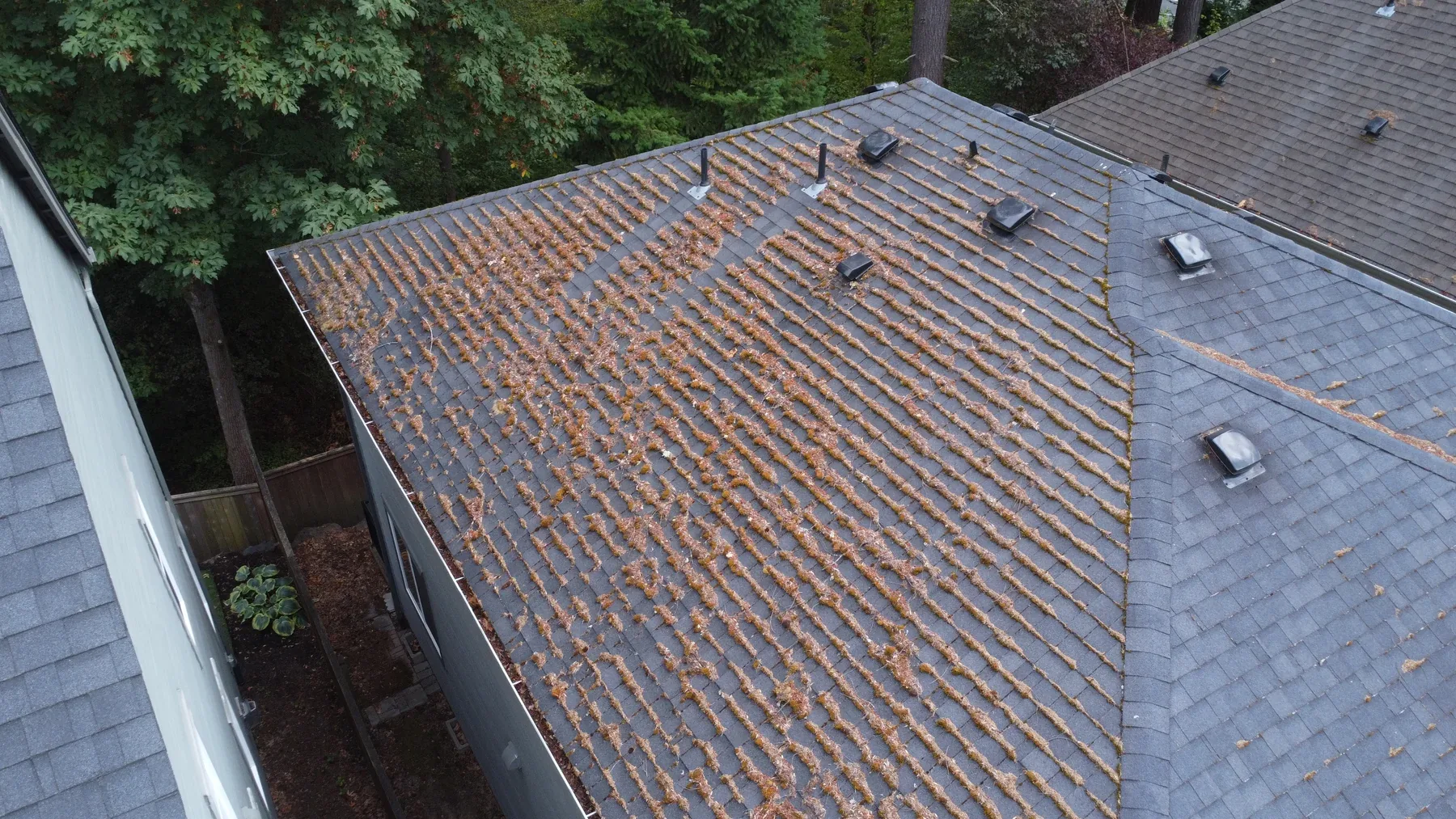
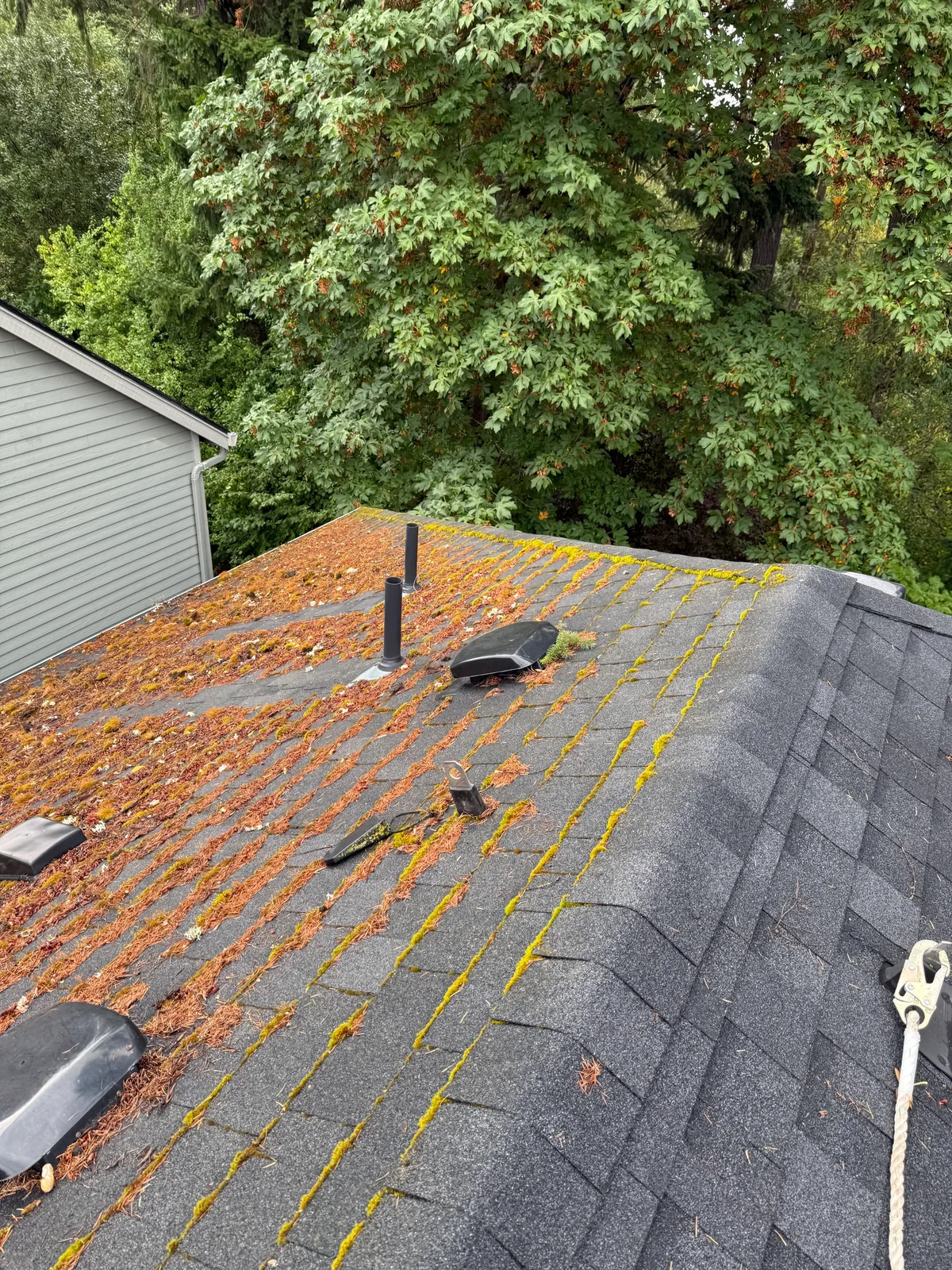
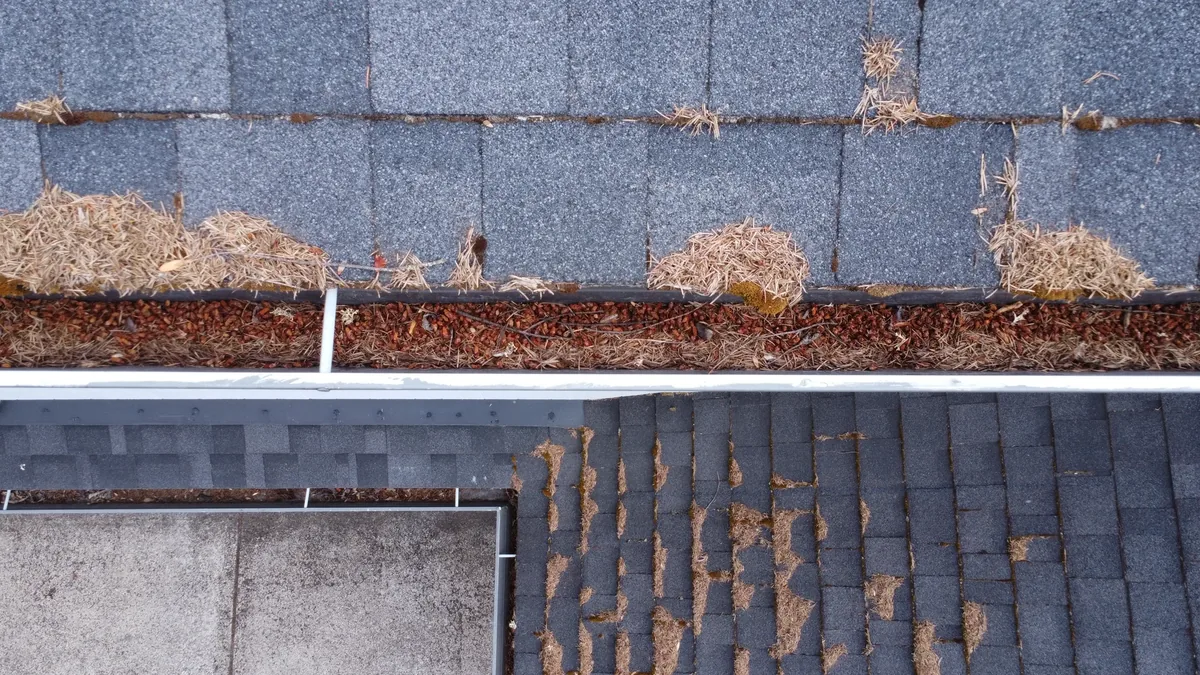
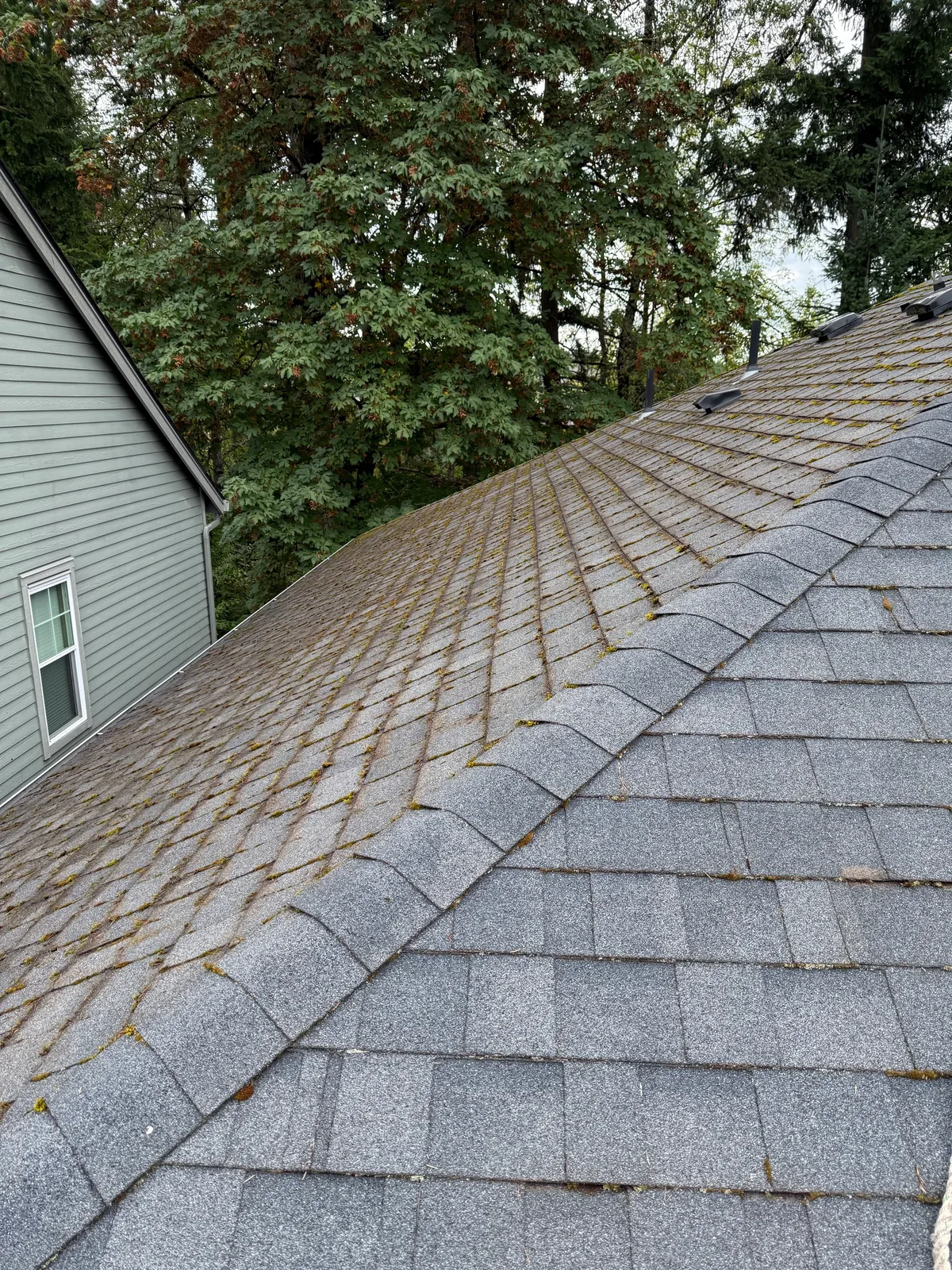
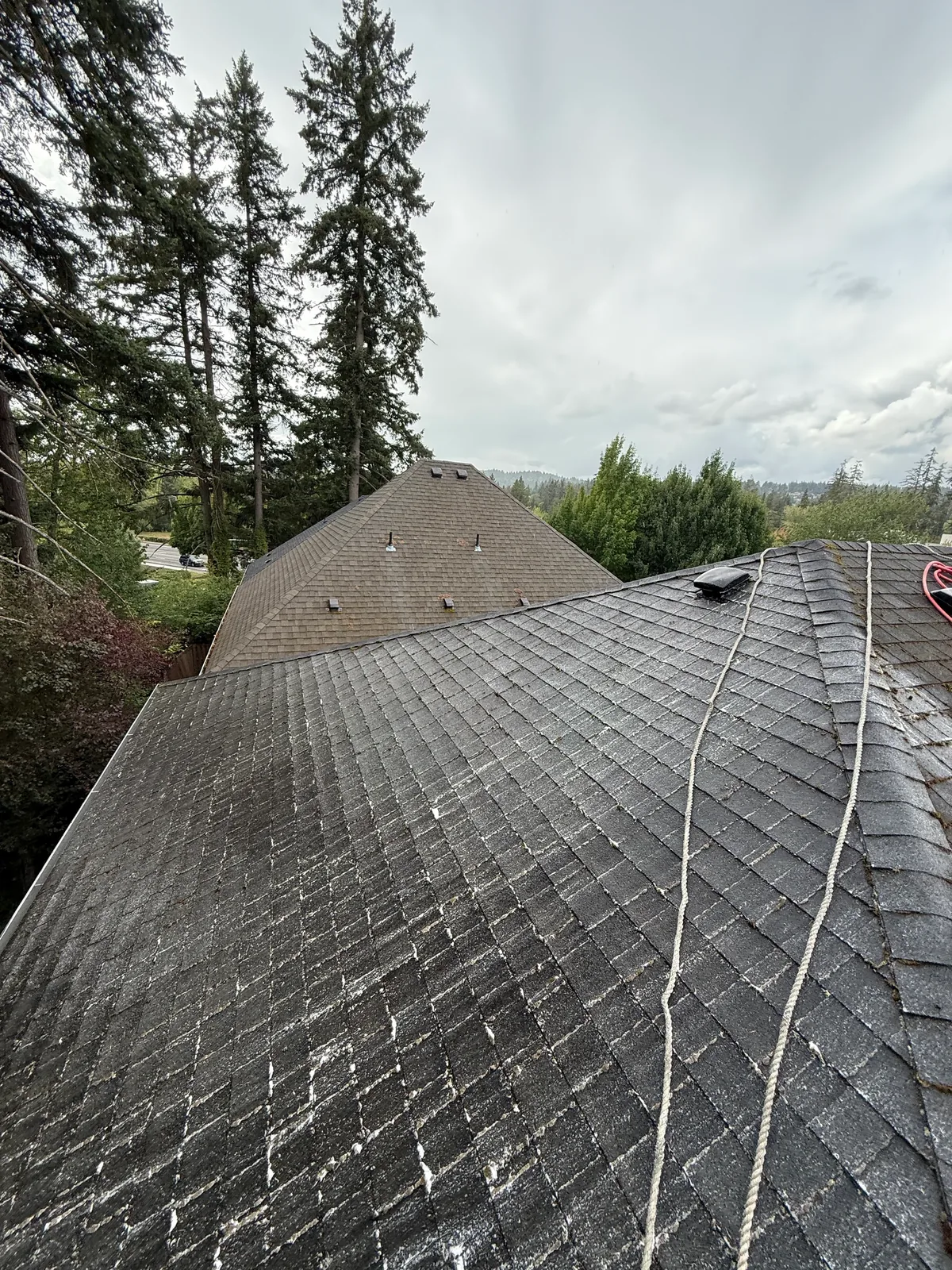
We worked across the asphalt shingles with a careful brushing process, removing the moss and loose pine needles that released without invasive scraping. The roof was not pressure washed. That approach protected the shingle surface while still removing the heavy, established material that treatment alone would not make disappear on the day of service.
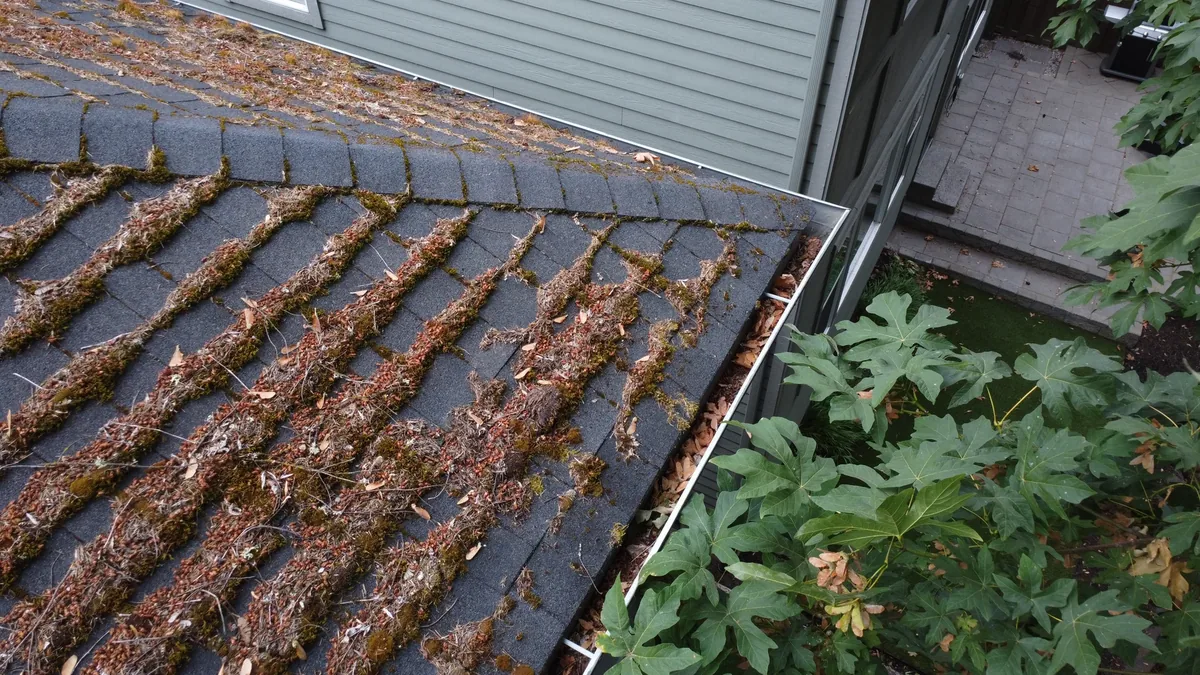
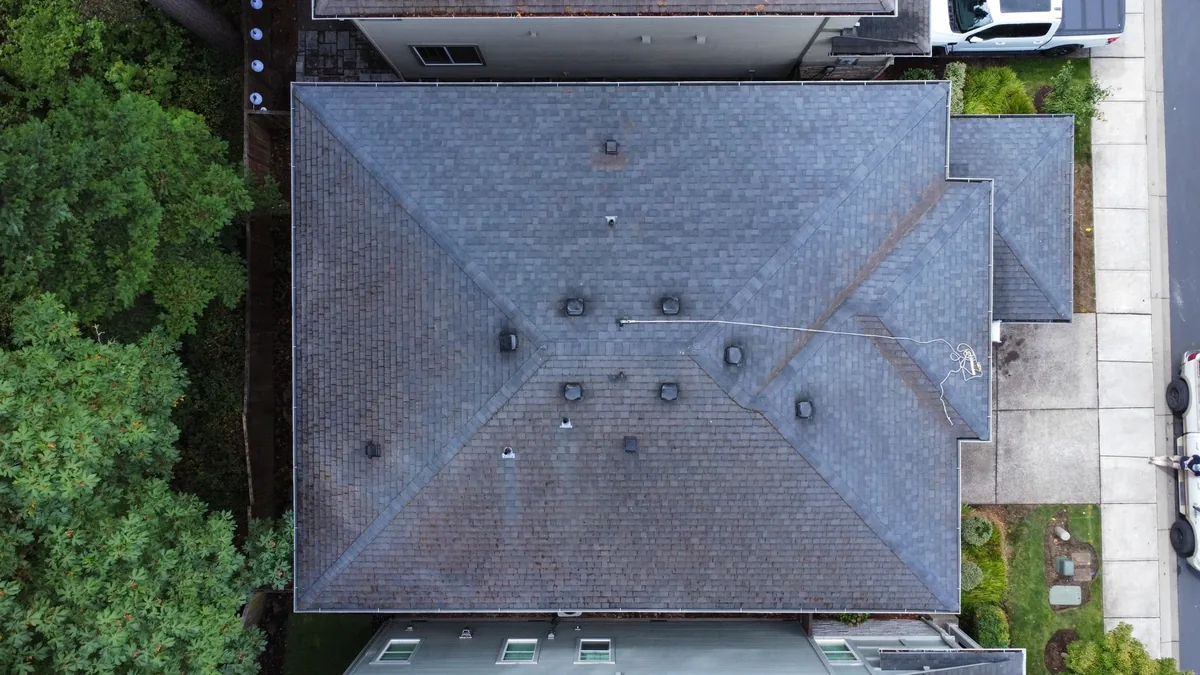
After the roof was brushed, the loosened material was collected rather than left around the home. We hauled away the moss removed from the roof, cleaned the gutters after the roof work, and then treated the full roof to kill remaining moss that was still attached. The work was completed without damage to the roof.
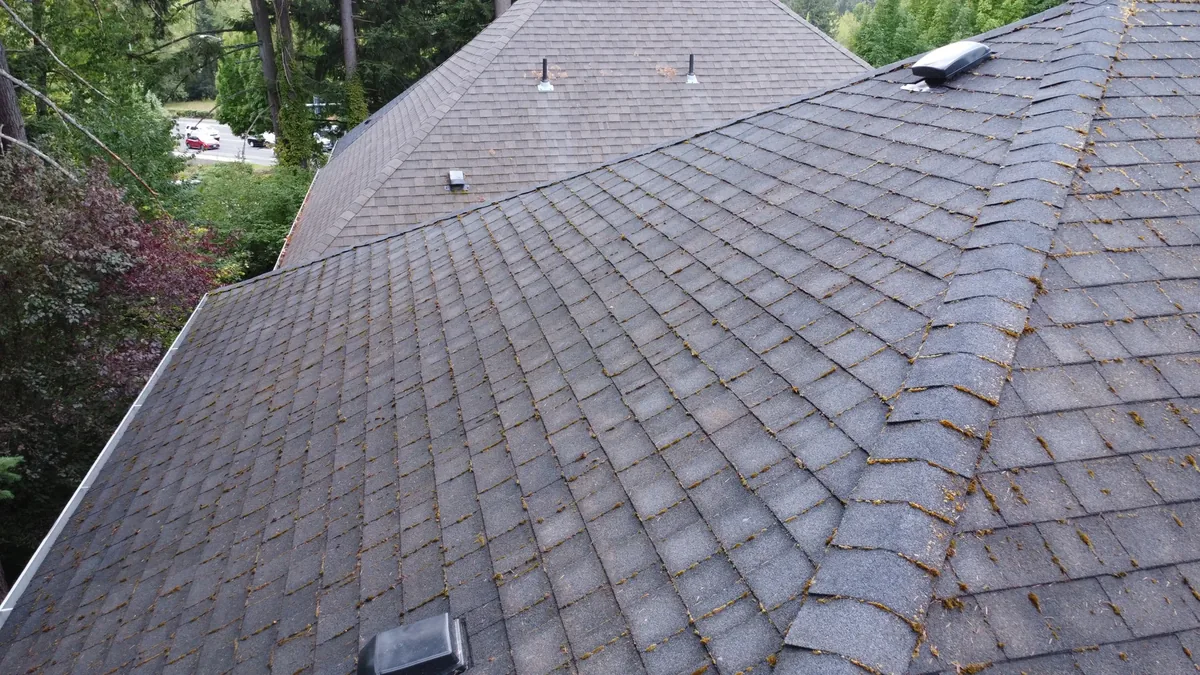
The treated photos show light application residue and small traces of growth left in the shingle edges. That is expected. Firmly attached material is allowed to break down with the treatment and weather rather than being forced off at the risk of damaging the roof.
Contractor Observation
The Rear Tree Line Explained the Uneven Buildup
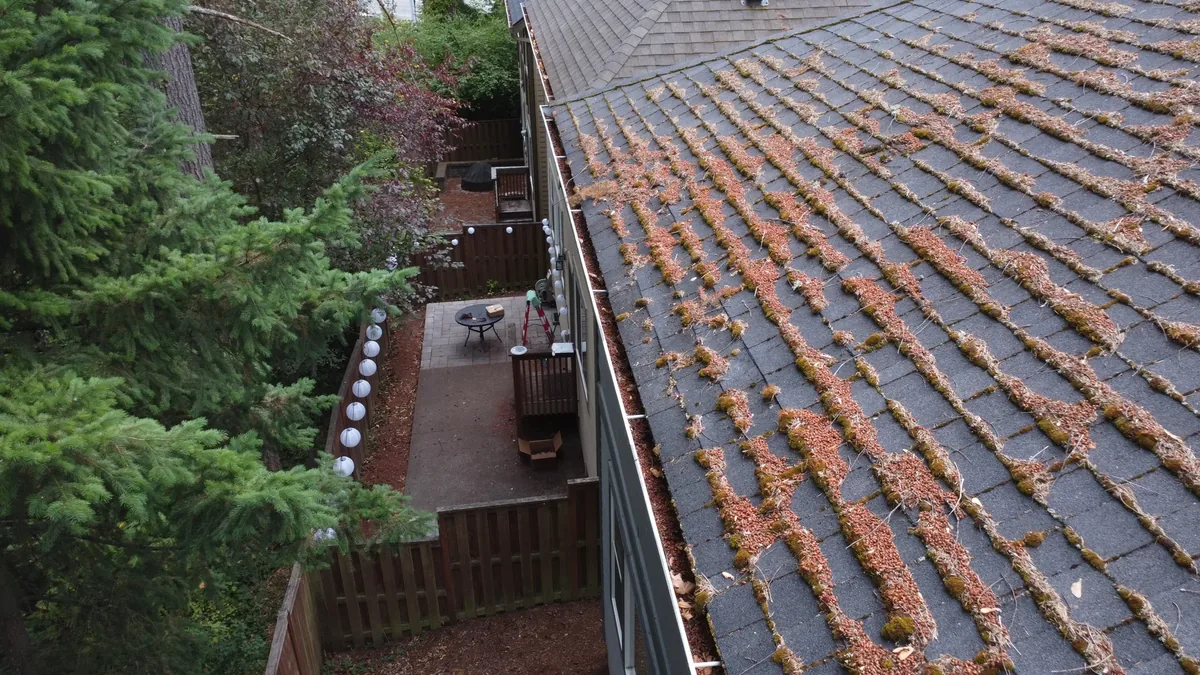
What stood out on this roof was how closely the moss pattern matched the tree cover. The rear slopes beside the conifers and broadleaf canopy had continuous moss and pine needles packed into row after row, while more open roof planes had noticeably less material. The issue was not simply an old roof looking dirty; shade and falling debris had created a much wetter microclimate on one side of the house.
That same debris pattern continued into the gutters. Cleaning the gutters after brushing mattered because the original buildup and the material released from the shingles both moved toward the eaves. Leaving it there just before fall rain would have undermined an otherwise complete roof-maintenance visit.