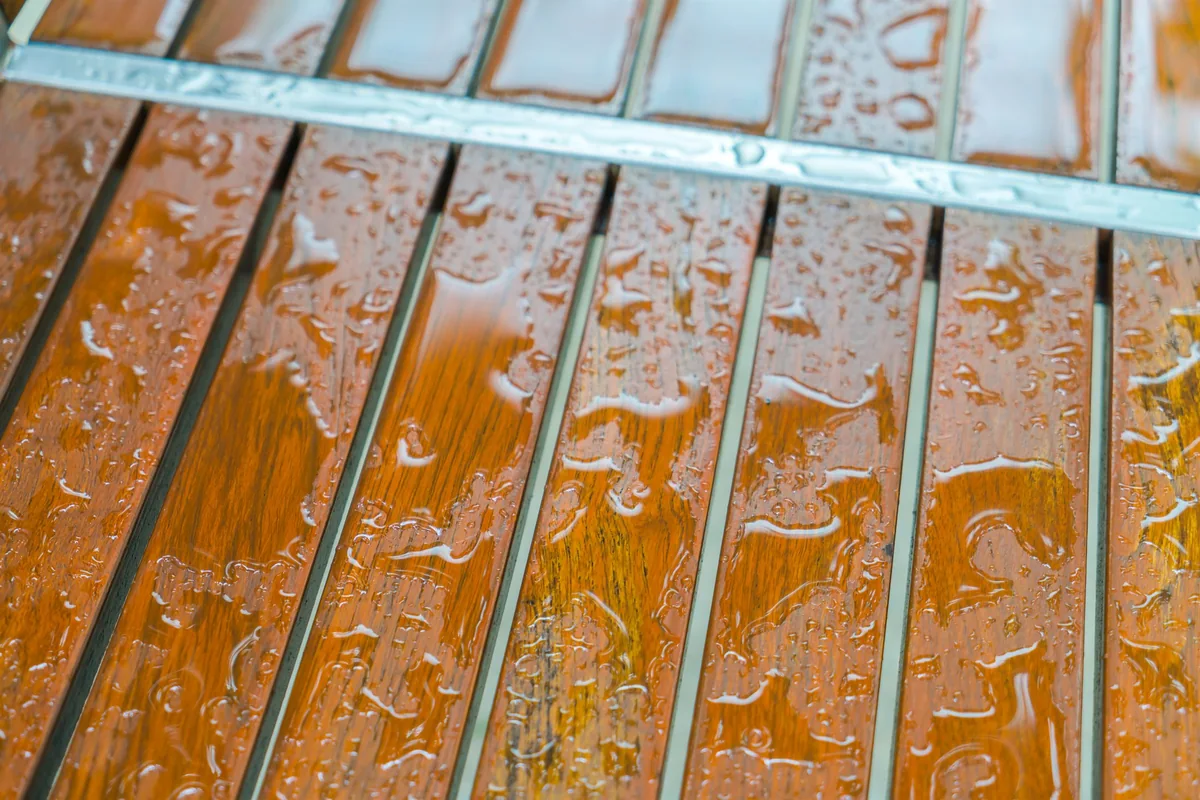
Surface FirstDecks Should Not Be Treated Like Driveways
Wood fibers, composite caps, paint, stain, age, sun exposure, and previous cleaning all change what a deck can tolerate. Excessive pressure can fuzz or gouge wood, expose splinters, force water into joints, or mark composite boards. We inspect the boards, rails, steps, fasteners, coating, rot, and nearby siding before recommending a method.
Deck cleaning targets appropriate surface buildup; it does not repair soft boards, loose rails, failed coatings, or structural movement. A carpenter or refinisher should address those conditions first.
Oregon MoistureWhy Beaverton Decks Turn Green and Slick
Shade from roofs, fences, and trees slows drying. Leaf litter stays between boards, planters trap moisture, and north-facing stairs can grow algae before the open deck looks dirty. Cleaning can remove accessible growth, but airflow, drainage, and shade determine how quickly it returns.
We discuss furniture, grills, planters, electrical items, gates, pets, water access, and what lies beneath the deck. If a patio or concrete landing is part of the project, it can be scoped separately through patio cleaning.
MethodA Controlled Deck-Cleaning Process
- Identify wood or composite type and existing finish.
- Document loose, rotten, splintered, or failing areas.
- Choose chemistry, dwell time, agitation, and rinse pressure for the material.
- Work around rails, stairs, siding, landscaping, and drainage.
- Review expectations after drying; wet wood can temporarily look darker.
Cleaning and refinishing are different scopes. We do not promise that cleaning alone will restore gray, sun-damaged, or failed stain to a like-new color.
EstimateWhat to Send for a Deck Cleaning Quote
Include wide daylight photos, close-ups of boards and coating, approximate dimensions, number of levels and stairs, access, items on the deck, known repairs, and whether it is wood or composite. Pair nearby vertical work with fence cleaning or siding care with house washing.
Wood and CoatingsCleaning Is Not the Same as Stripping or Refinishing
A cleaning scope removes suitable surface contamination. It is not automatically a stain-strip, brightening, sanding, or refinishing service. Old coatings may be uneven before work and may look more obviously failed once dirt is removed. Gray sun-weathered wood also does not return to a uniform new-board color from washing alone.
If the goal is new stain or paint, coordinate with the refinisher about preparation and dry time. Soft boards, protruding fasteners, loose rails, failed steps, and rot belong with a carpenter first. Cleaning a structurally questionable deck is not worth the risk.
Ongoing CareHelp a Deck Dry Between Oregon Storms
Clear leaves from board gaps and stair corners, move planters occasionally, avoid rugs that remain wet, and keep safe airflow around the perimeter. Check where roof runoff lands and whether nearby irrigation repeatedly wets the same boards. These conditions often explain why one section turns green sooner than the rest.
After cleaning, allow adequate drying before replacing furniture or scheduling a coating. Shade, temperature, board moisture, airflow, and product requirements all affect timing. A fixed number of hours is less reliable than the actual condition of the deck.