Roof Conditions
Tree Shade Created Moss Where the Sun Could Not Dry the Roof
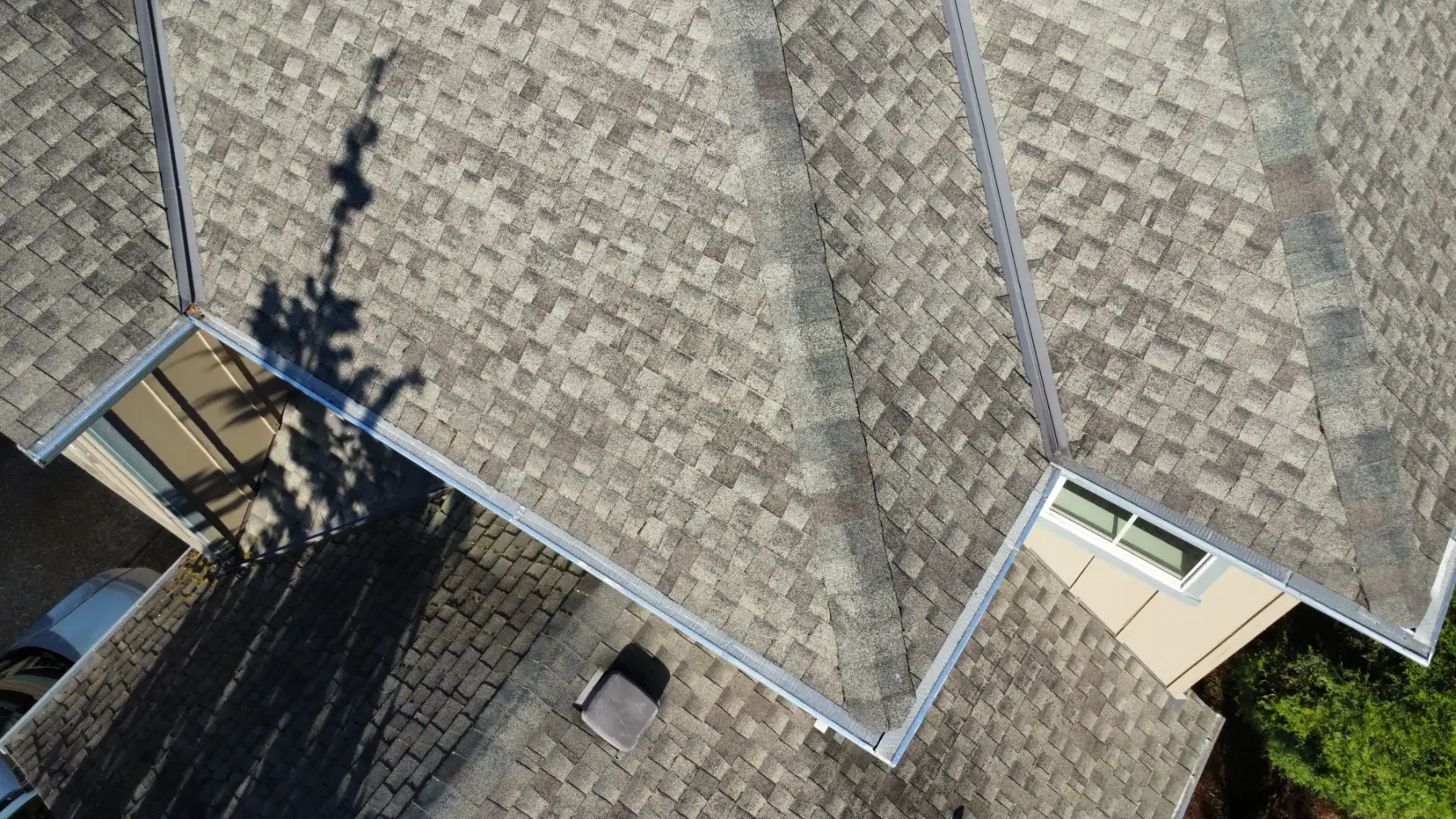
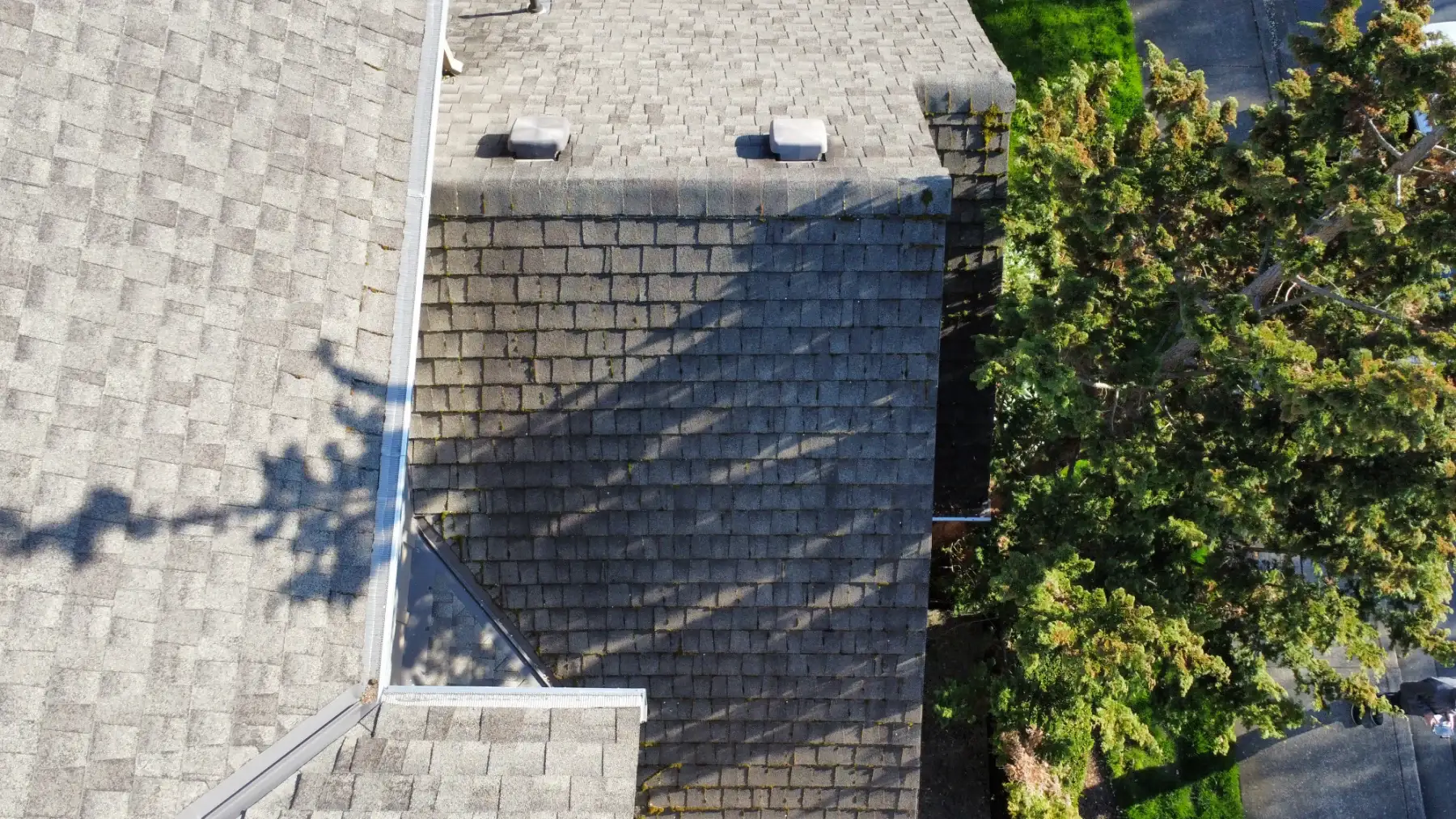
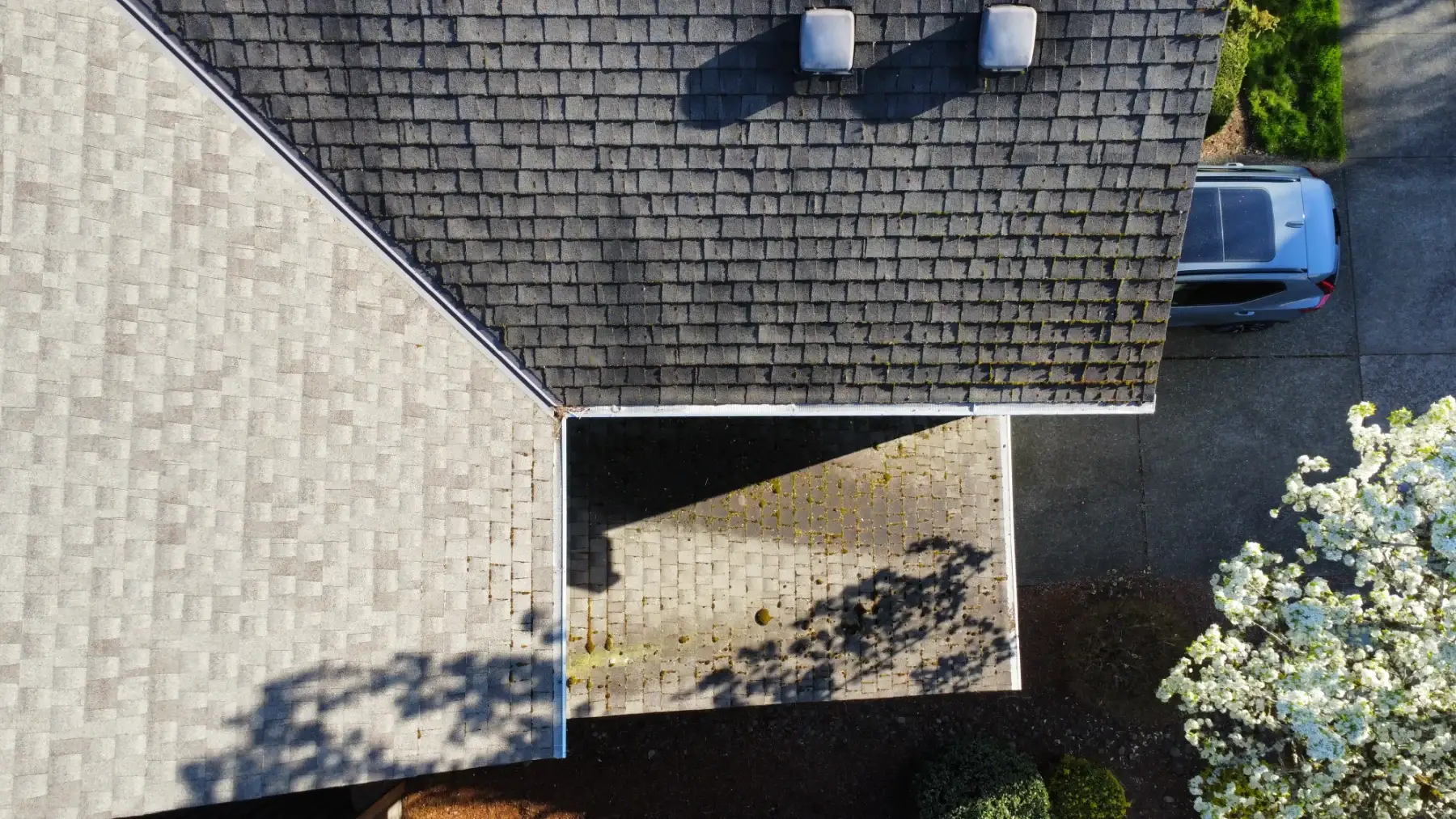
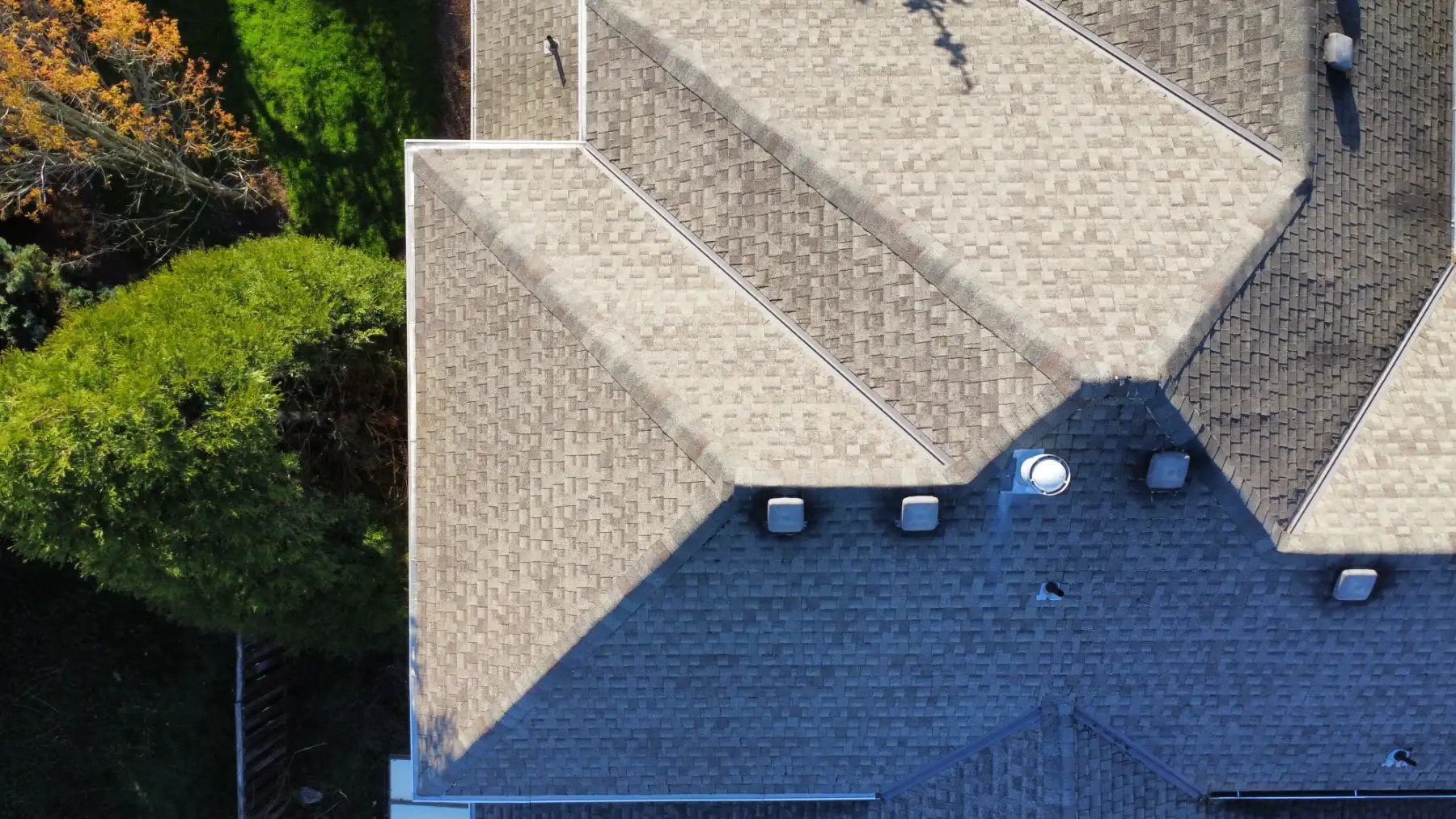
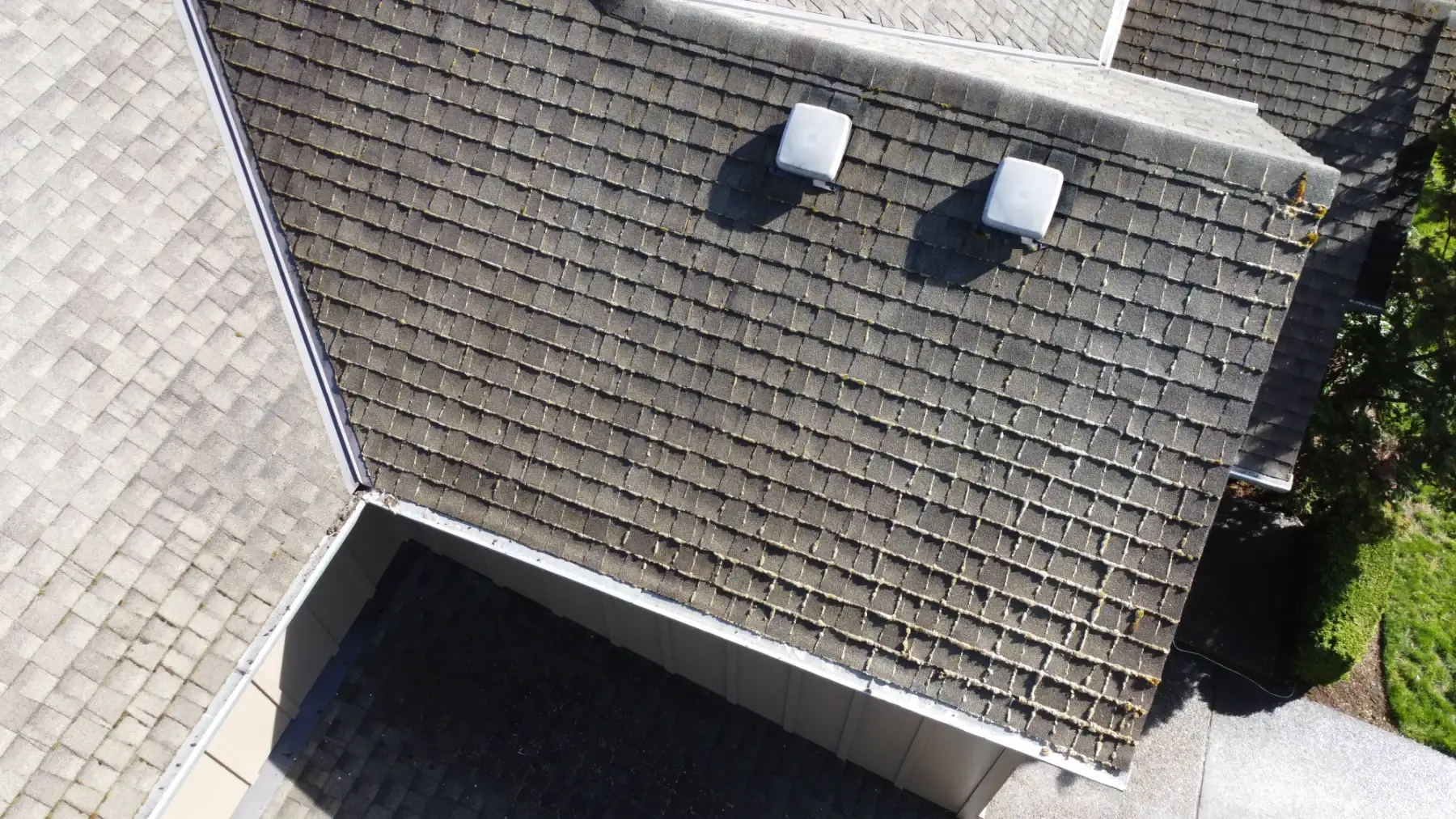
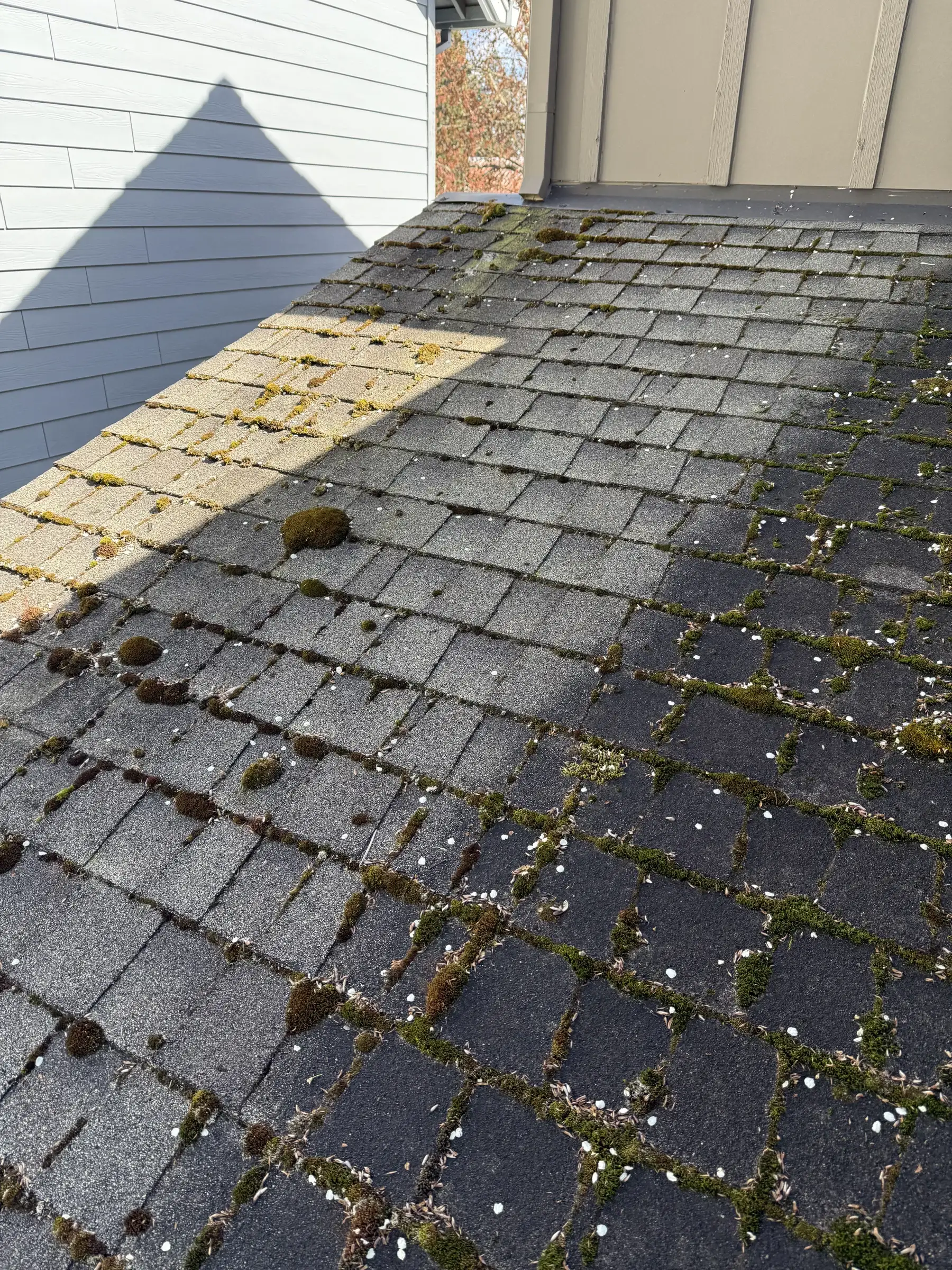
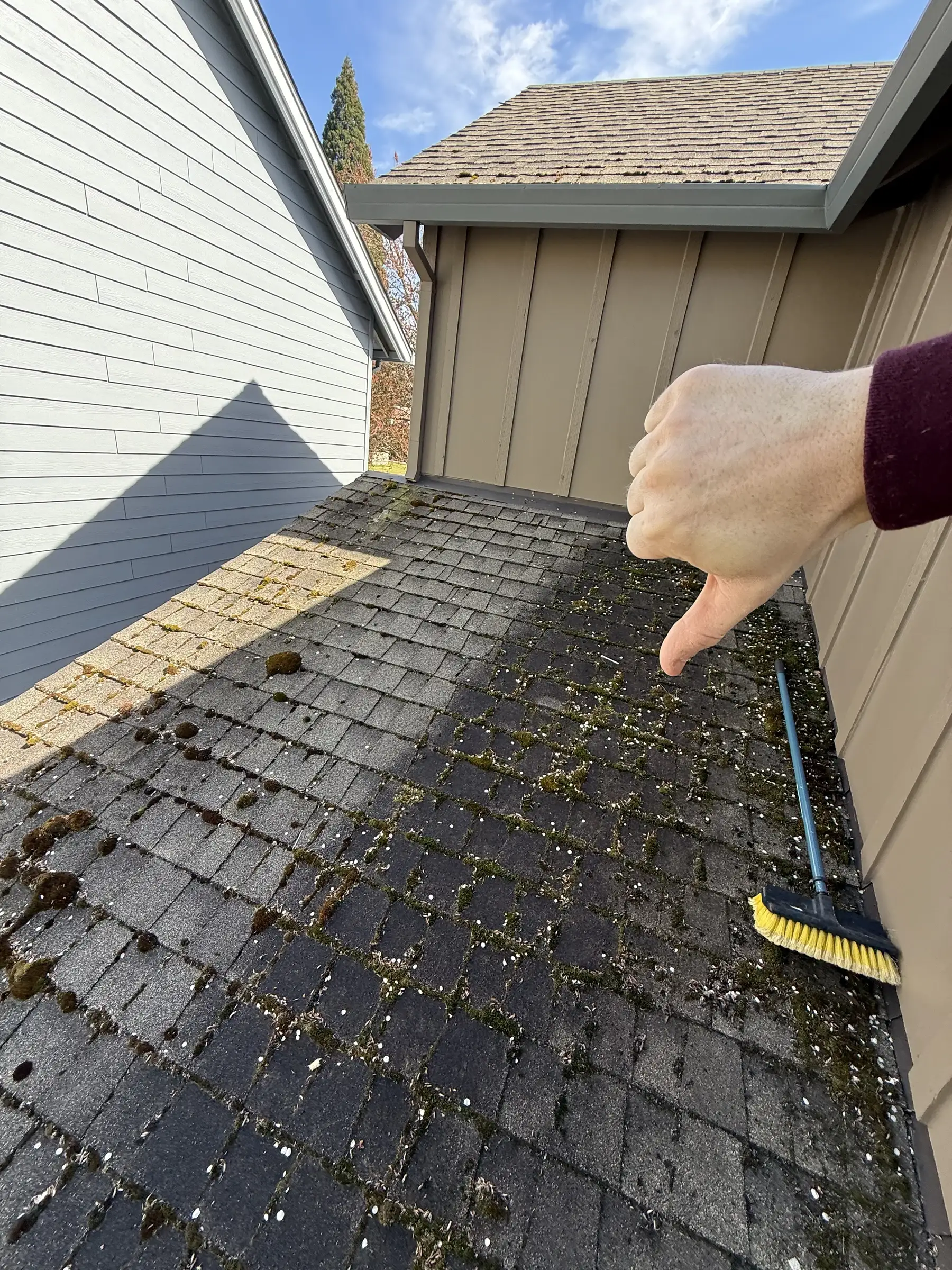
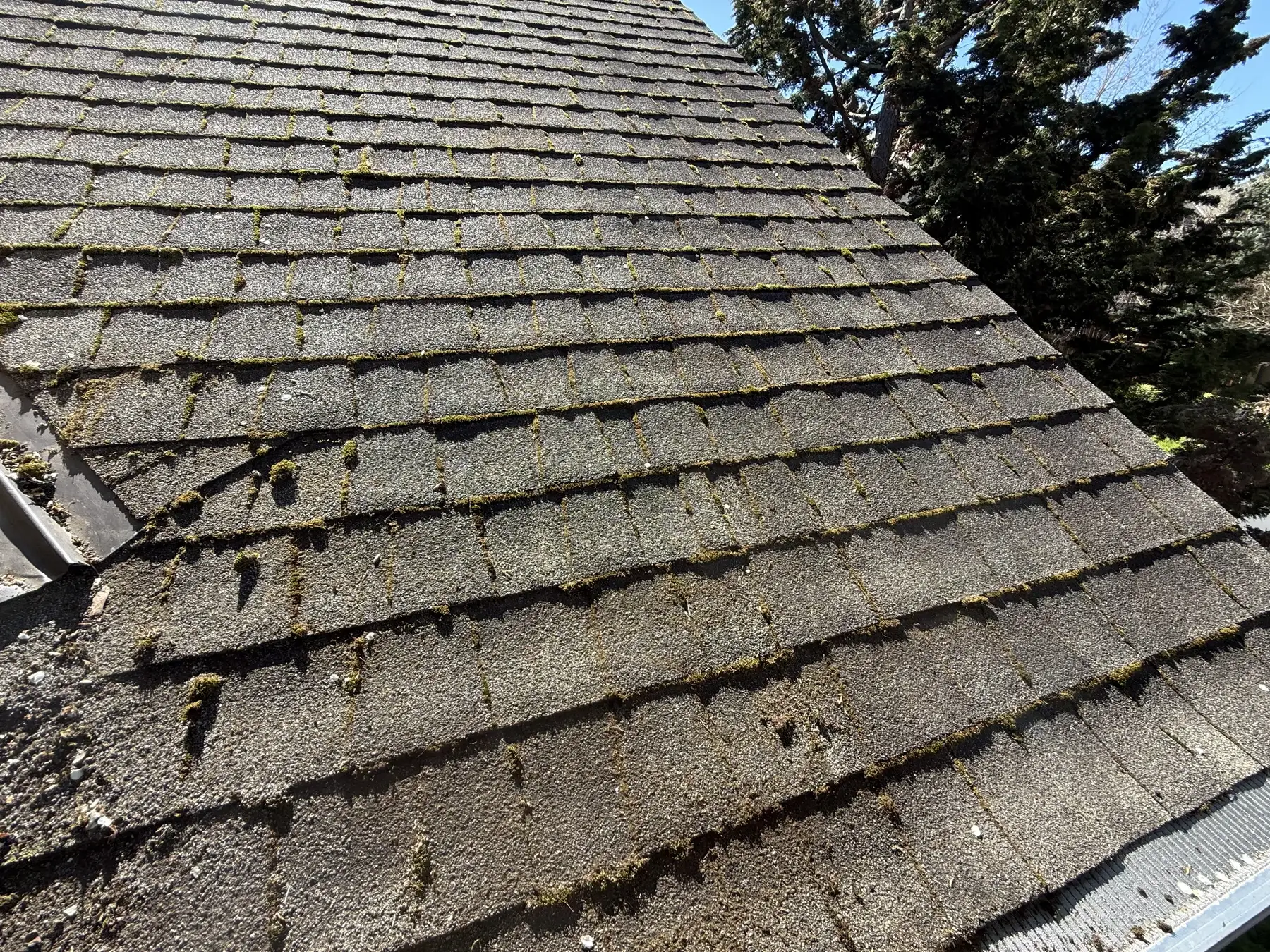
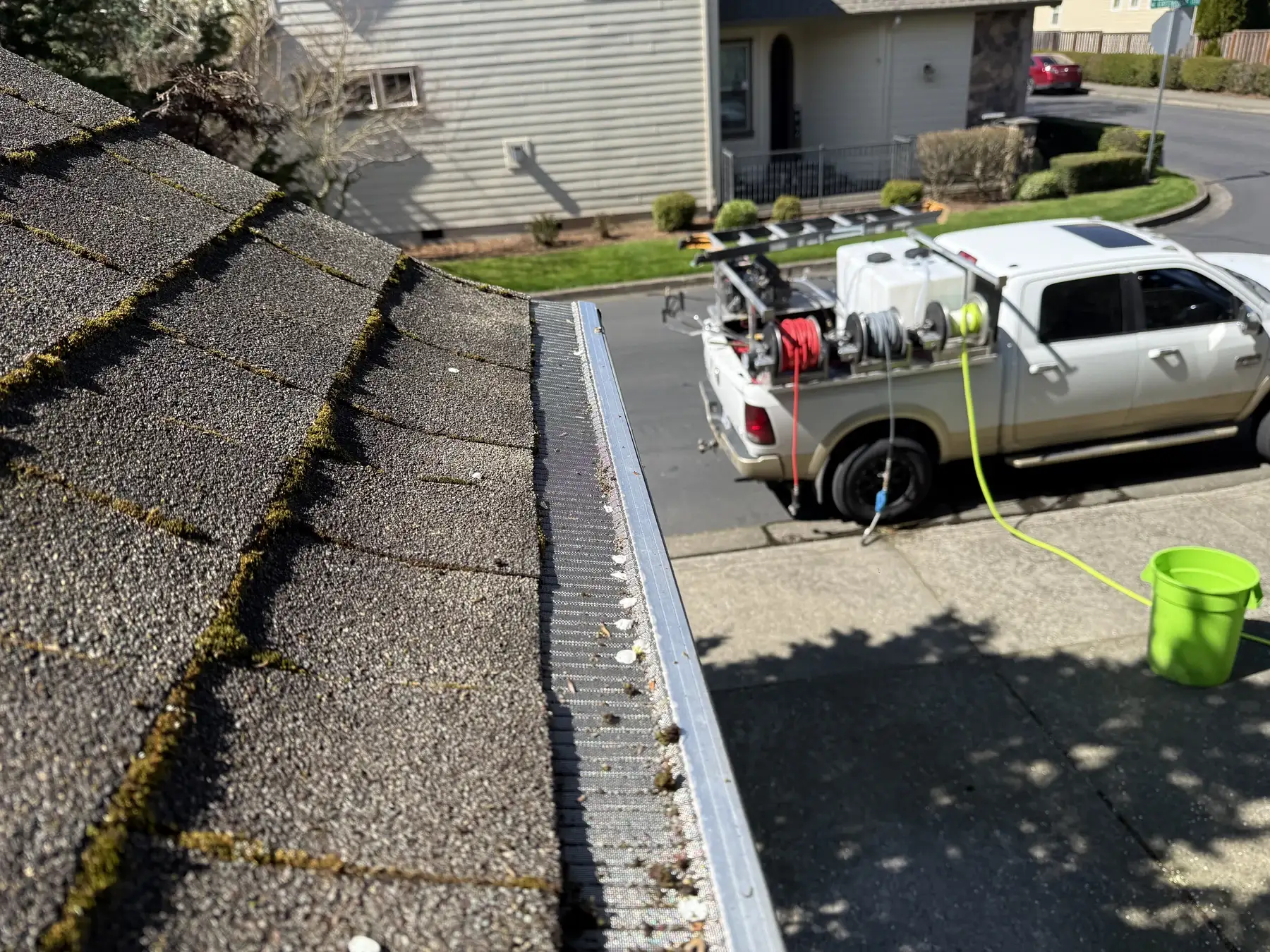
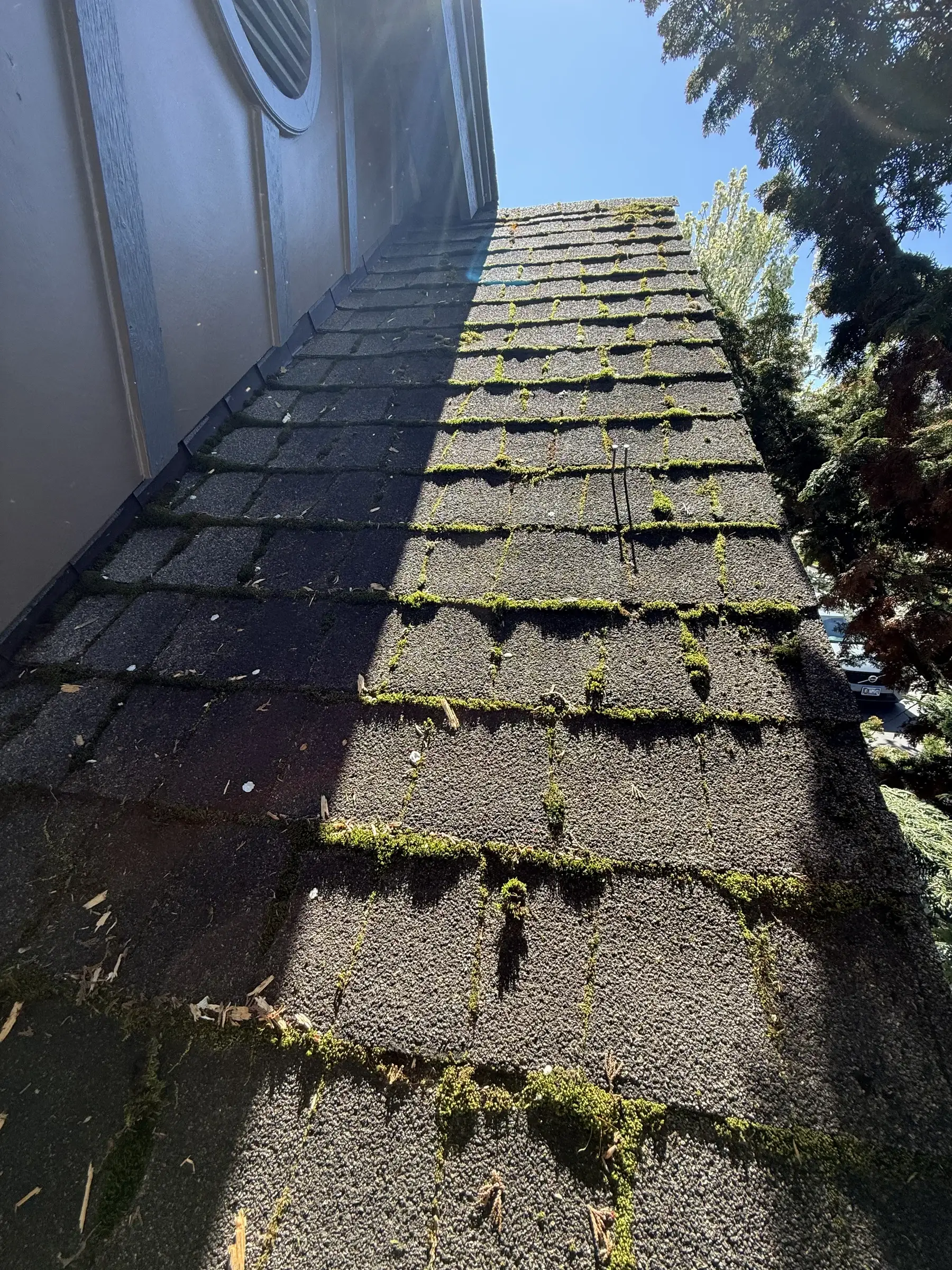
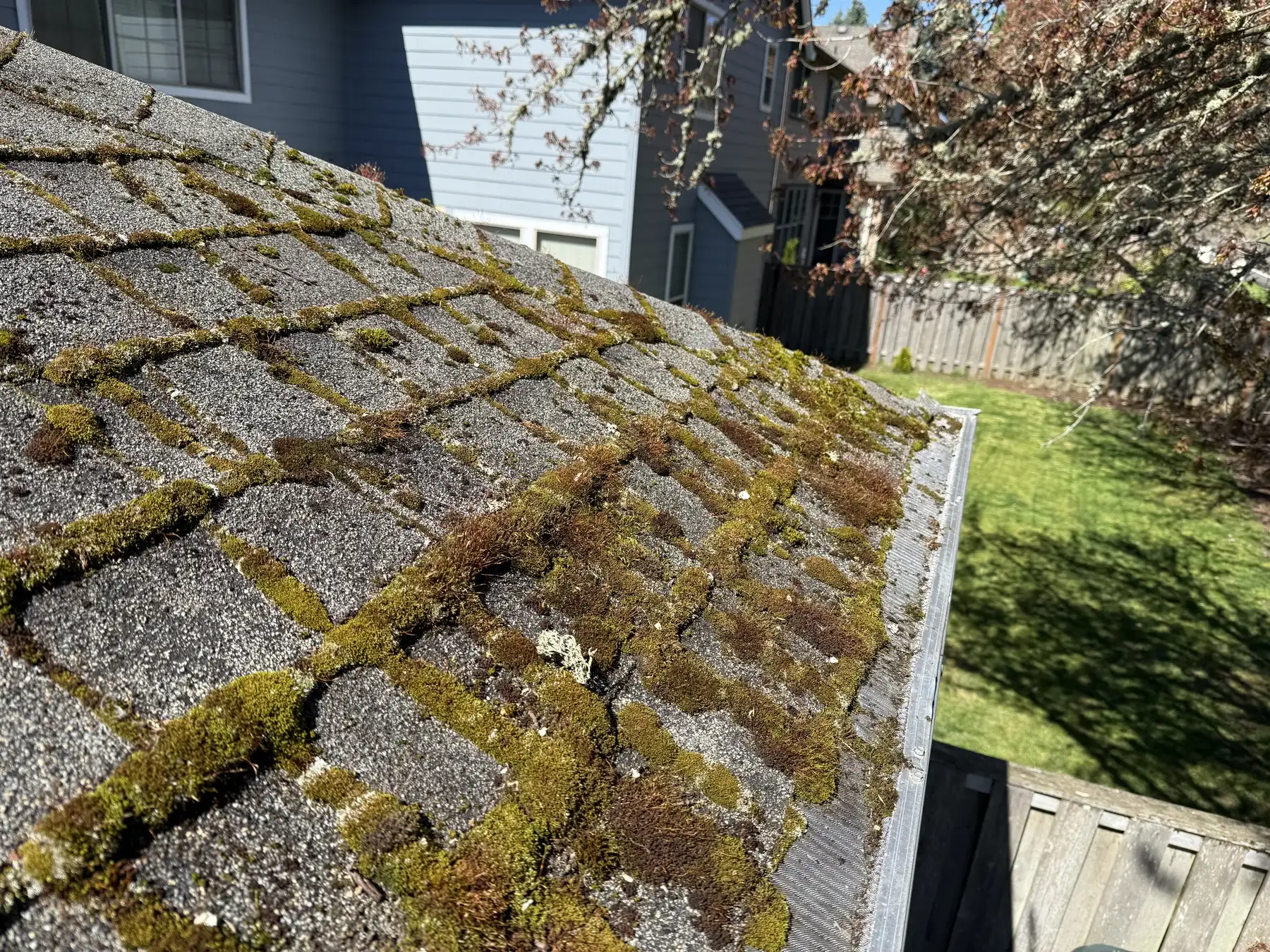
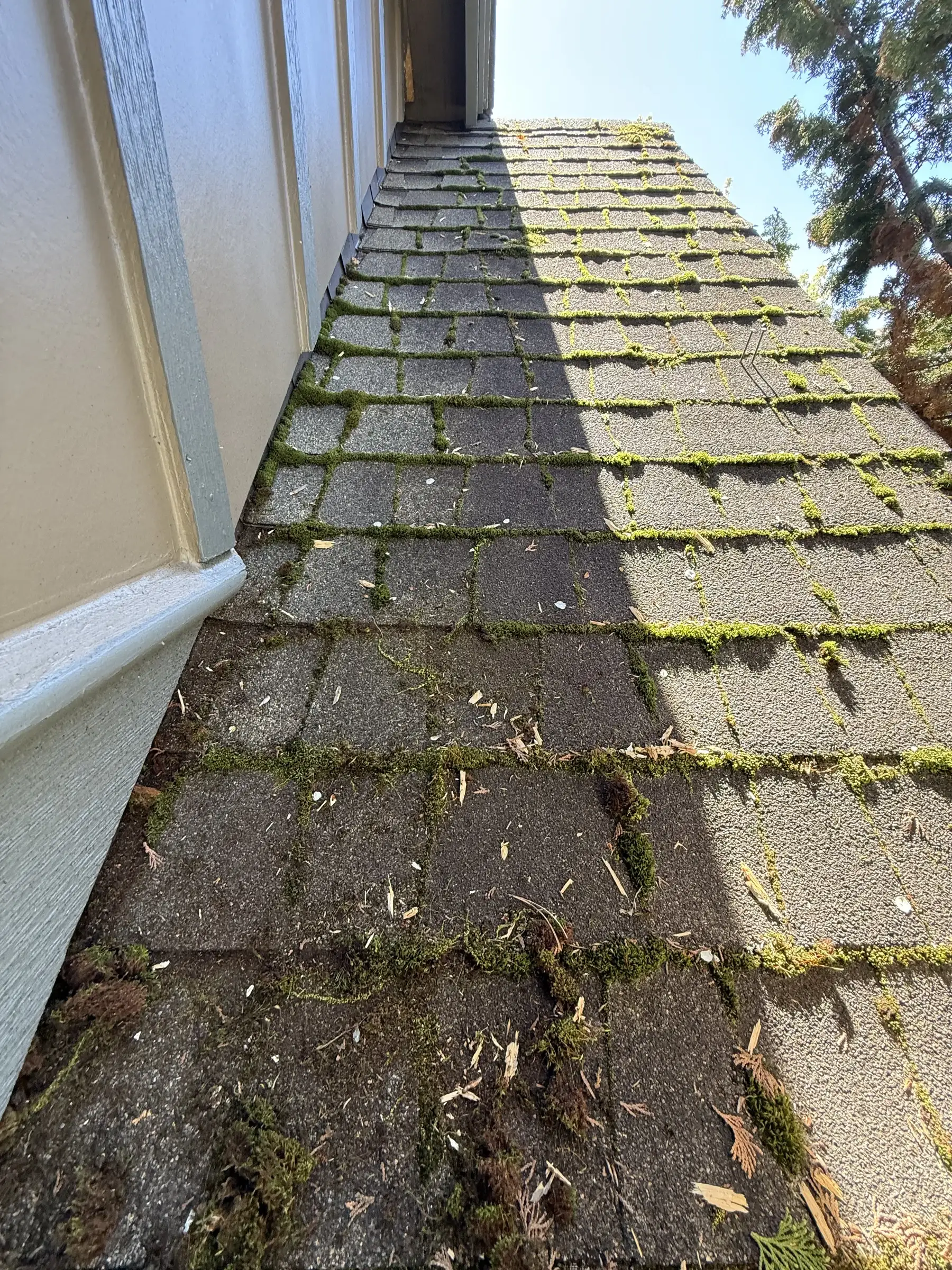
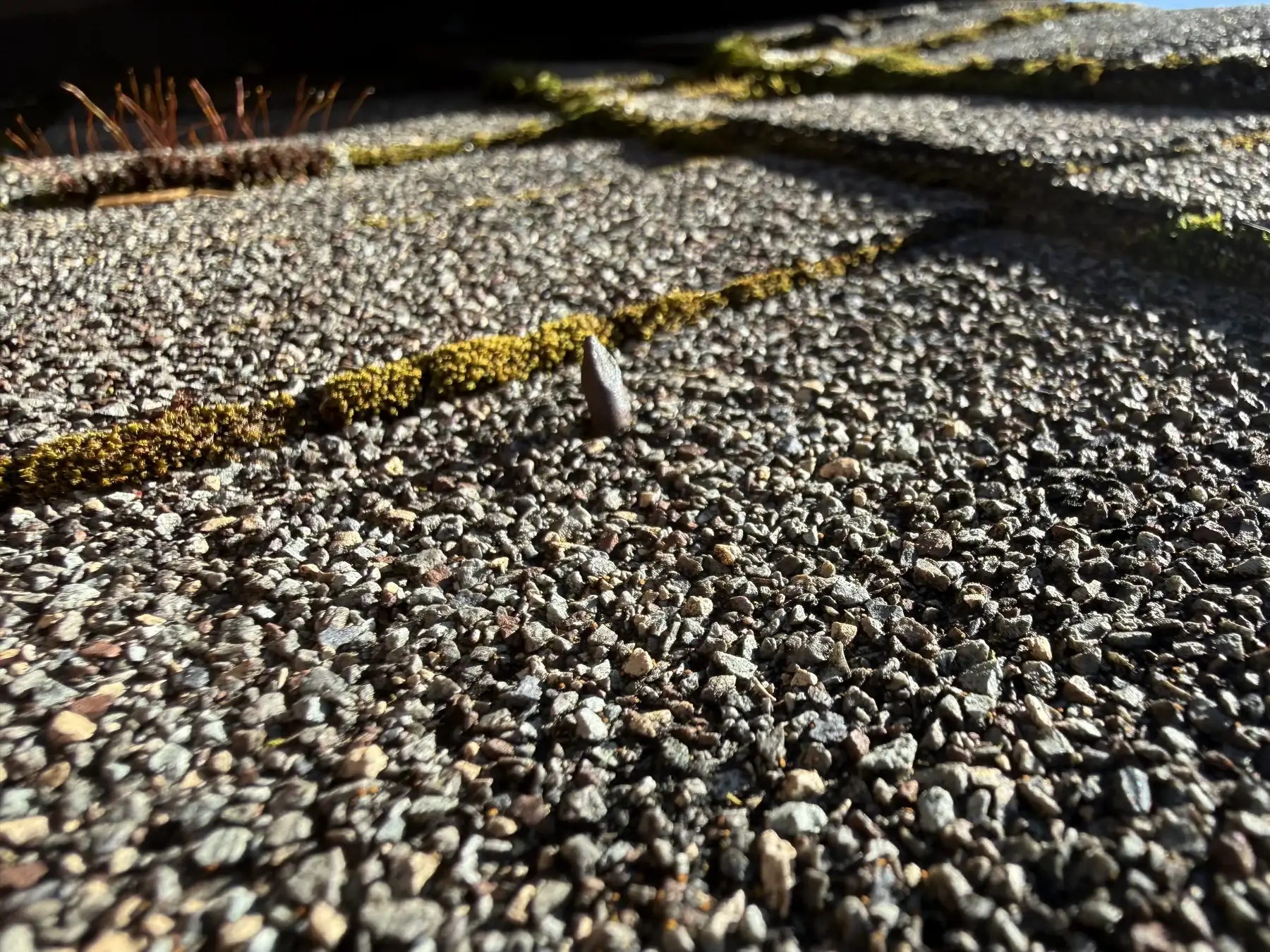
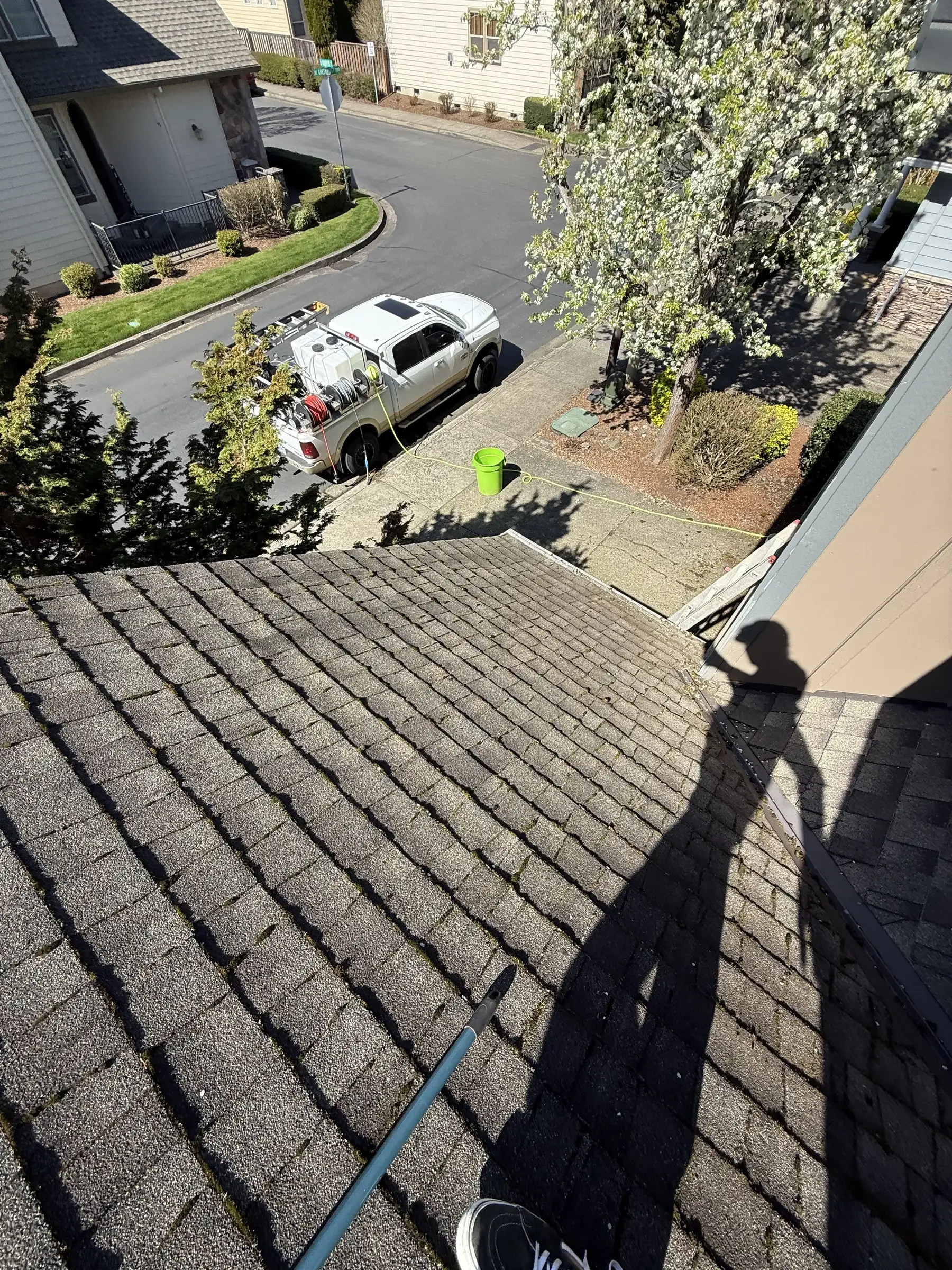
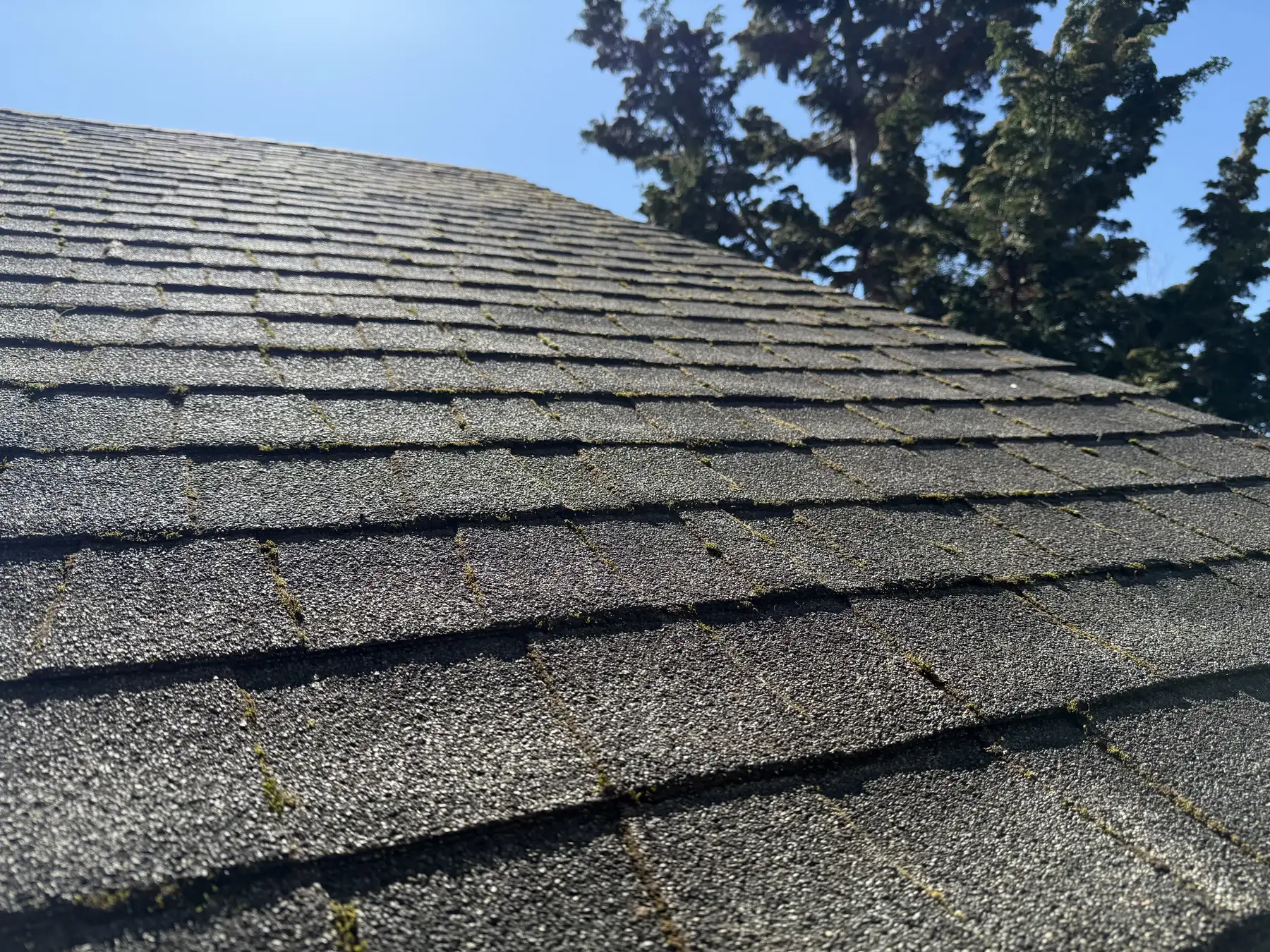
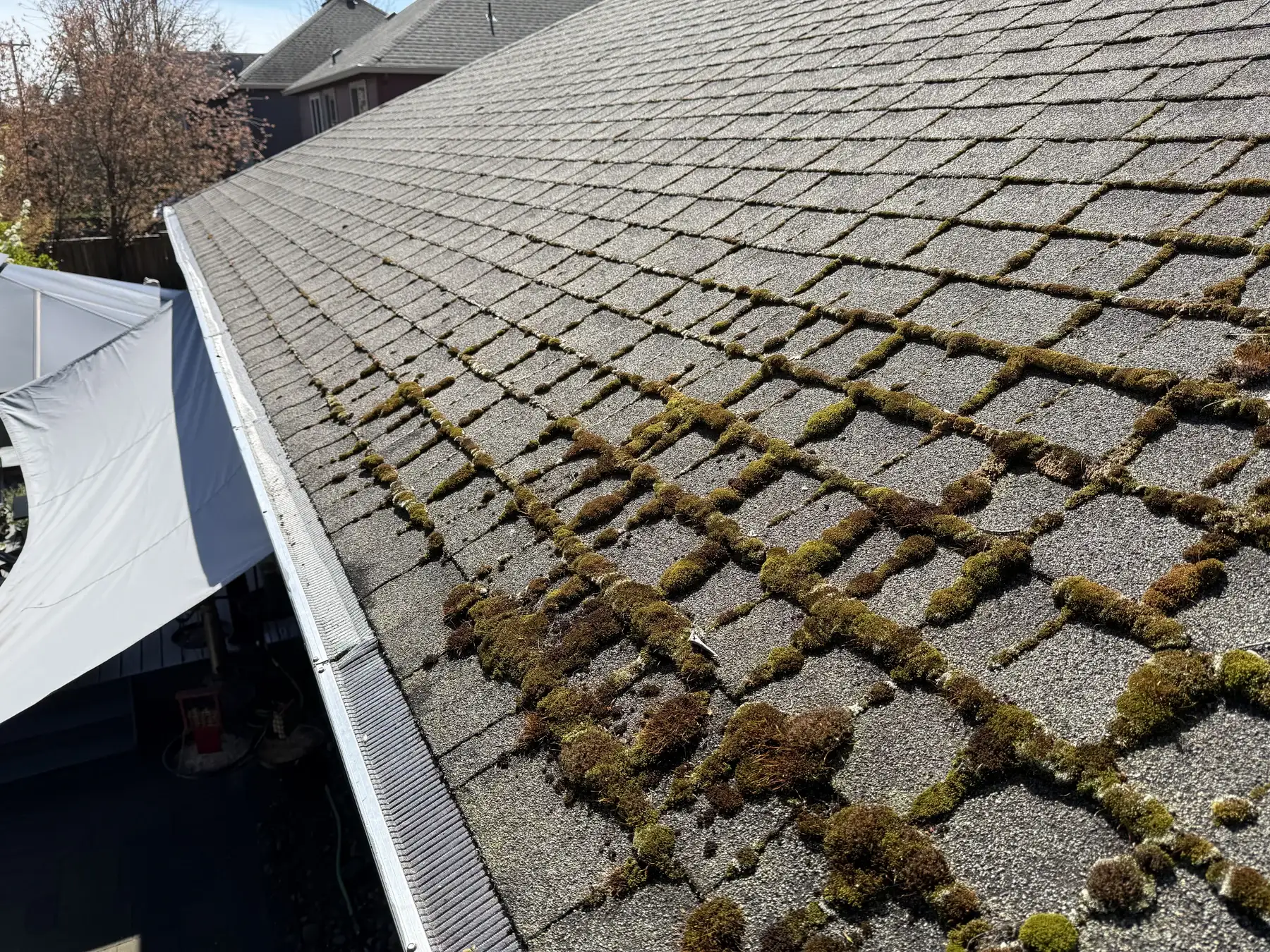
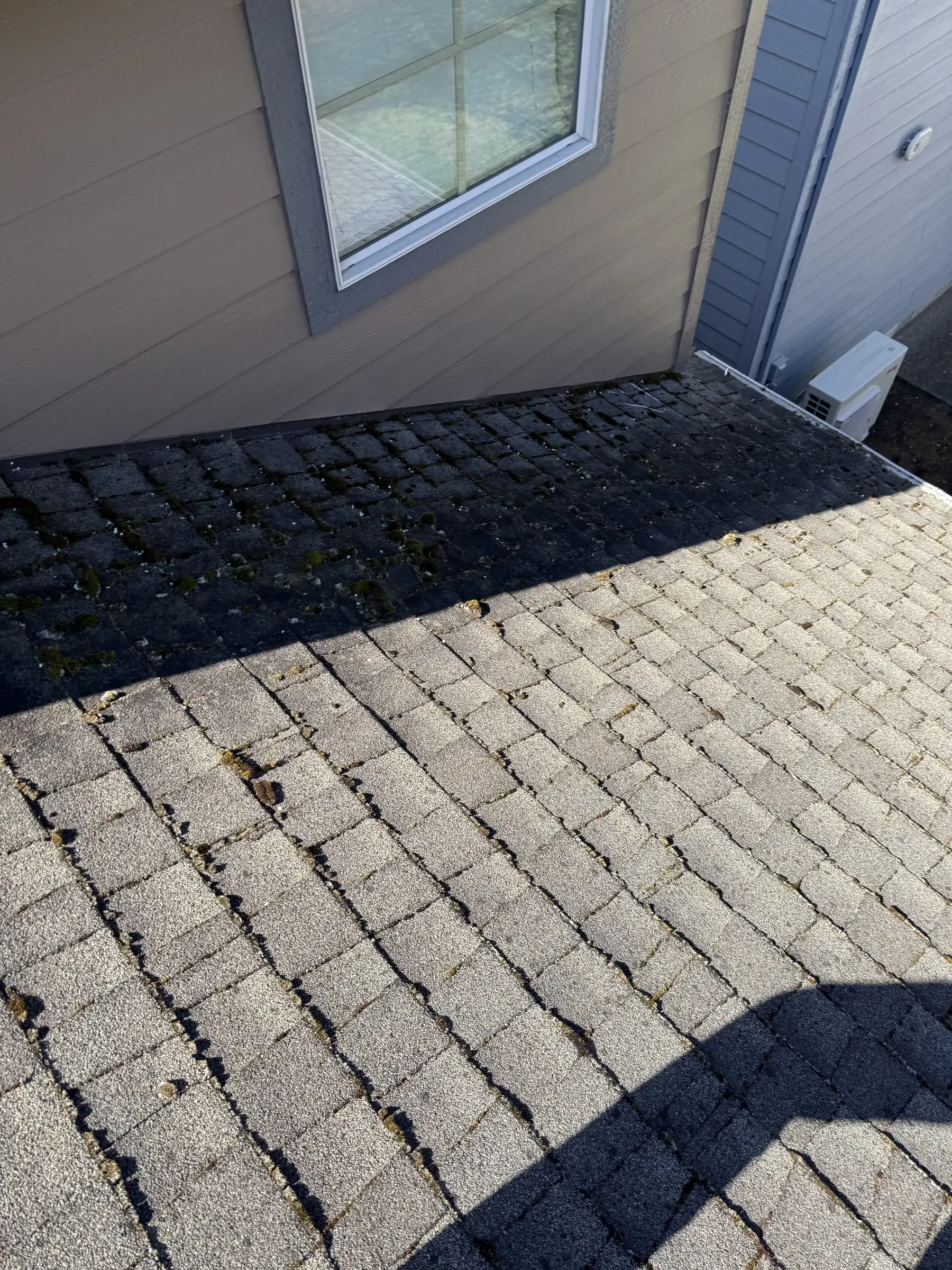
The moss pattern told us something important here: this was not a neglected roof. It was a mostly healthy roof with a few damp areas that stayed shaded because nearby trees and roof geometry blocked sun. In the photos, the worst growth follows the shingle rows on side roof sections and along roof edges rather than spreading evenly across every plane.
That detail changed the way the job was approached. Instead of treating the roof like a heavy moss removal project, the work stayed focused on the visible problem areas. Moss that released safely was removed by hand and with light brushing. Firmly attached material was not scraped hard because asphalt shingle granules matter more than making one same-day photo look perfect.
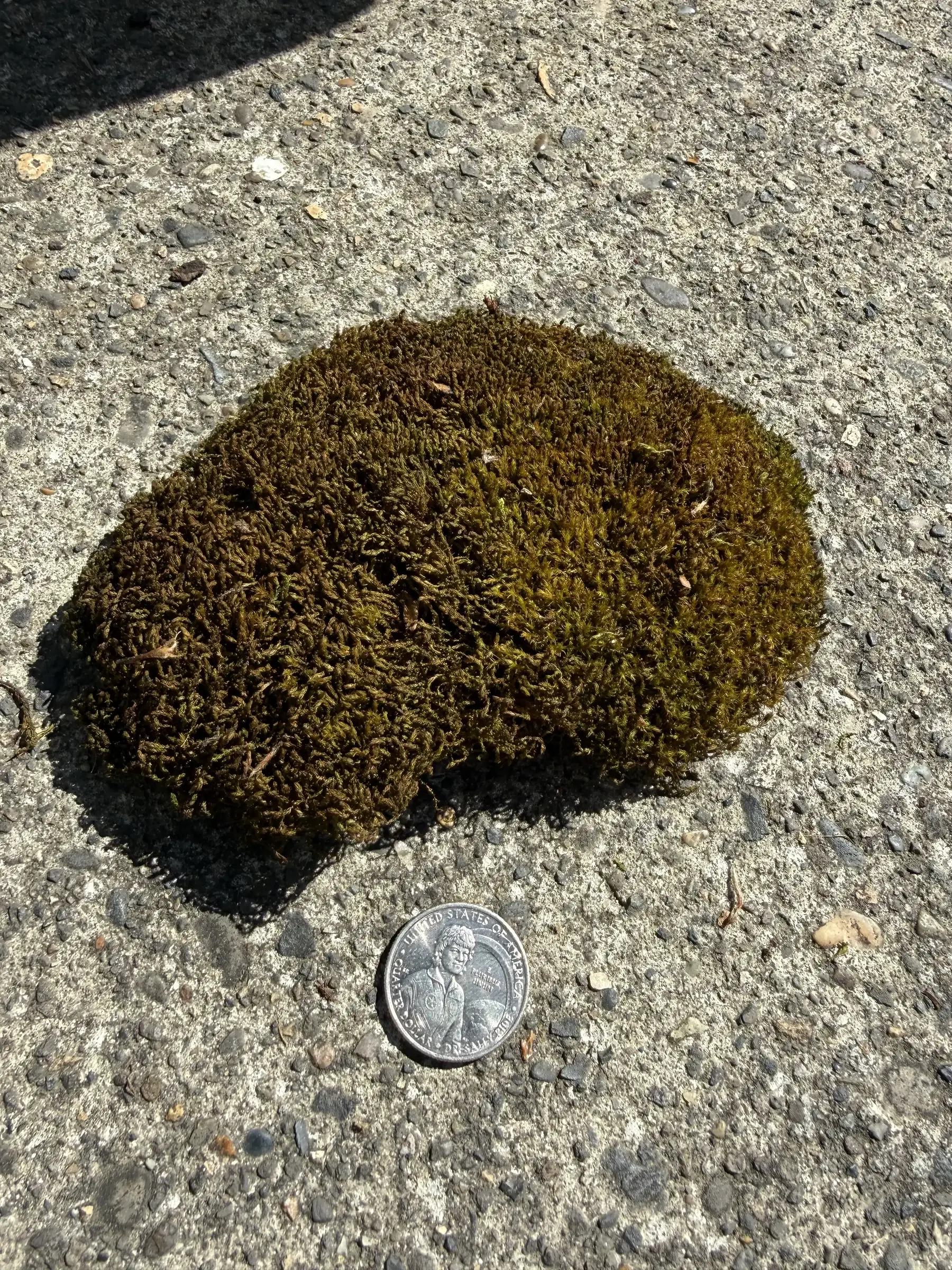
The removed moss clump photo shows how much organic material can come out of a small area. Even when only part of the roof needs service, those shaded strips can hold enough growth to catch an HOA's attention and keep moisture sitting against the shingles.
Treatment Work
Treating the Areas Most Likely to Grow Back
After loose moss was removed from the shaded sections, the affected roof areas were treated. Treatment was the better fit for the remaining growth because the roof did not need aggressive cleaning across the whole surface. The treated moss and remaining discoloration should be expected to change gradually with weather instead of disappearing instantly.
This kind of partial scope can be a practical choice for Beaverton homes under trees. It addresses the HOA-visible moss, reduces the organic buildup in the dampest sections, and avoids unnecessary contact with roof planes that were already in good shape.
For roofs with full gutters below mossy areas, gutter cleaning may need to be paired with roof work. On this project, the provided scope centered on the roof sections and treatment areas, so the page only documents that work.