Process
Cleaning the Roof Before Treating the Whole Surface
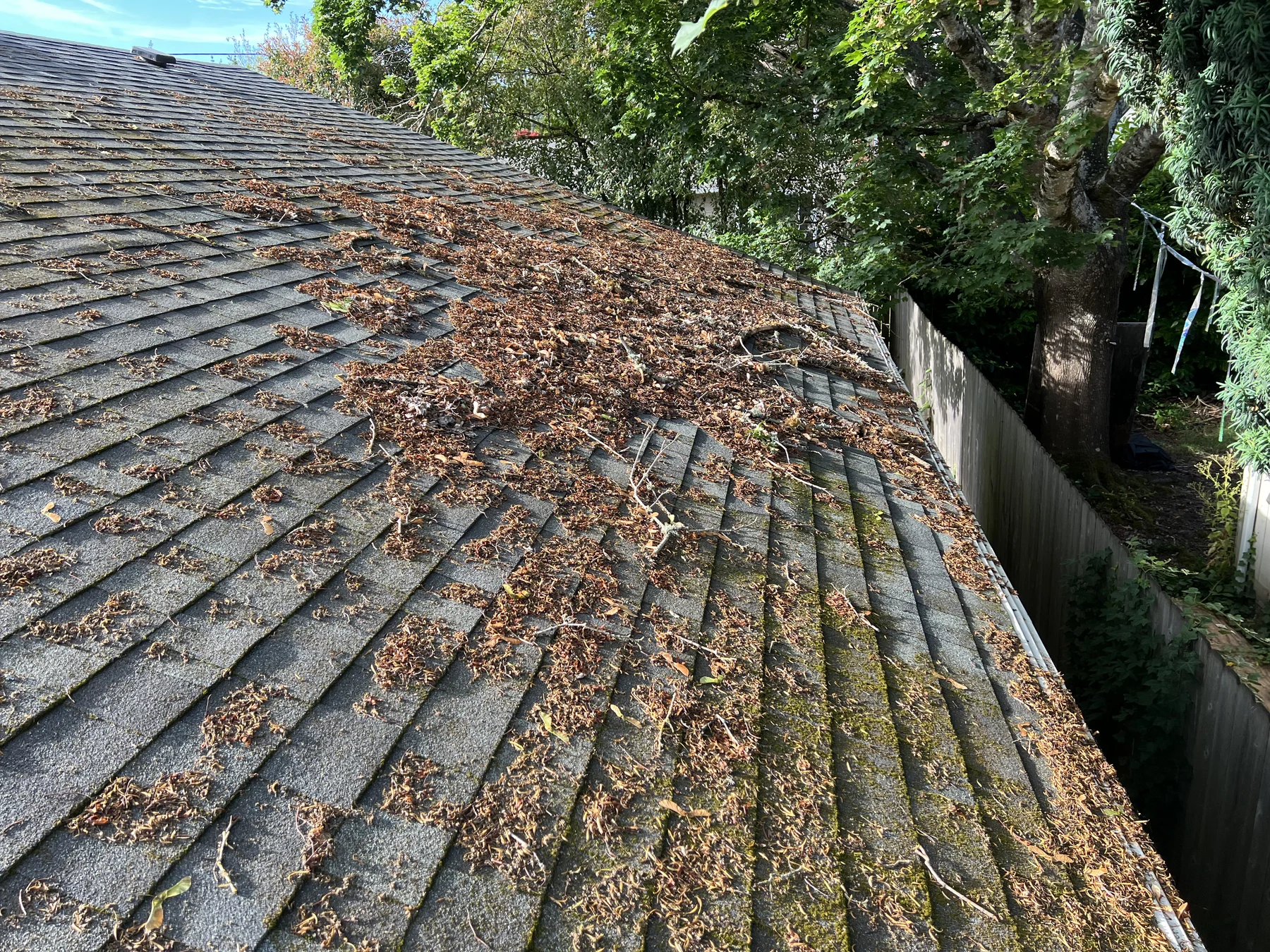
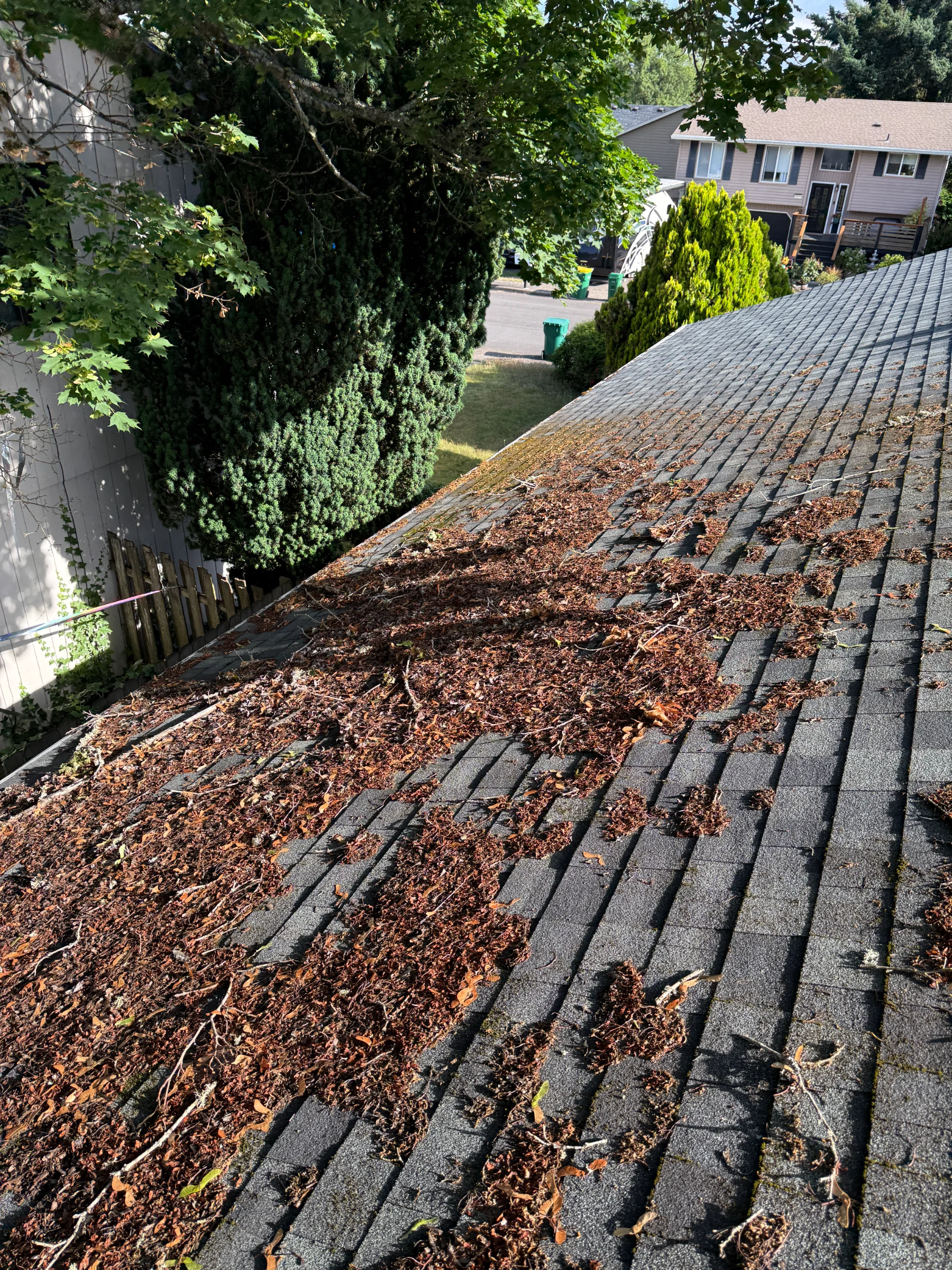
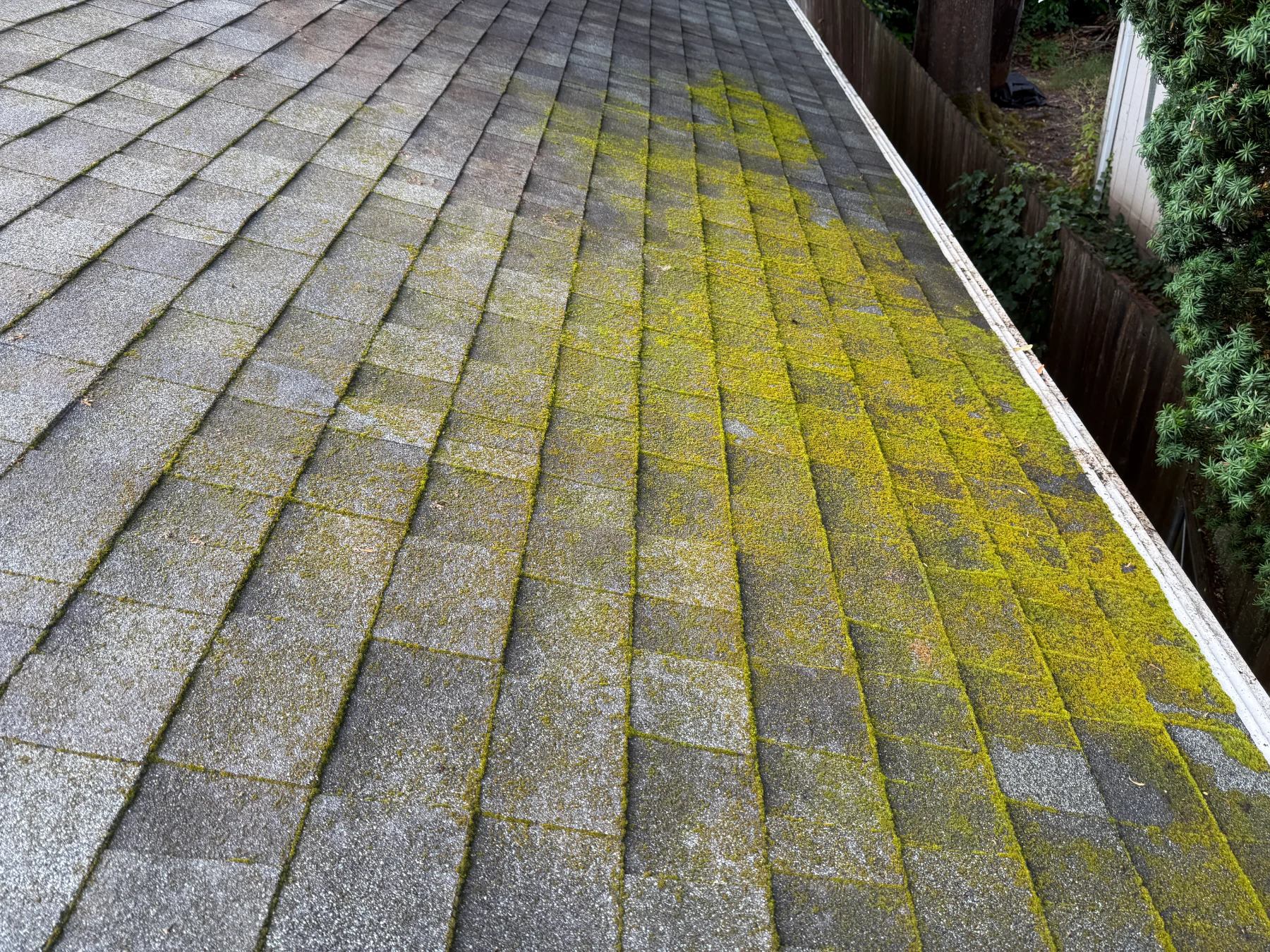
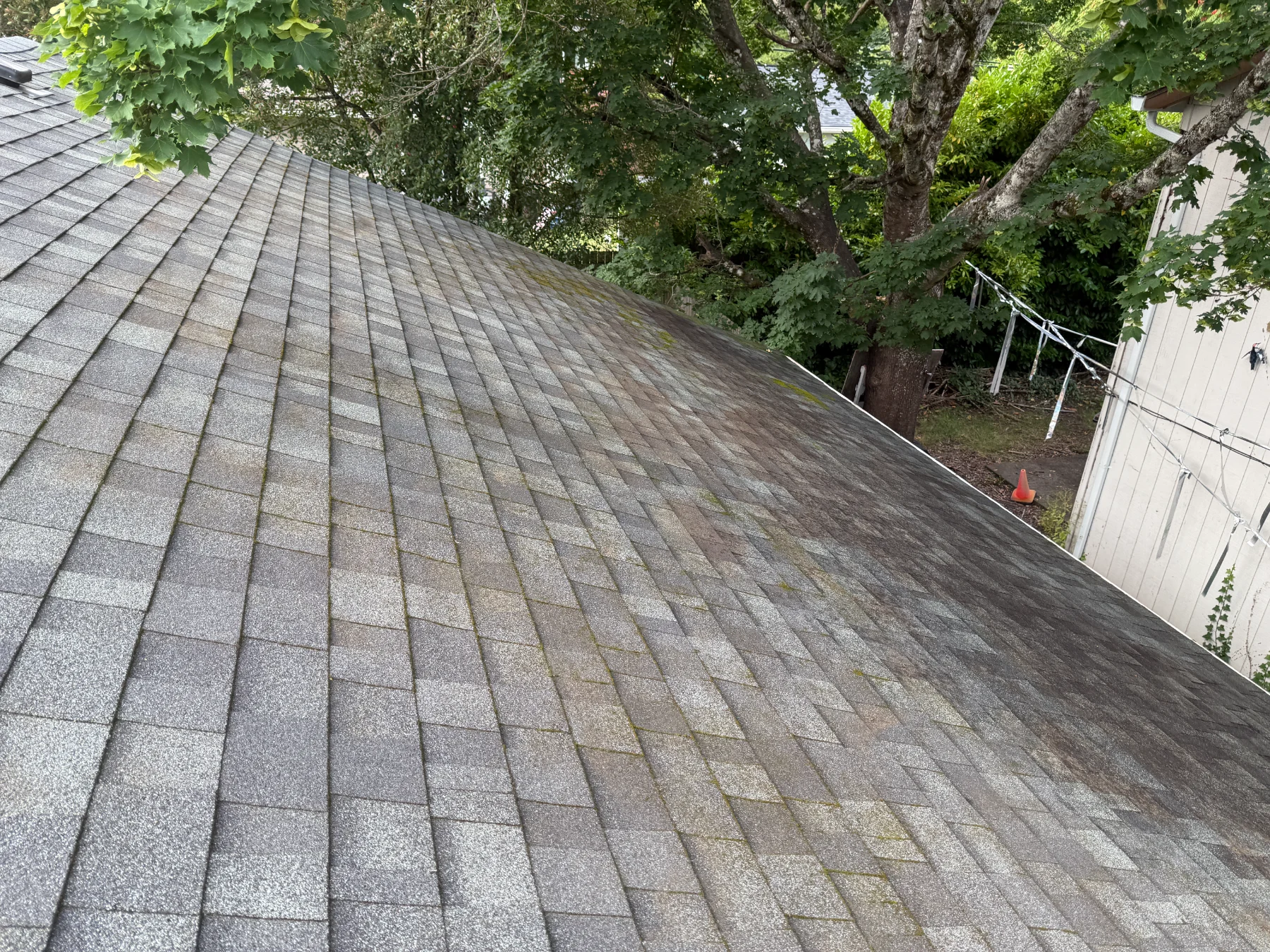
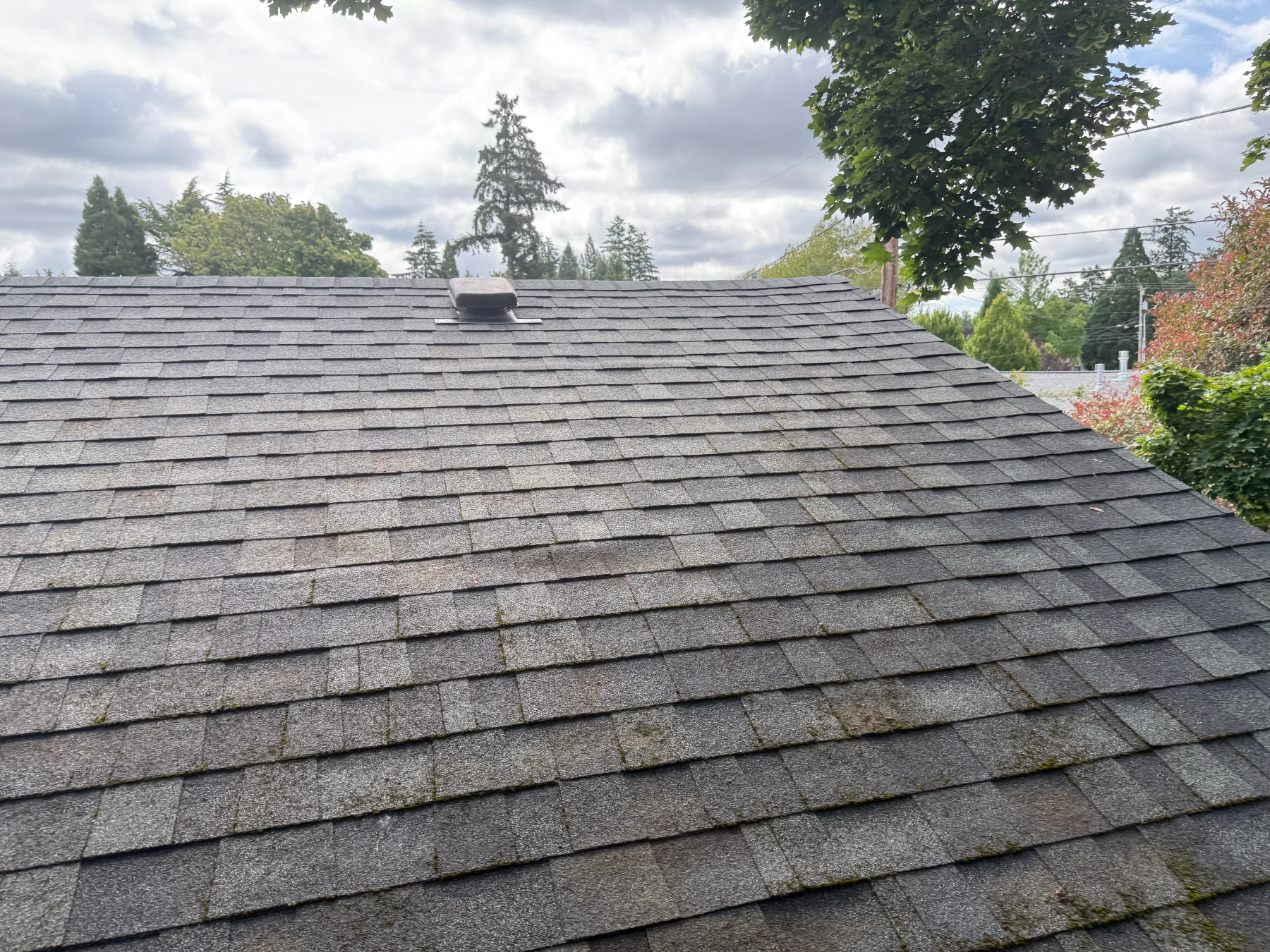
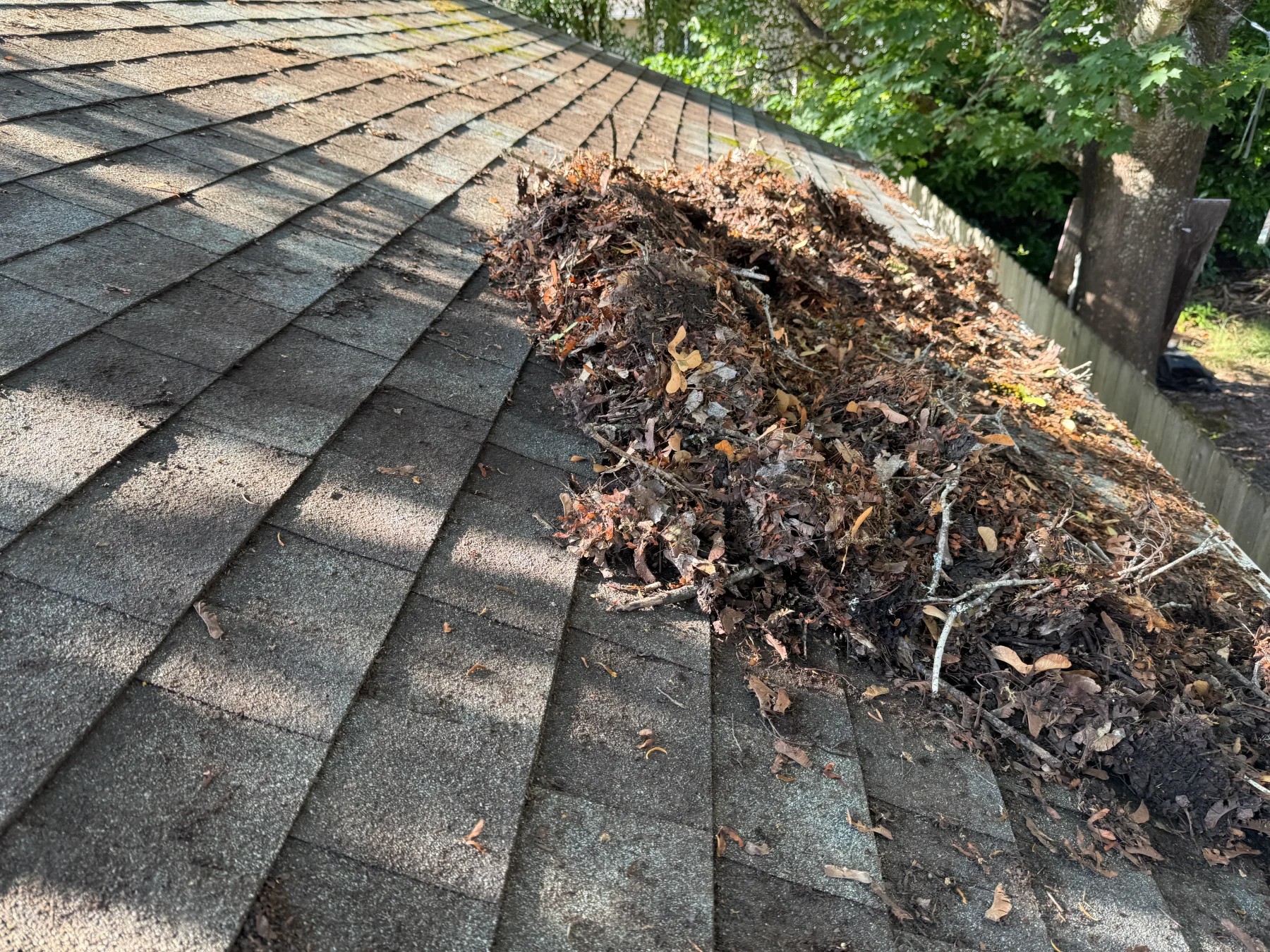
Suds Doctor first removed loose roof debris from the accessible roof areas. Leaves, sticks, and other tree litter were cleared so treatment was not being applied over a layer of organic material. This was roof maintenance work, not pressure washing. Asphalt shingles were handled with a low-impact approach because forcing moss or debris off aggressively can do more harm than good.
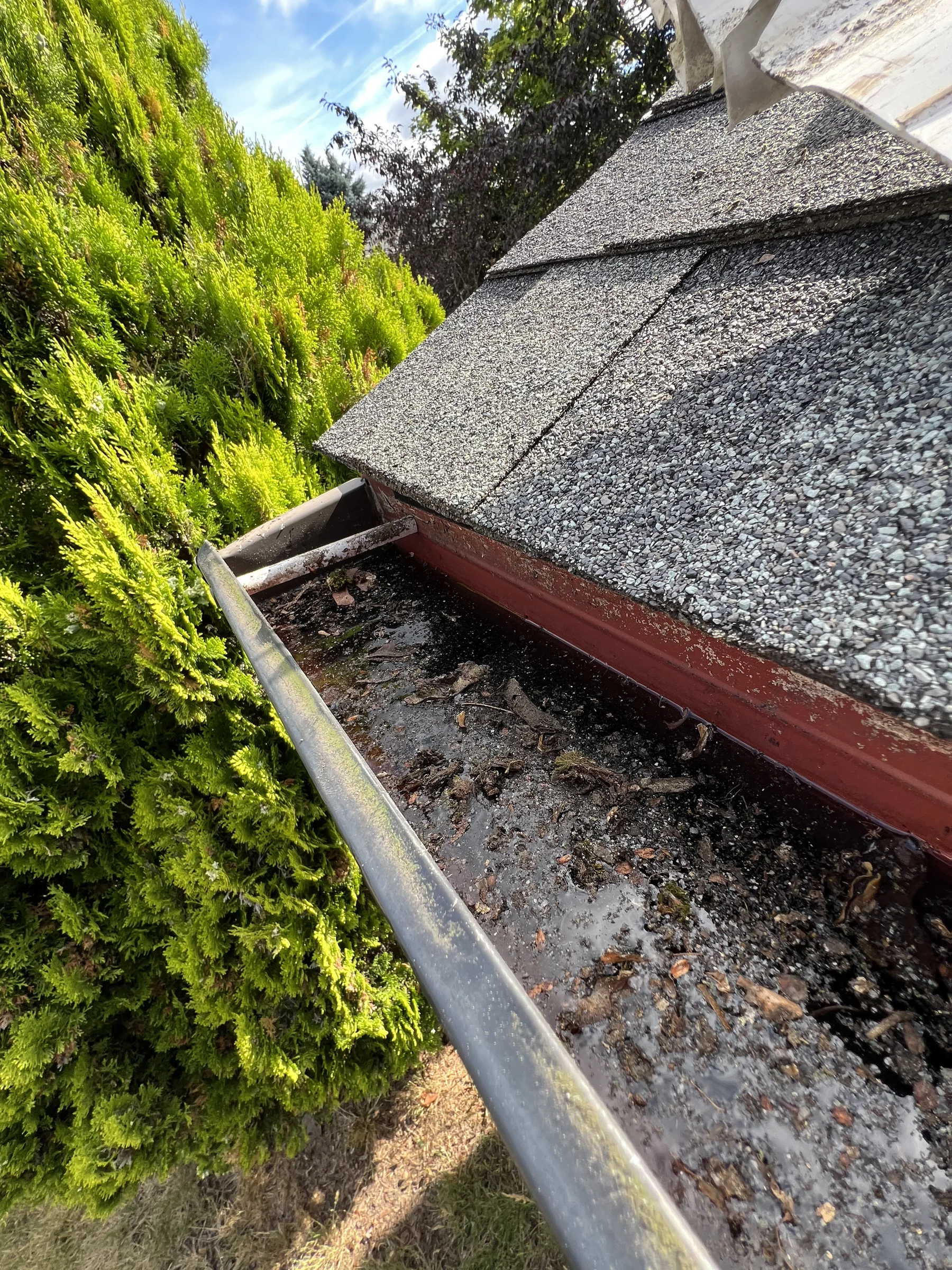
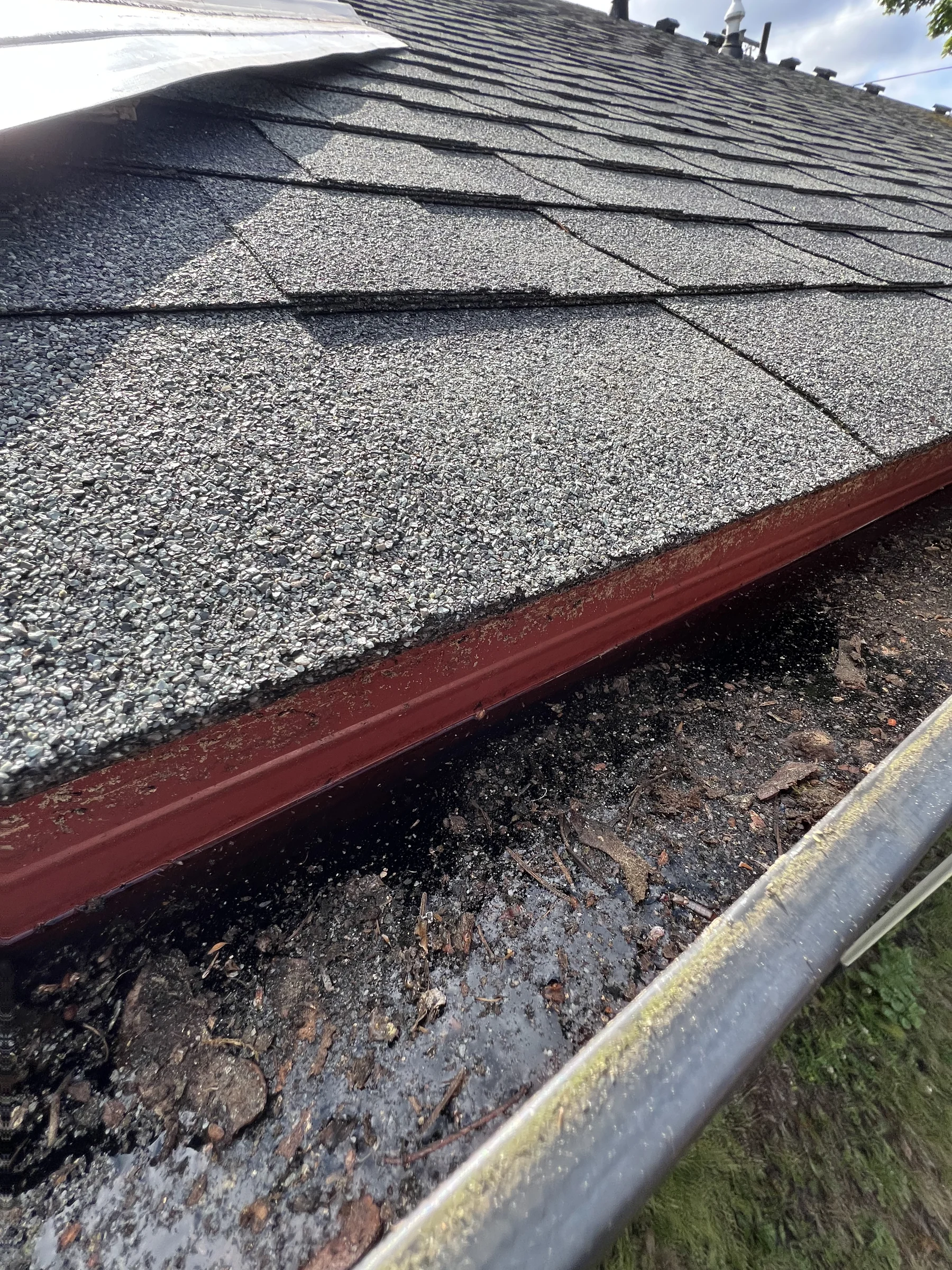
The gutters were cleaned because the photos and job notes showed a real blockage problem. Debris was removed from the gutter runs, then the downspouts were flushed so roof runoff had a clearer path. That is especially important around tree-covered Beaverton properties where needles, leaves, and shingle grit can compact into the gutter line.
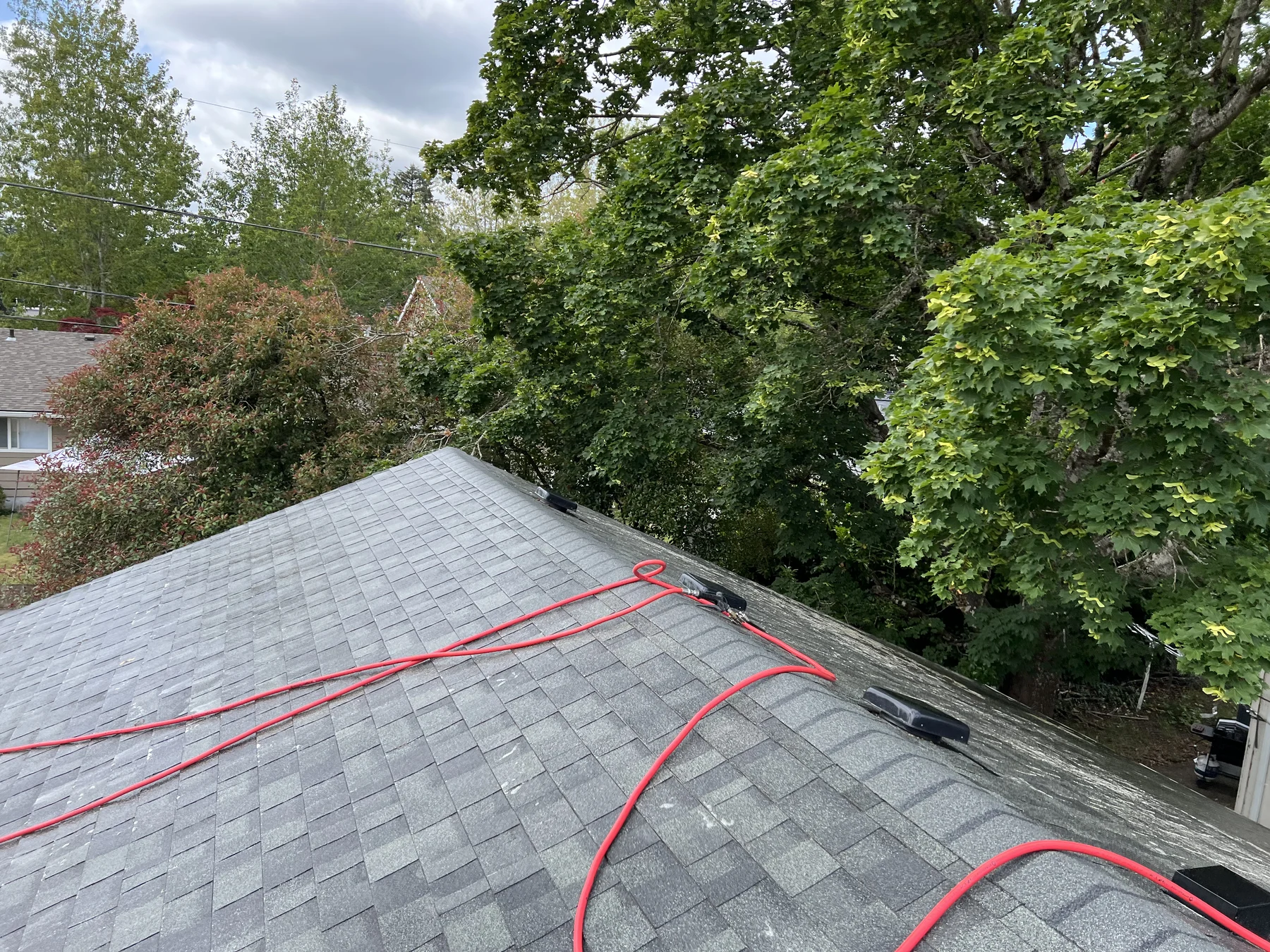
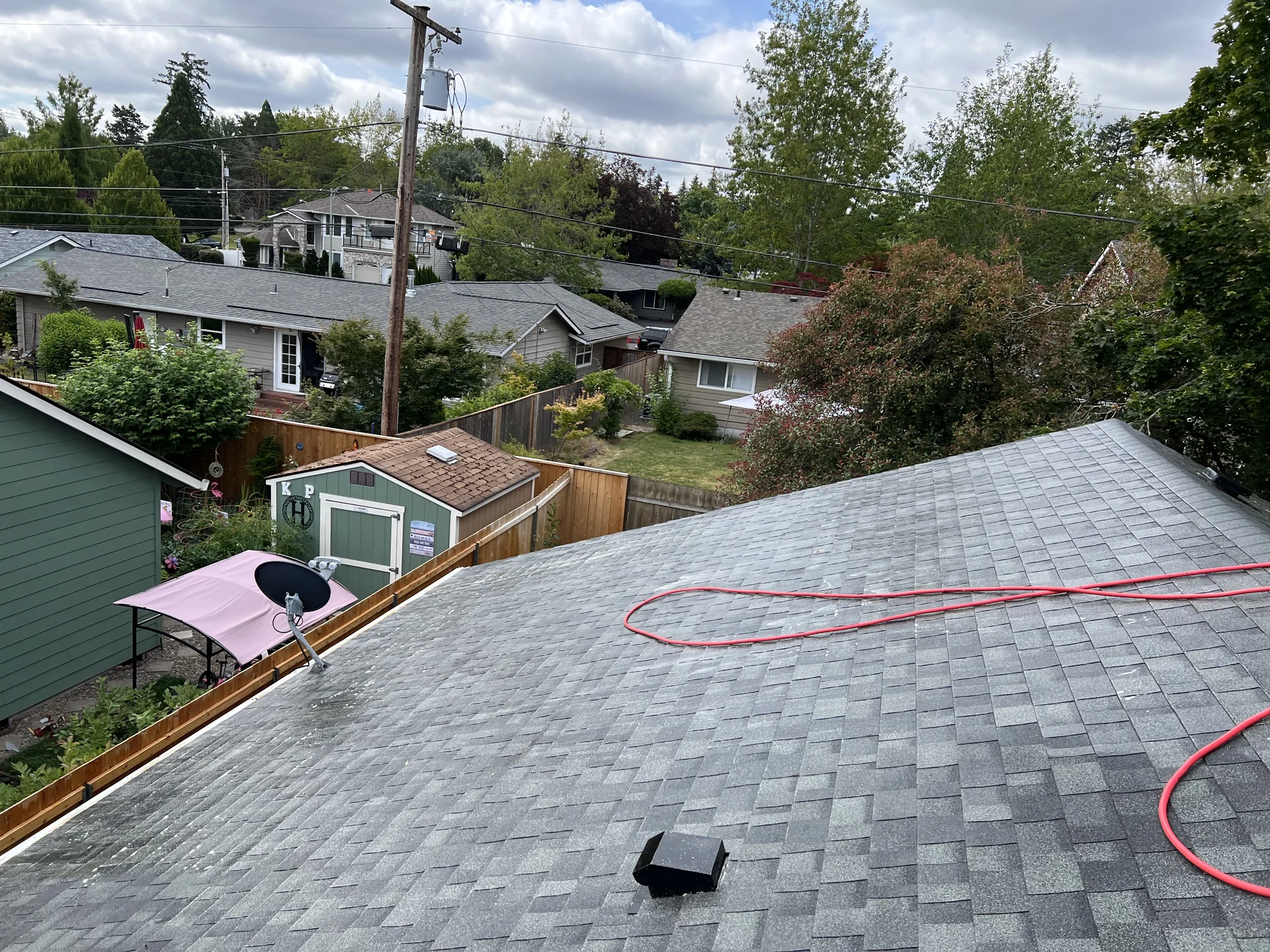
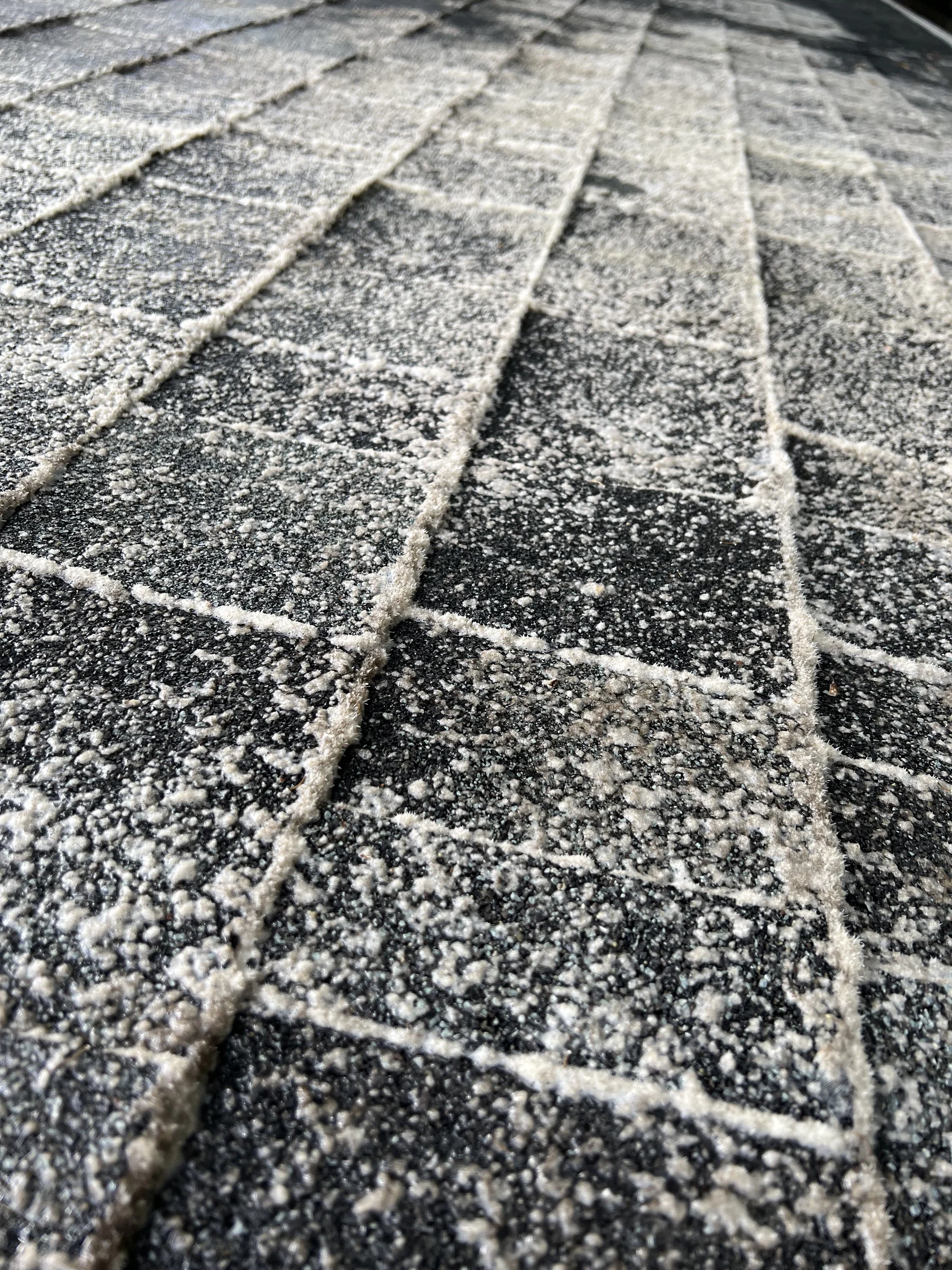
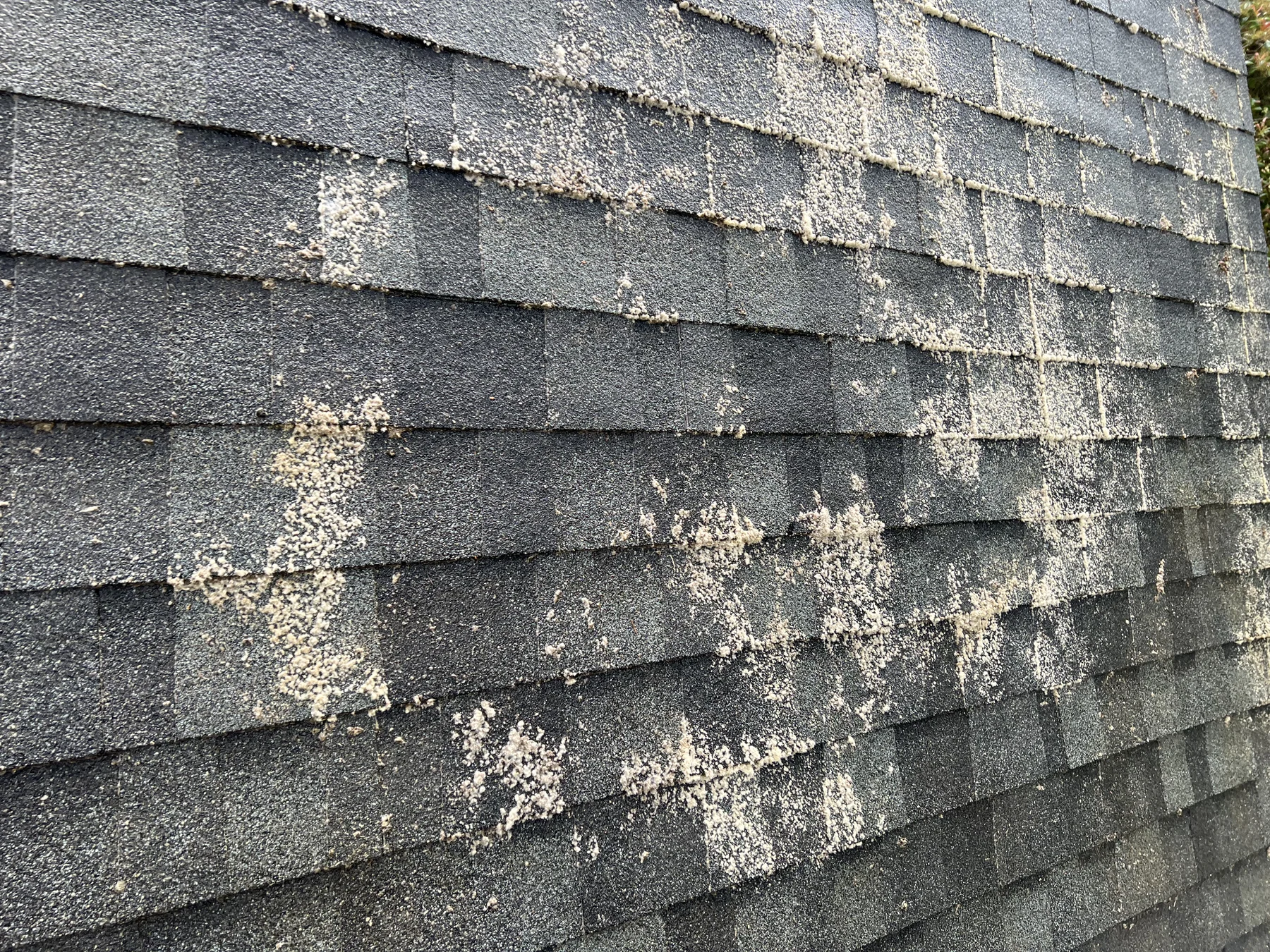
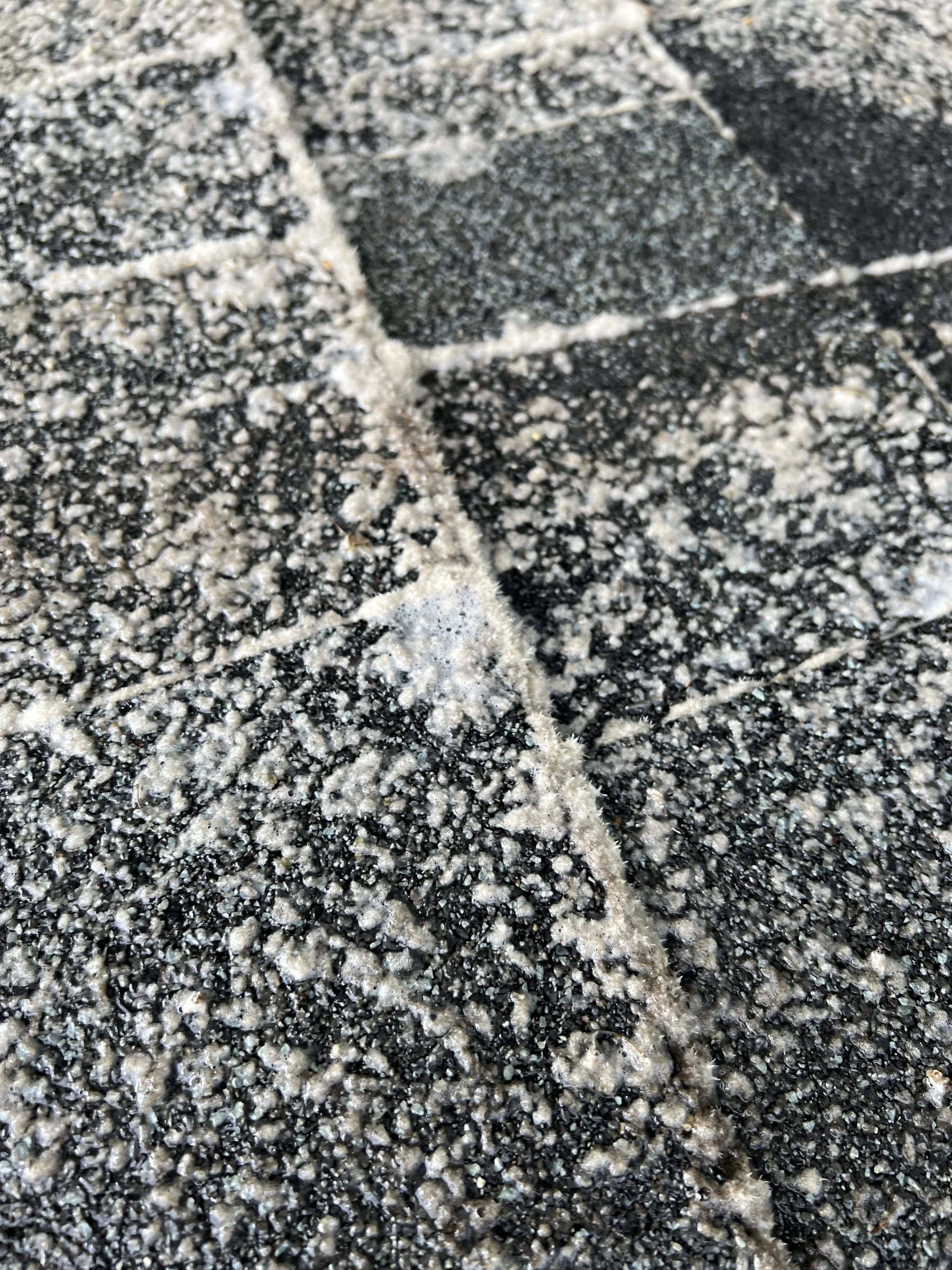
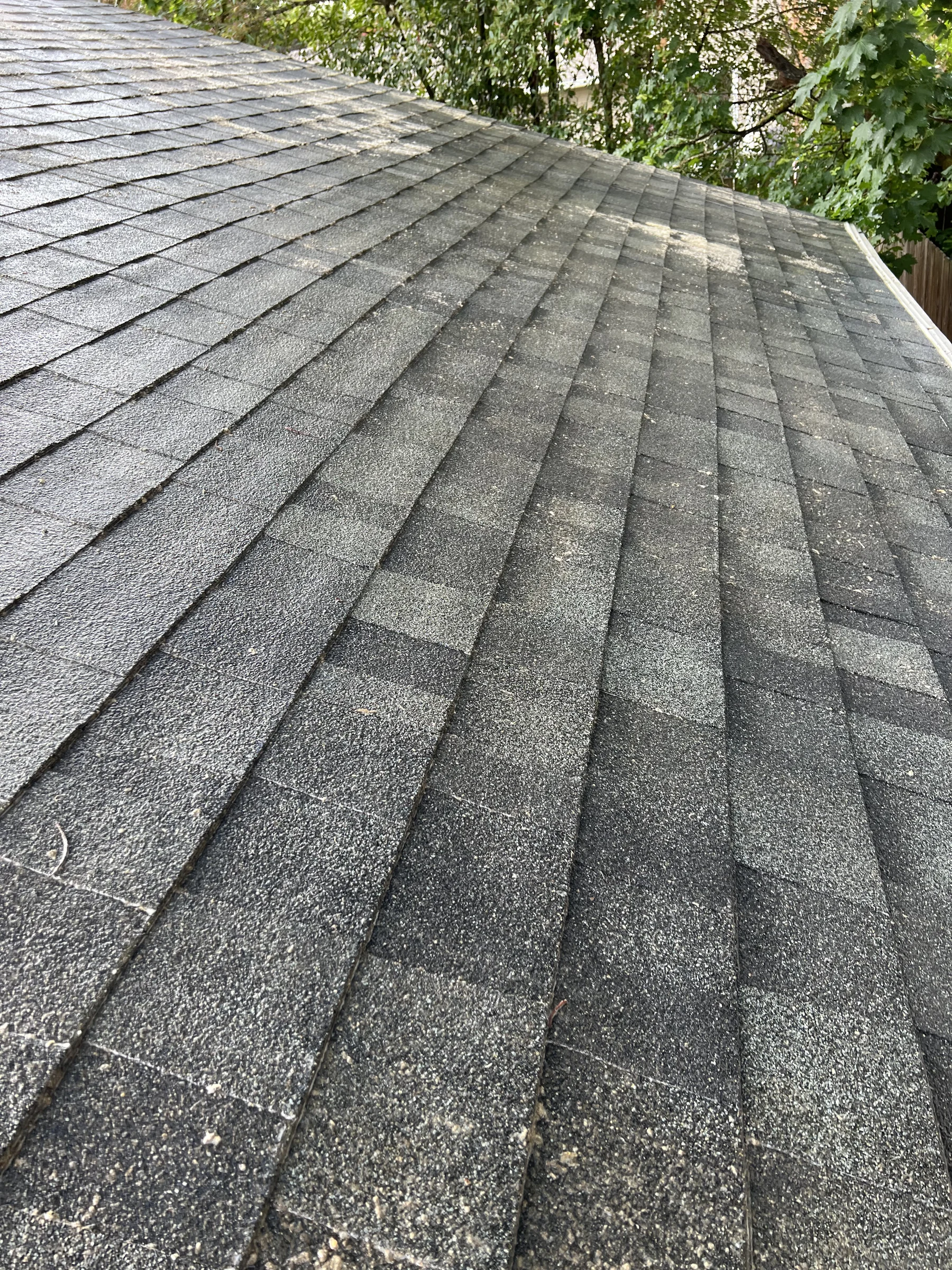
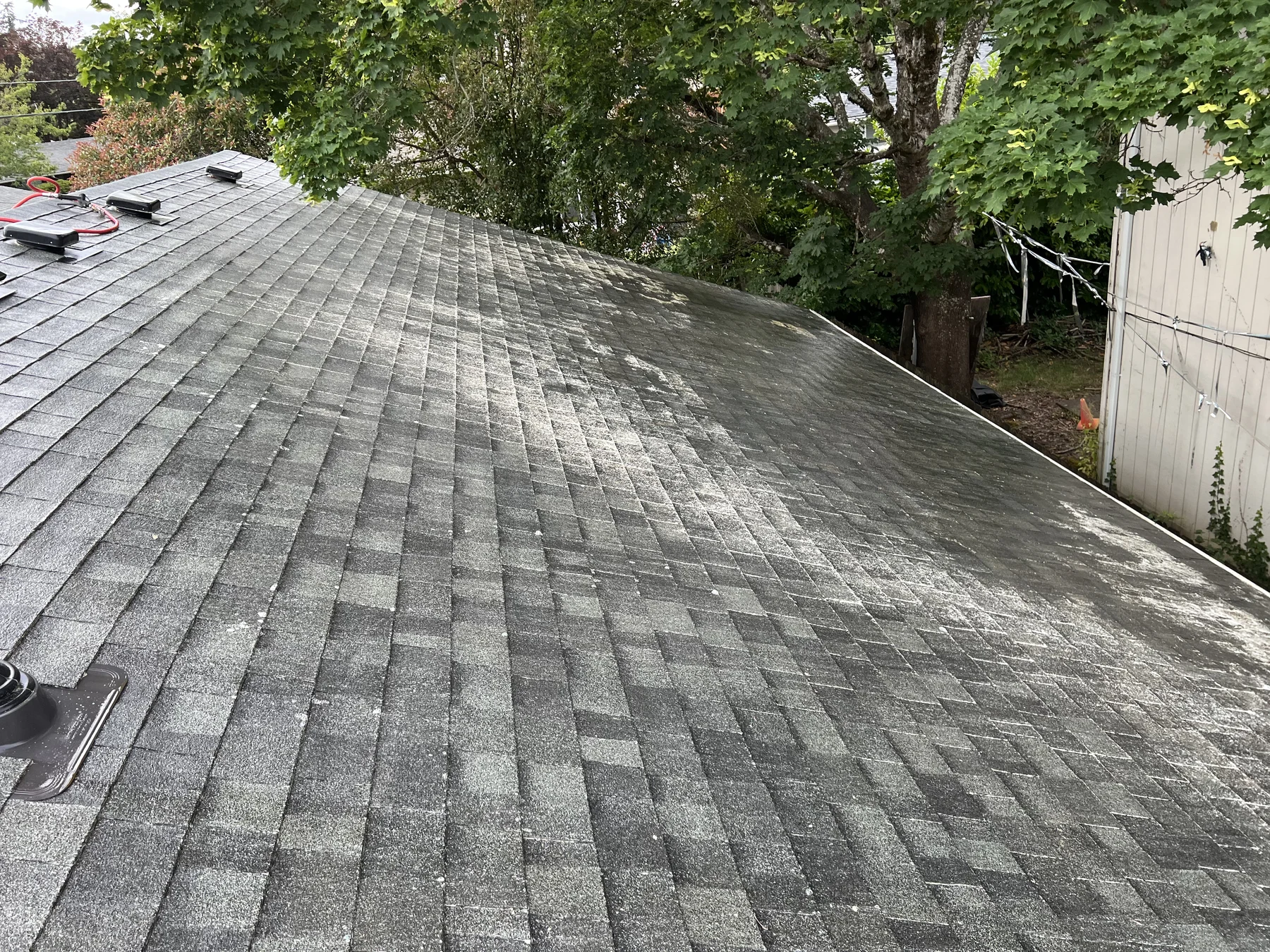
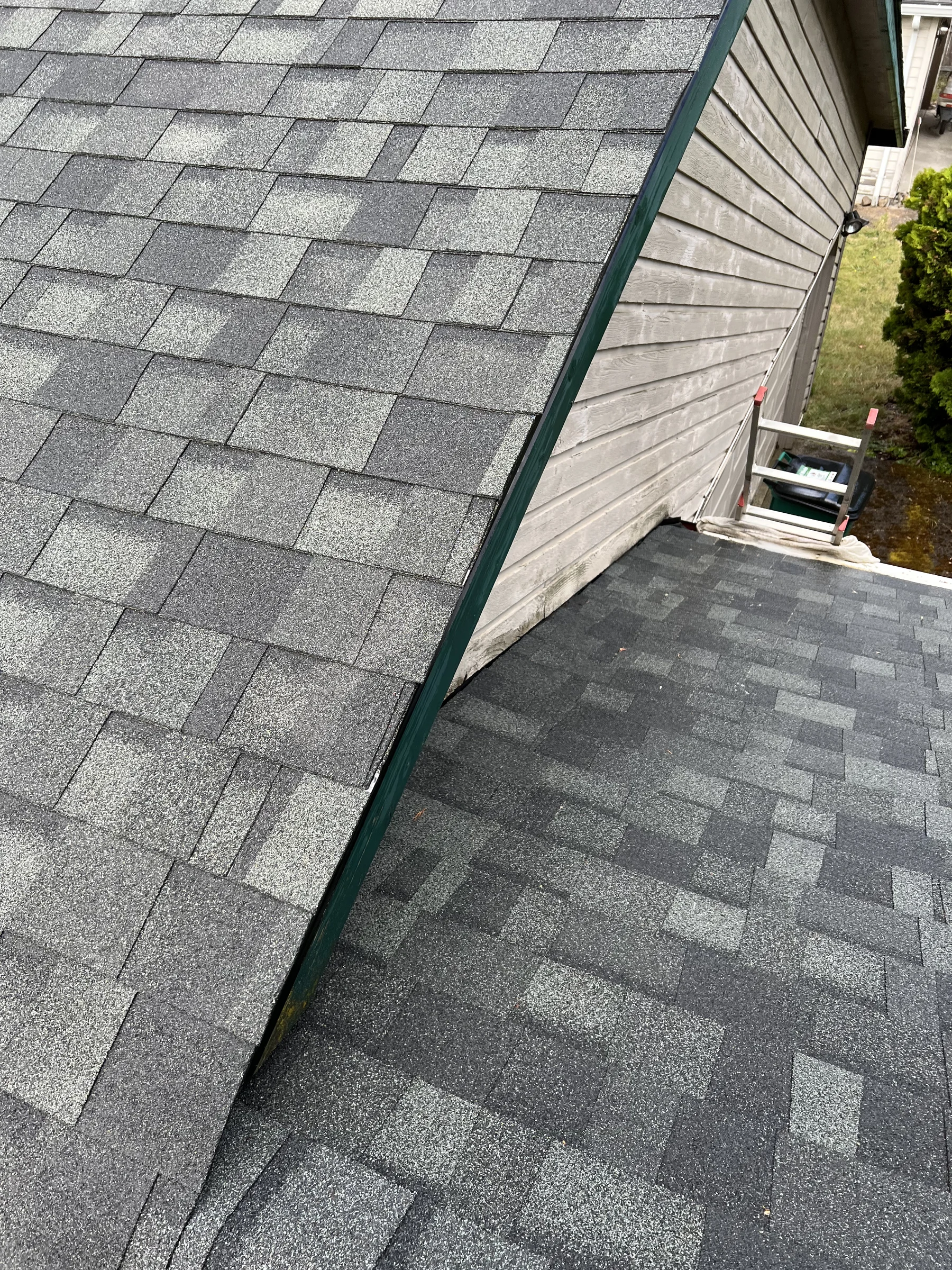
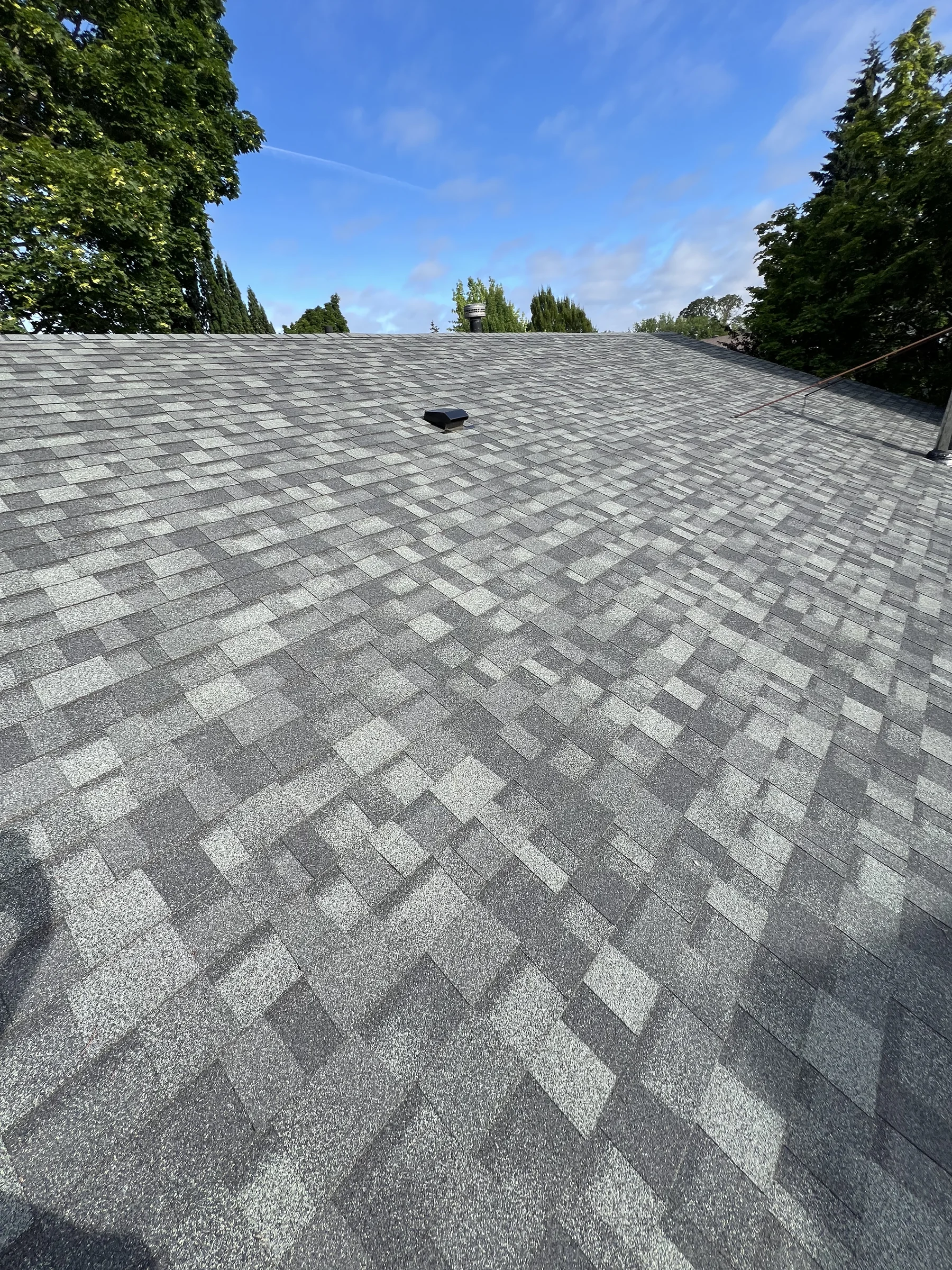
After the cleaning and drainage work, Suds Doctor treated the whole roof. The visible treatment pattern in the photos is normal for this kind of work. The treatment is not meant to erase every remaining stain instantly; it works gradually as weather breaks down treated organic growth.
Contractor Notes
What Stood Out on This Roof
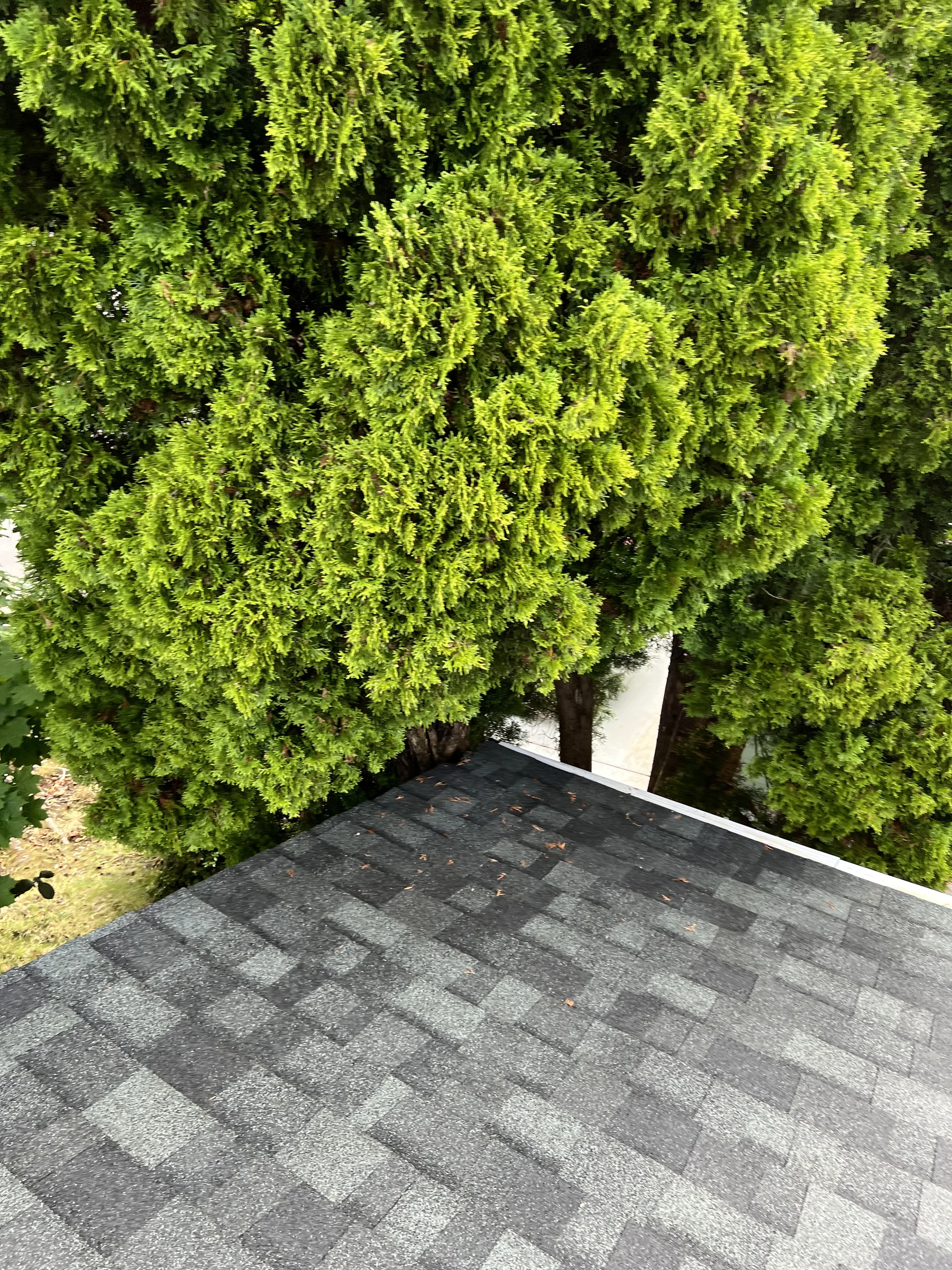
A detail that mattered here was how the tree cover affected more than one part of the roof system. The same overhanging trees that shaded the shingles were also dropping enough leaves and sticks to clog the gutters. In the photos, the debris is heaviest along roof edges and near the gutter line, which told us the roof treatment needed to be paired with practical cleanup and drainage work.
This is the kind of project where skipping the gutters would leave the job half-finished. The roof surface needed treatment, but the gutters and downspouts also needed attention so the next stretch of rain did not push water around old debris.