Jobsite Story
A Sloped Driveway With a Block Wall Along the Edge
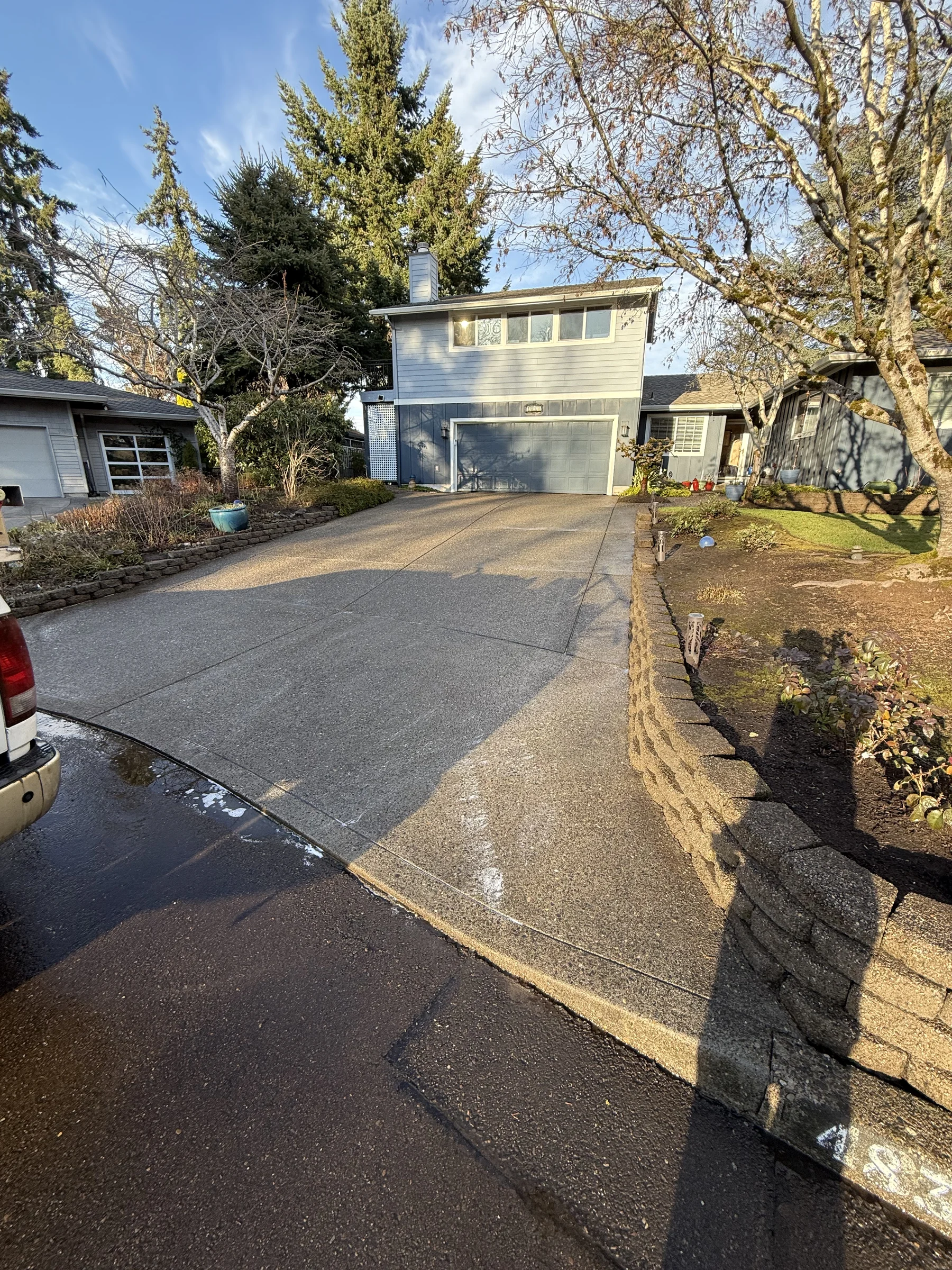
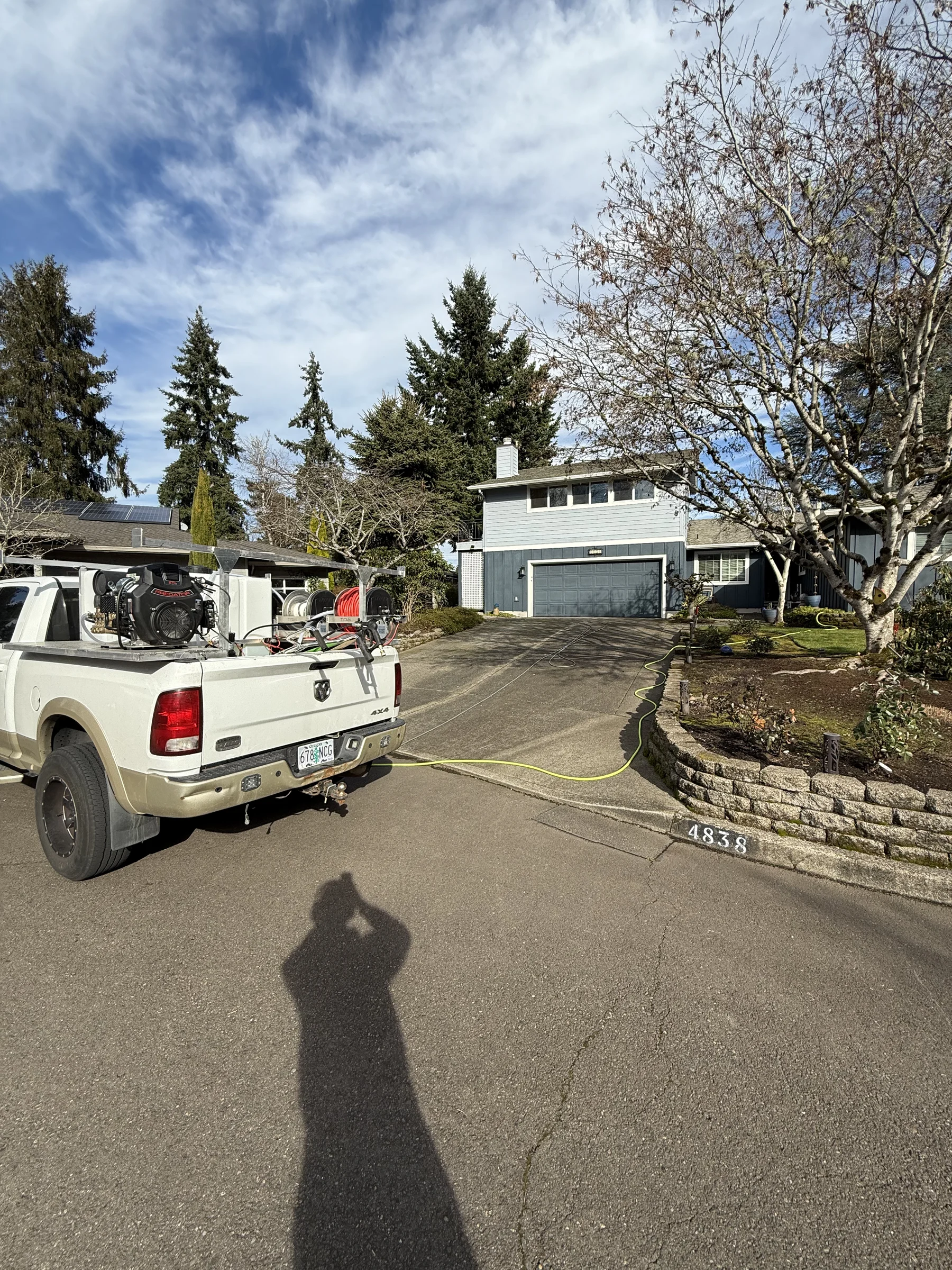
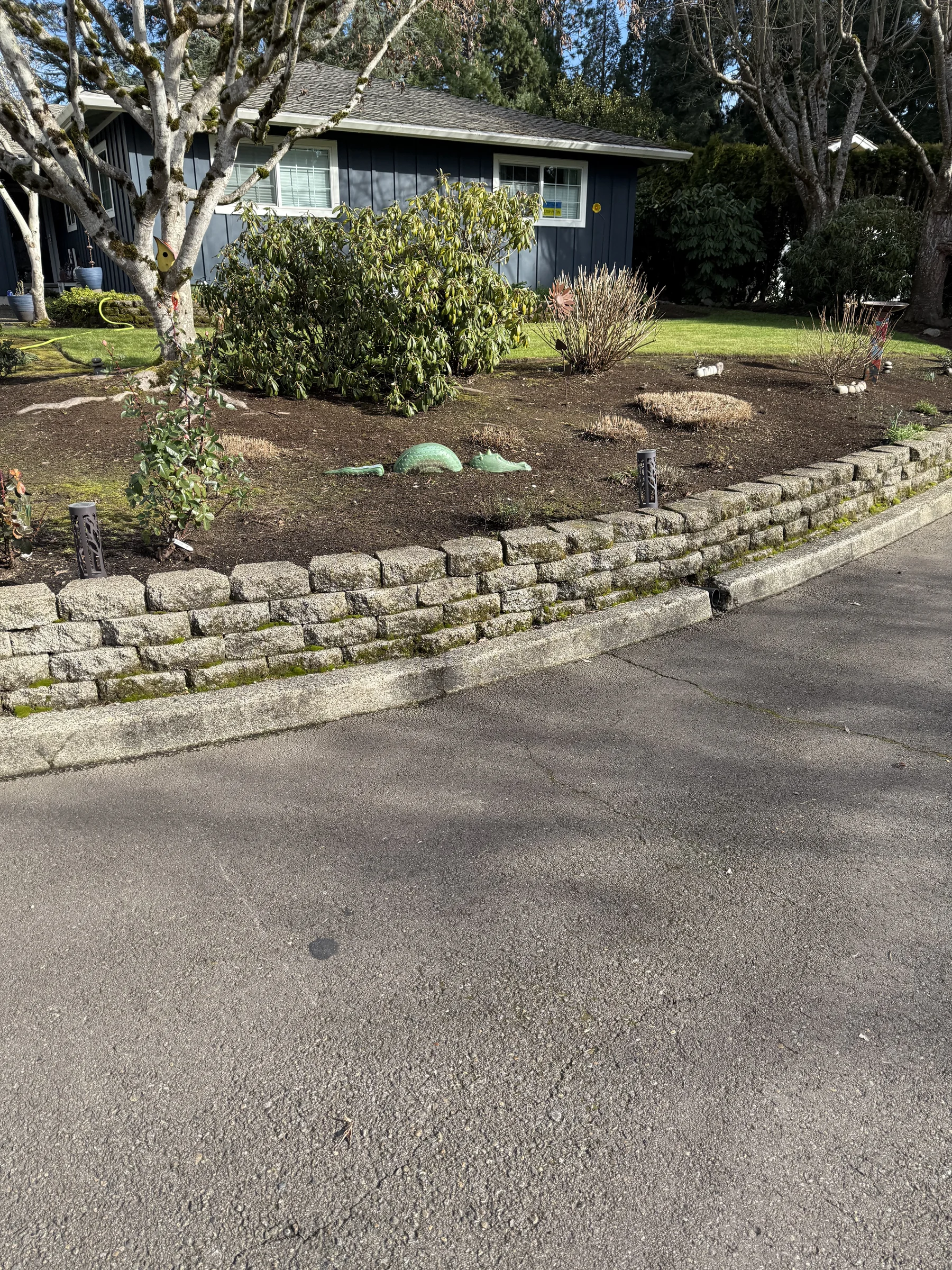
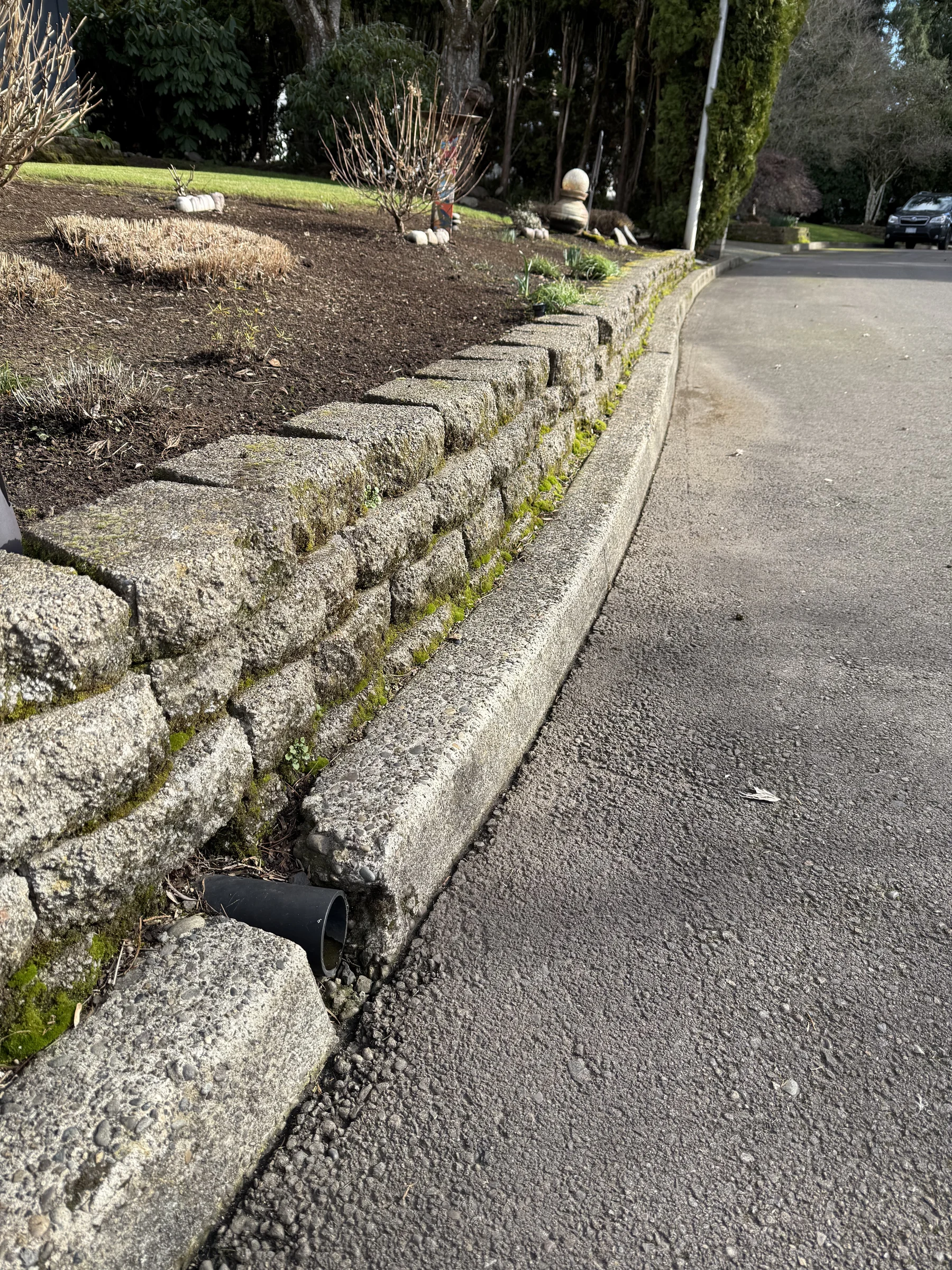
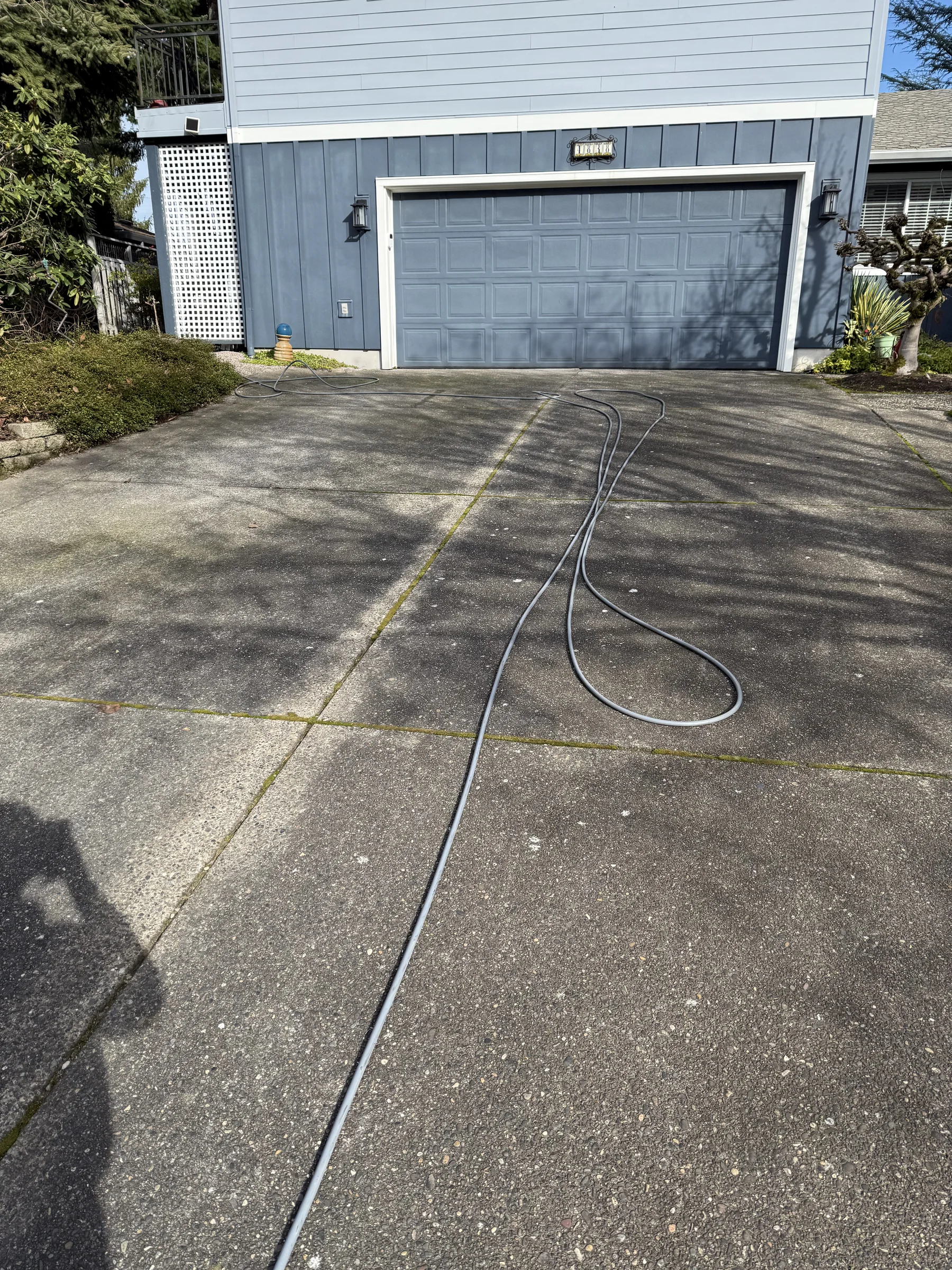
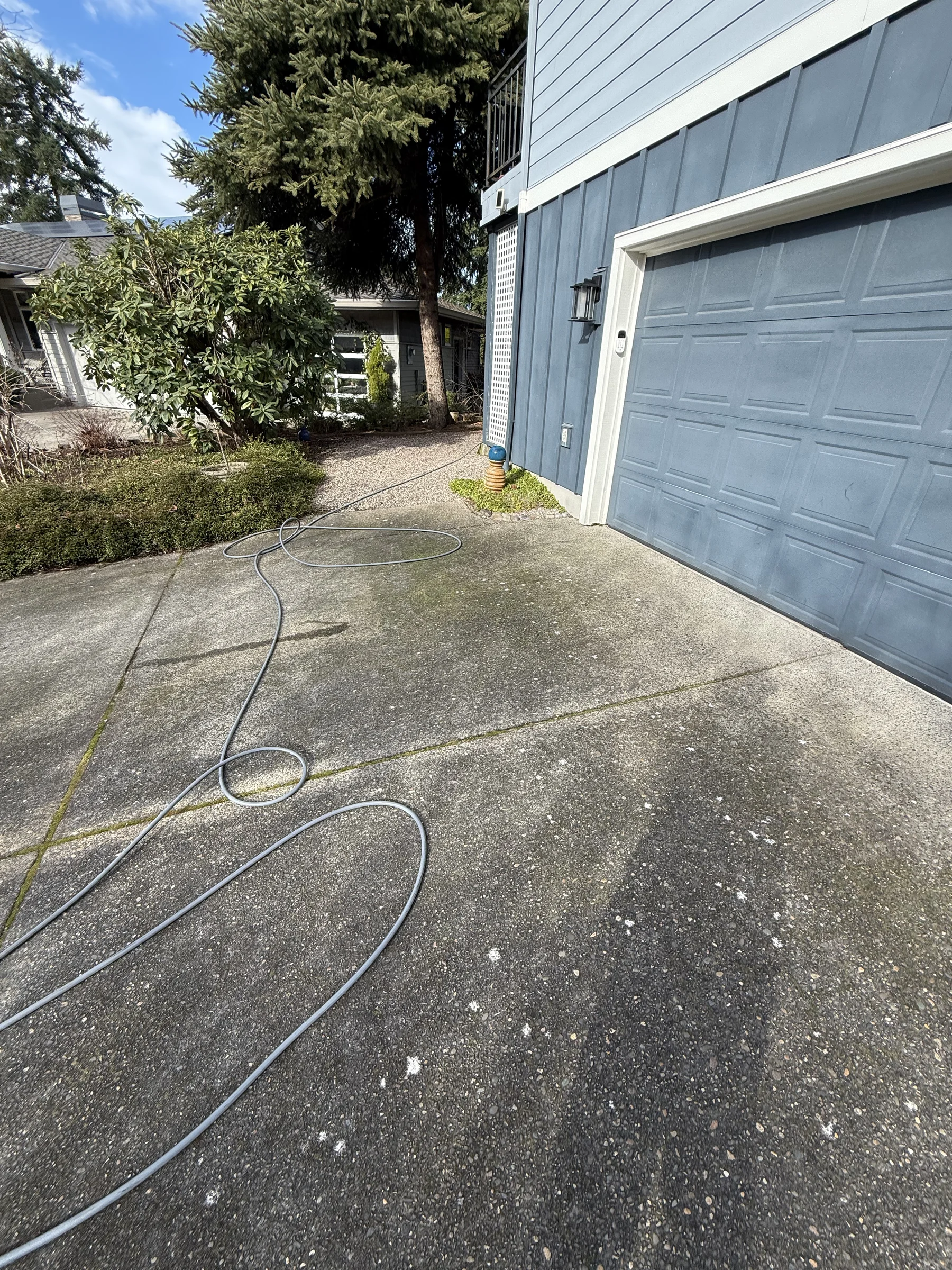
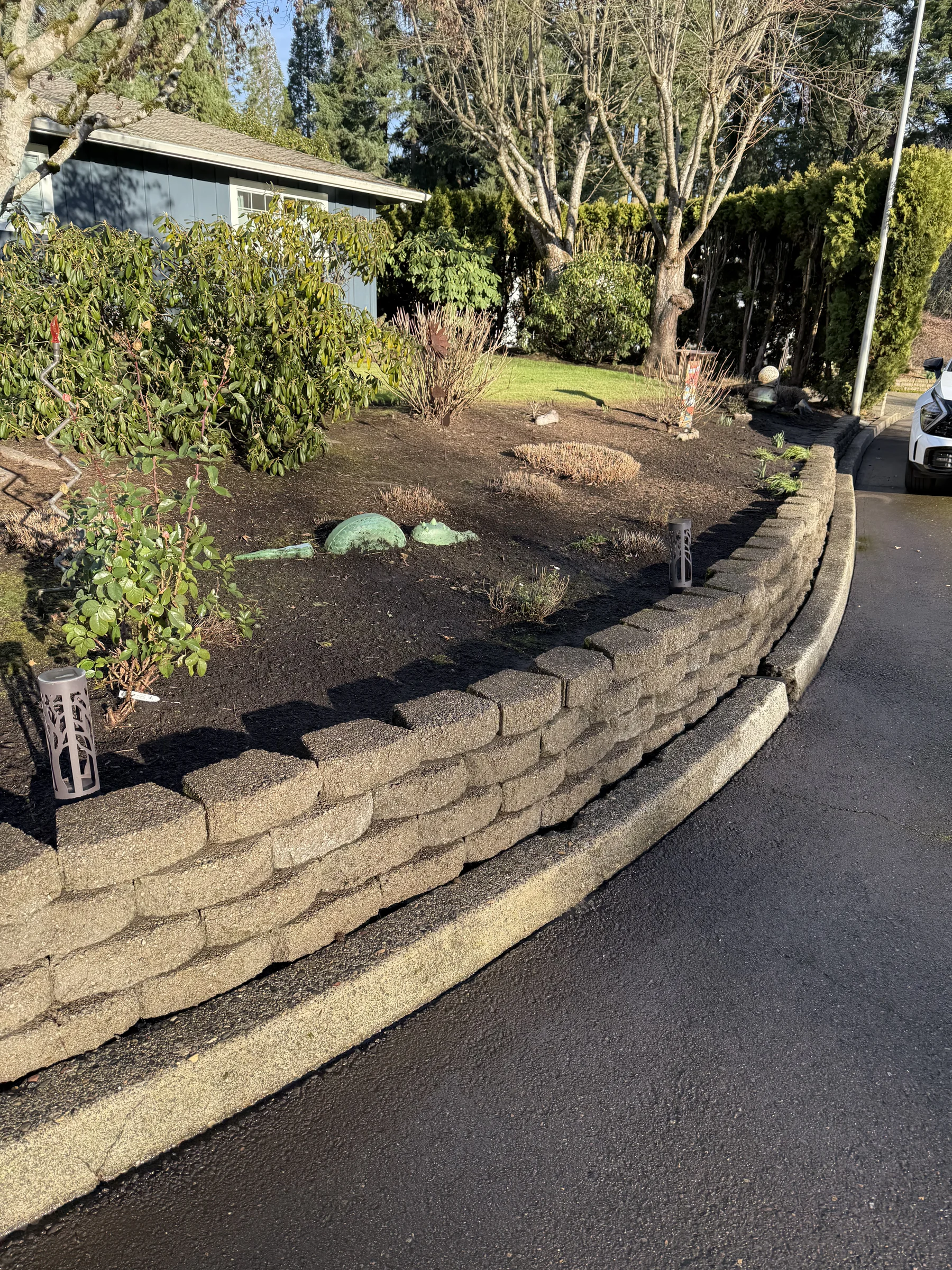
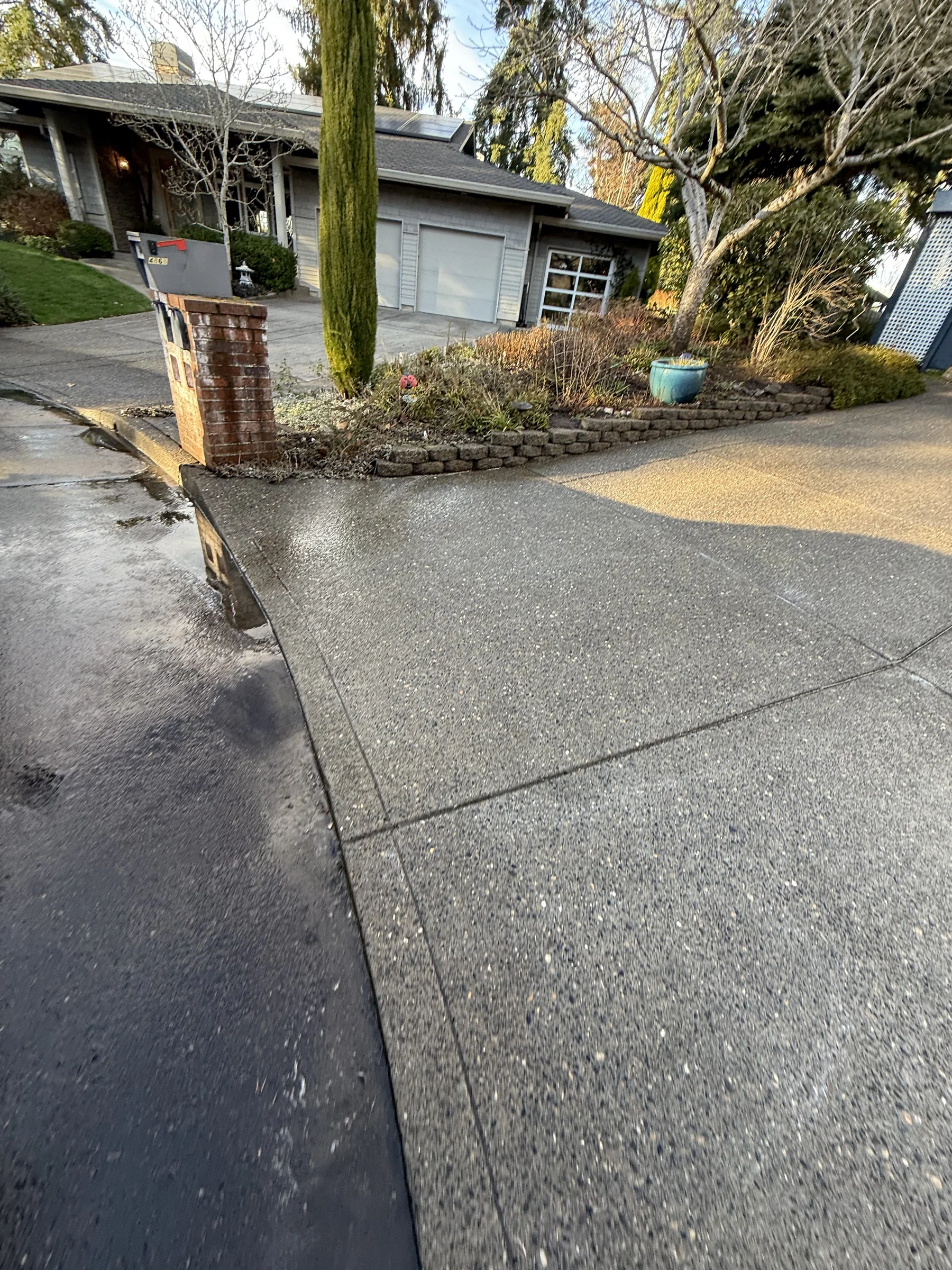
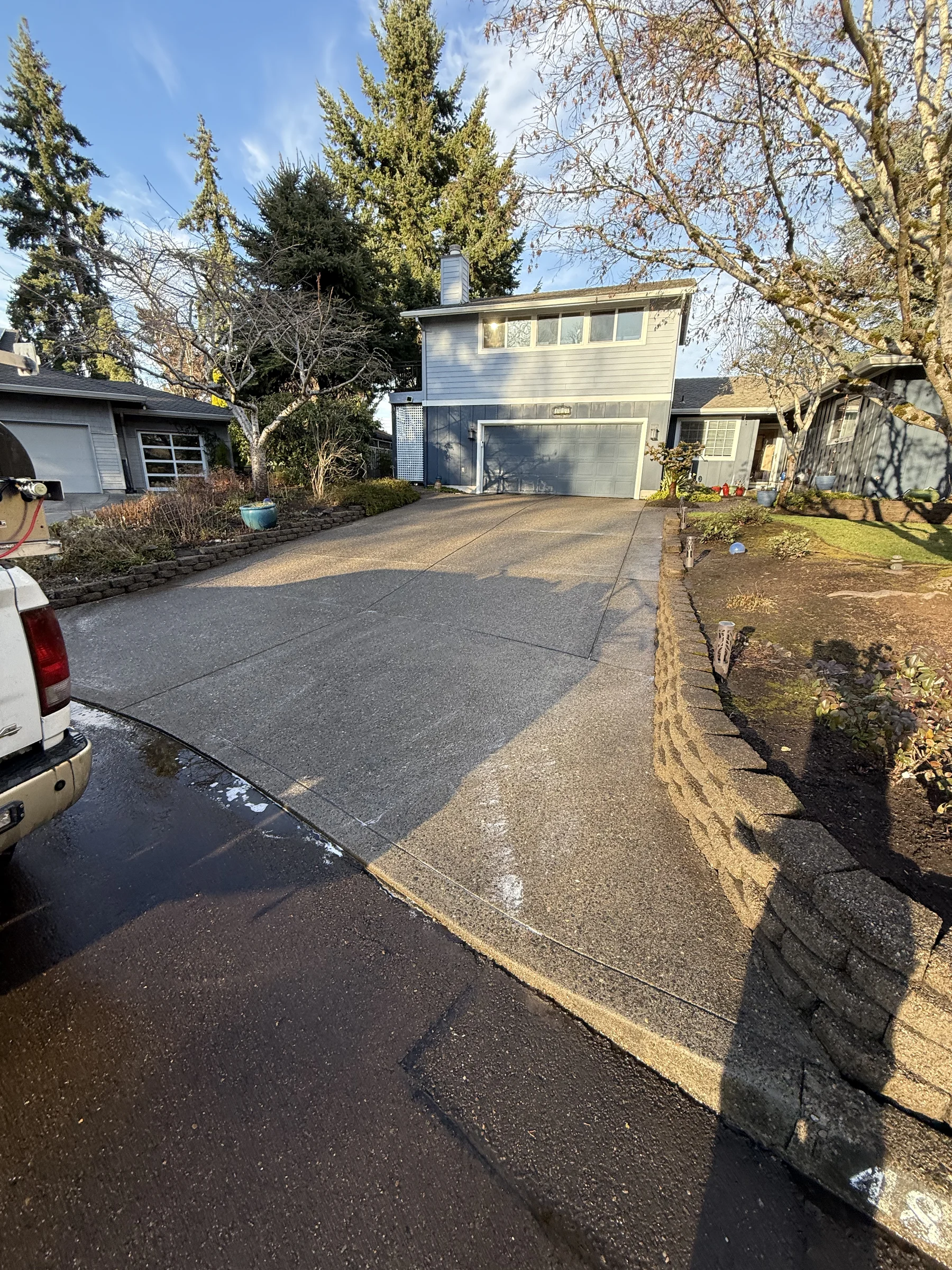
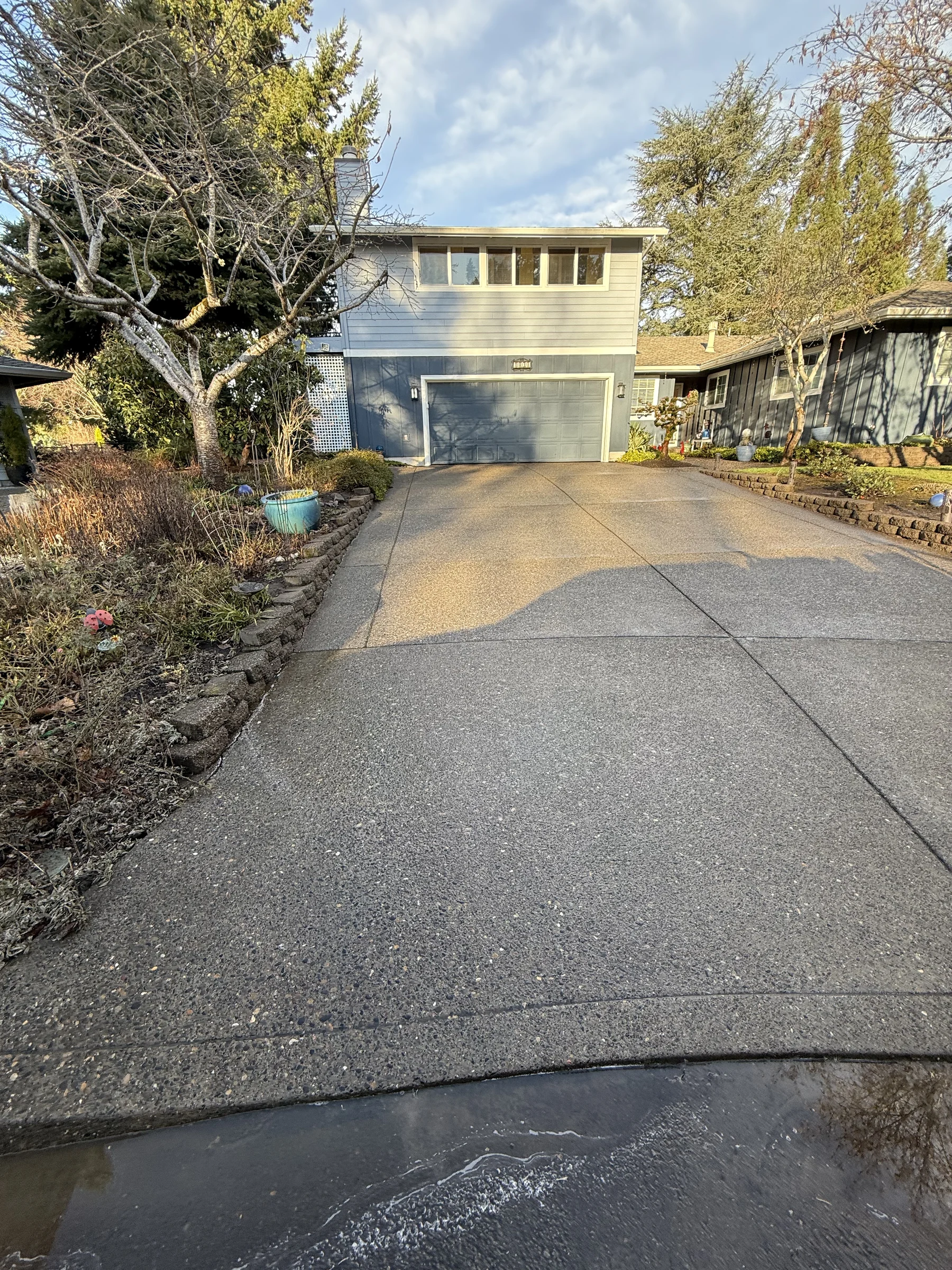
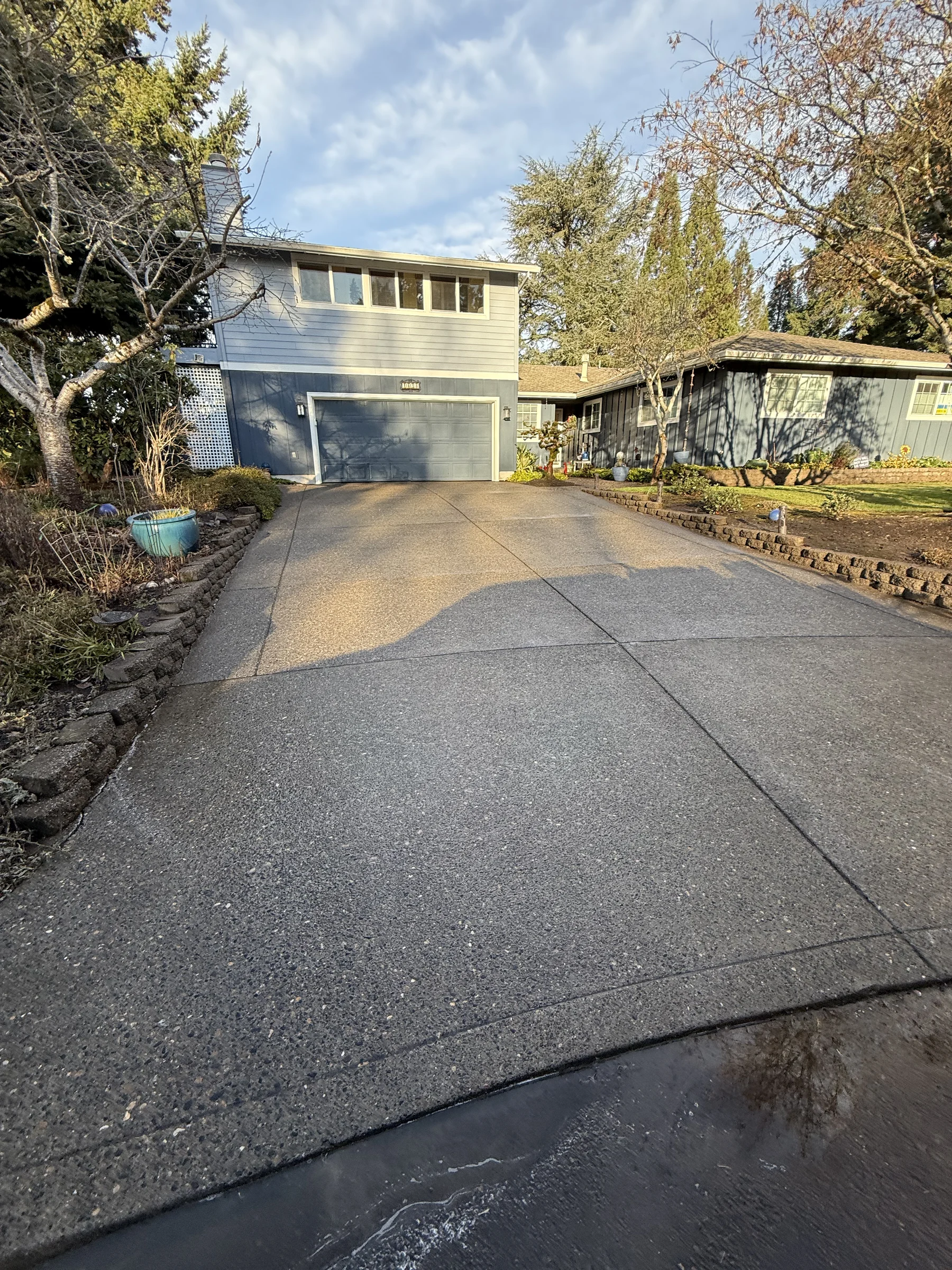
The driveway had a clear downhill edge toward the street and a small retaining wall running along one side. That wall mattered because grime was not only on the flat concrete. The block faces, caps, joints, and curb line all collected buildup differently than the driveway panels.
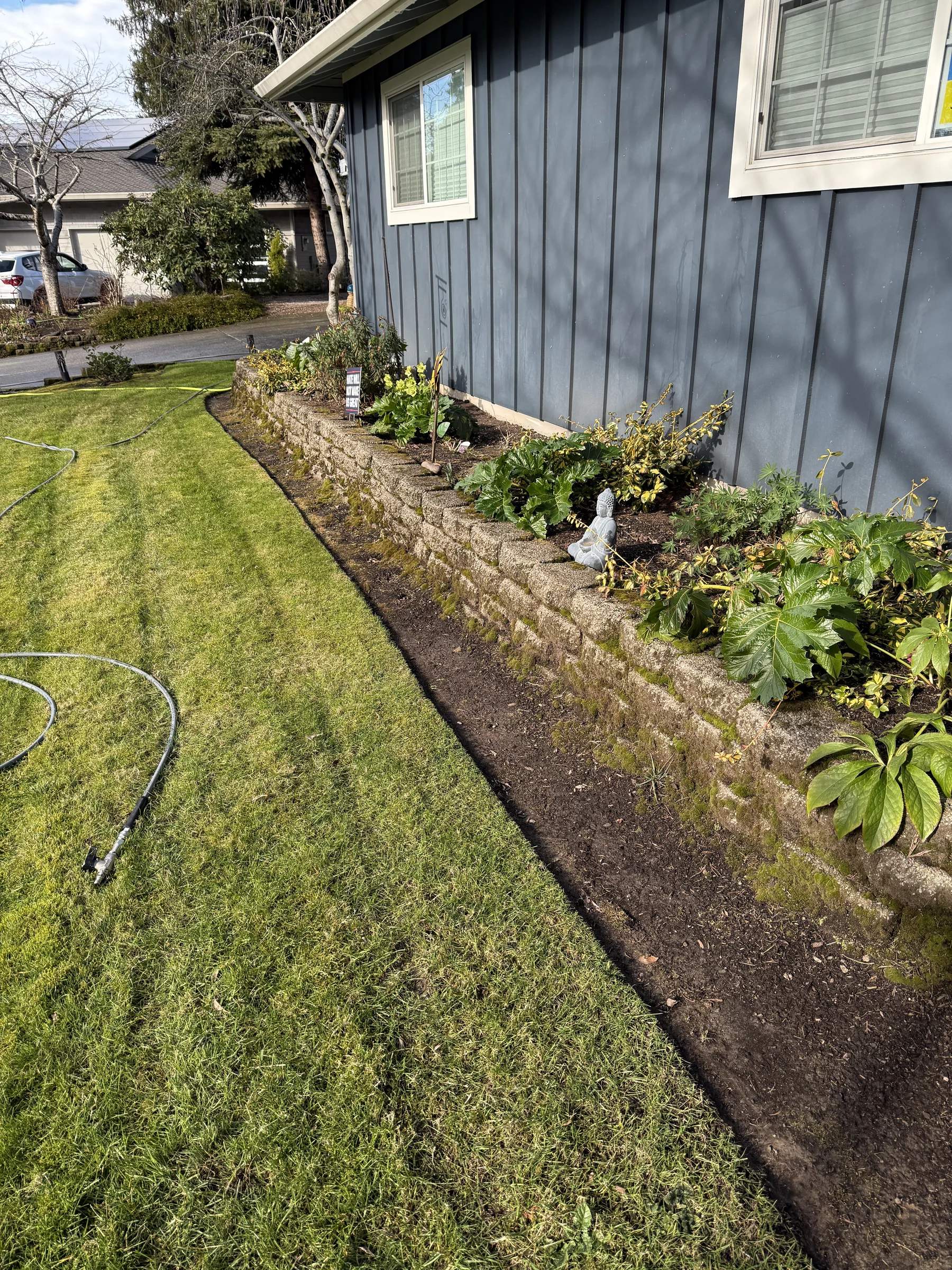
In the photos, you can see how the wall sits between the driveway and the landscaped bed. That detail changes the rinsing plan: water, loosened soil, and debris need to be moved away from the wall and driveway edge without washing material into the planting bed or leaving dirty runoff along the curb.
The garage approach also needed attention where hoses, shade, and tree cover met the concrete. On this kind of Rock Creek driveway, the best result comes from reading the slope, the expansion joints, and the wall edge together instead of running the same pass everywhere.
Patio Areas
House-Side Patio Pads and Tight Edges
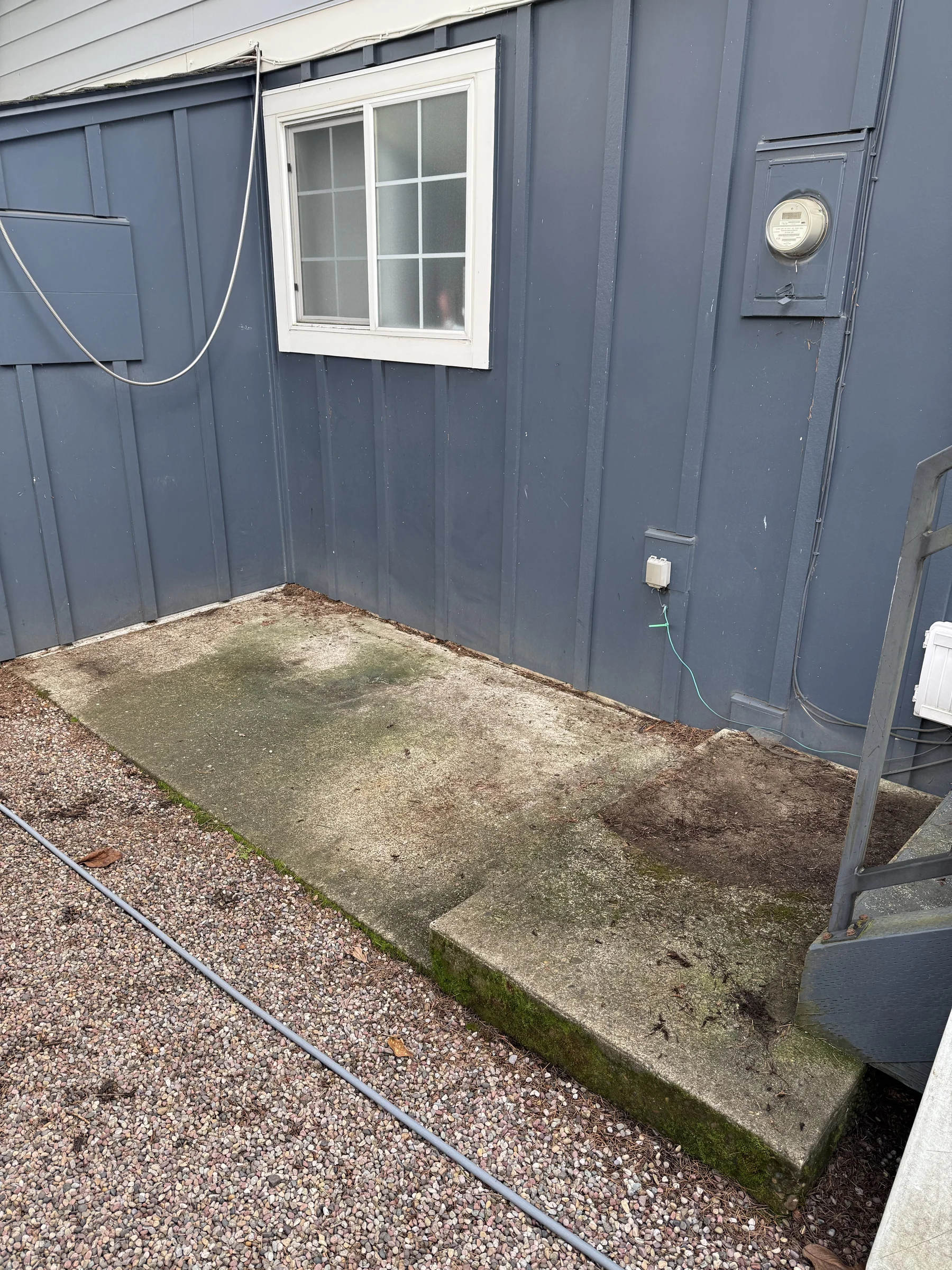
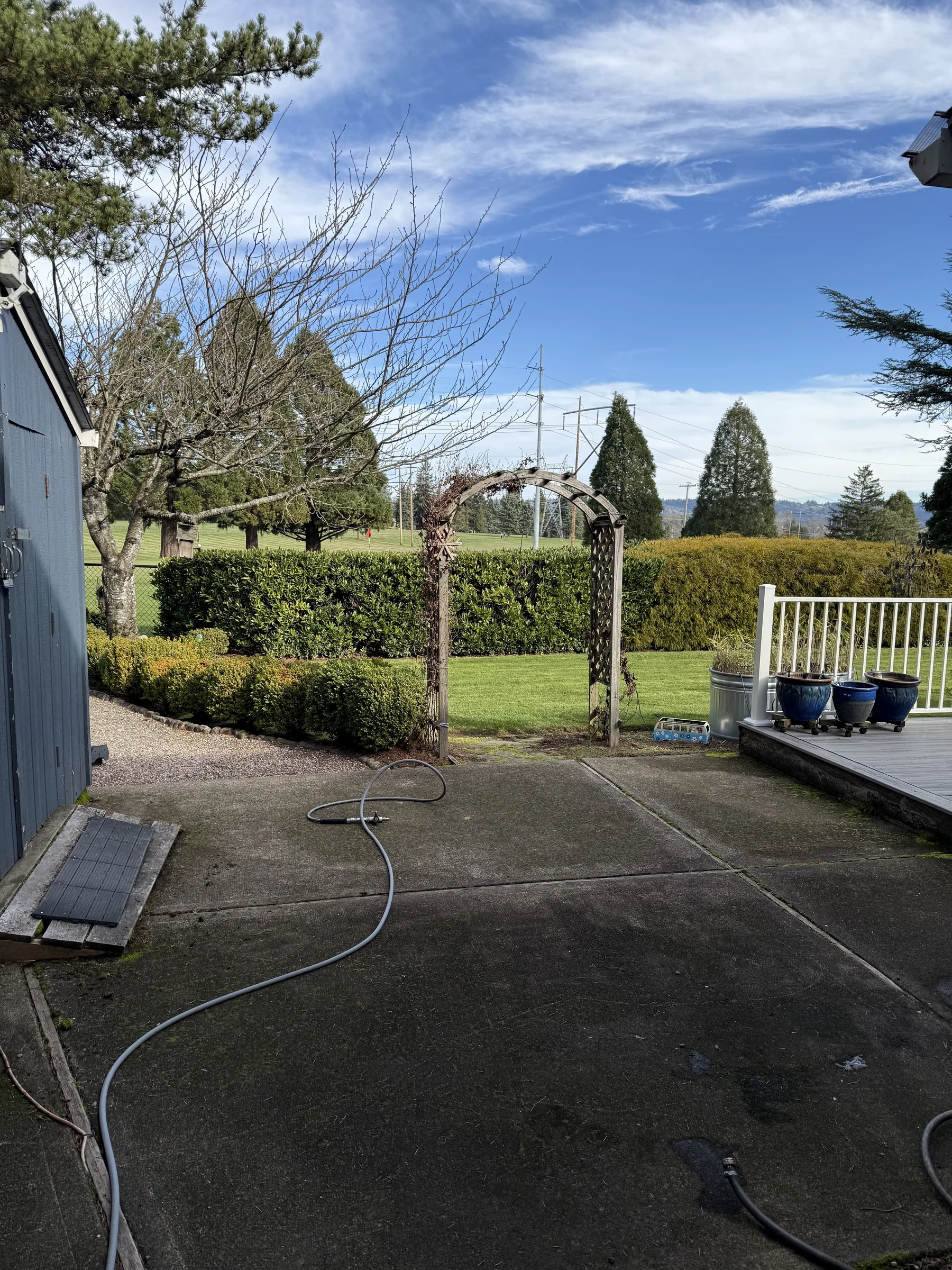
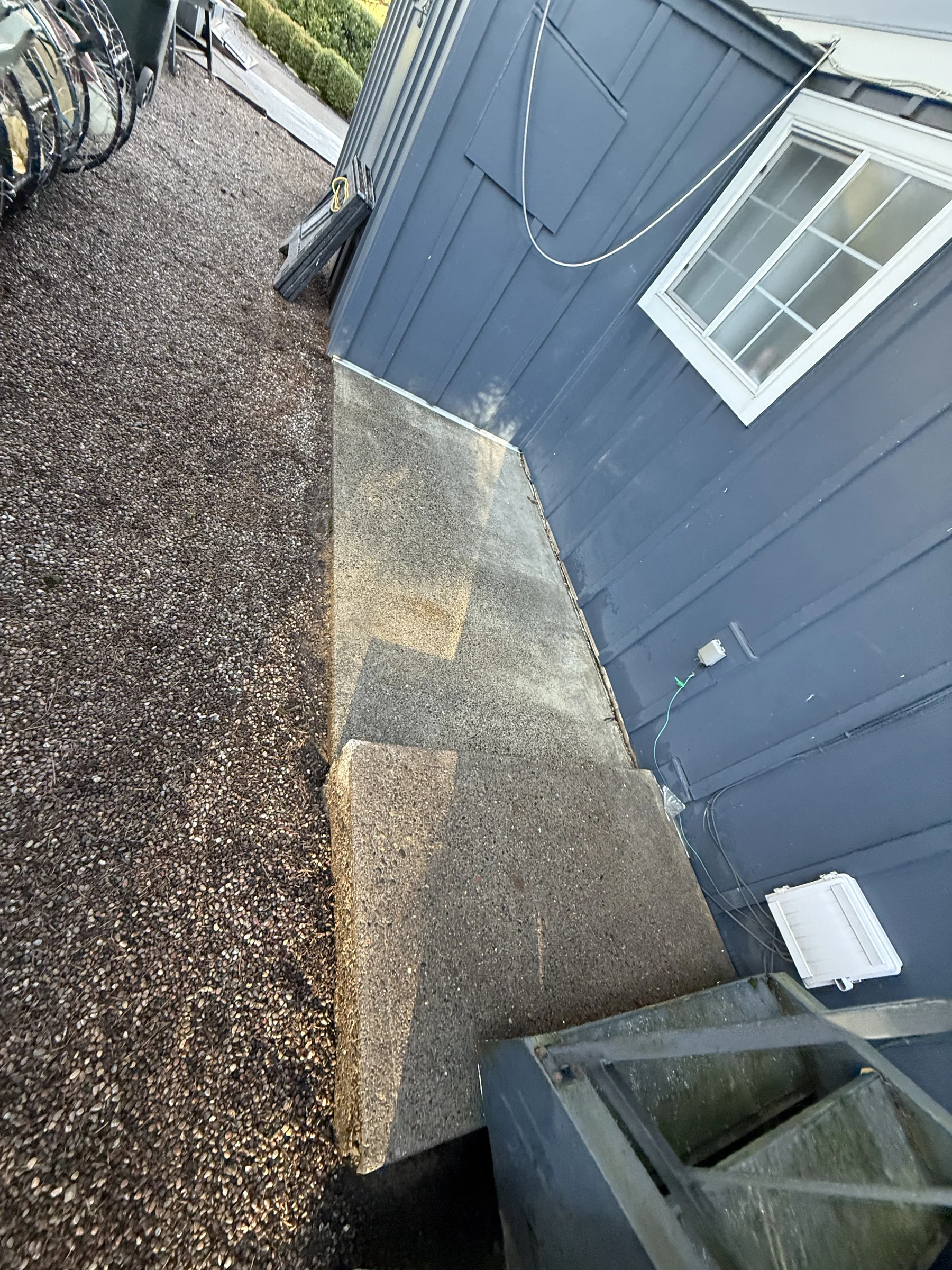
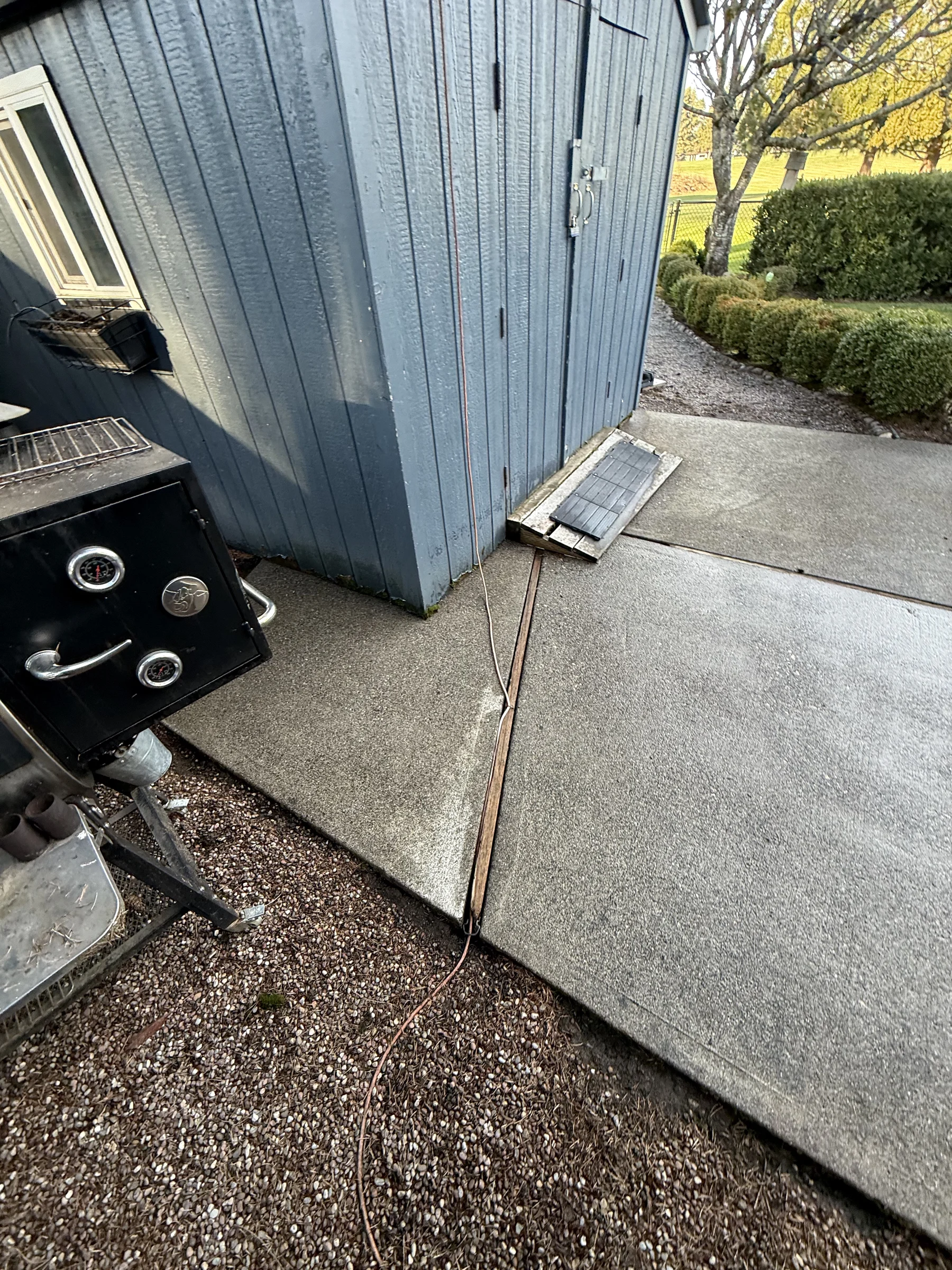
The patio work was more detailed than a wide-open slab. Some concrete sat beside siding and windows, while other pads bordered gravel, lawn, planter areas, and backyard equipment. Those smaller areas can stay damp in Oregon weather even when the driveway dries faster.
One patio photo shows how tight the work area was: concrete, gravel, siding, a fence line, and outdoor equipment all within a few steps. That is the kind of spot where rinse direction matters as much as pressure.
For similar patio work, Suds Doctor pairs patio cleaning with surface-specific care around siding, trim, garden edges, and drainage paths. The goal is a cleaner usable space without treating the patio, driveway, and retaining wall as if they were the same material and layout.