Cleaning Method
Even Driveway Cleaning With Extra Attention to Mossy Edges
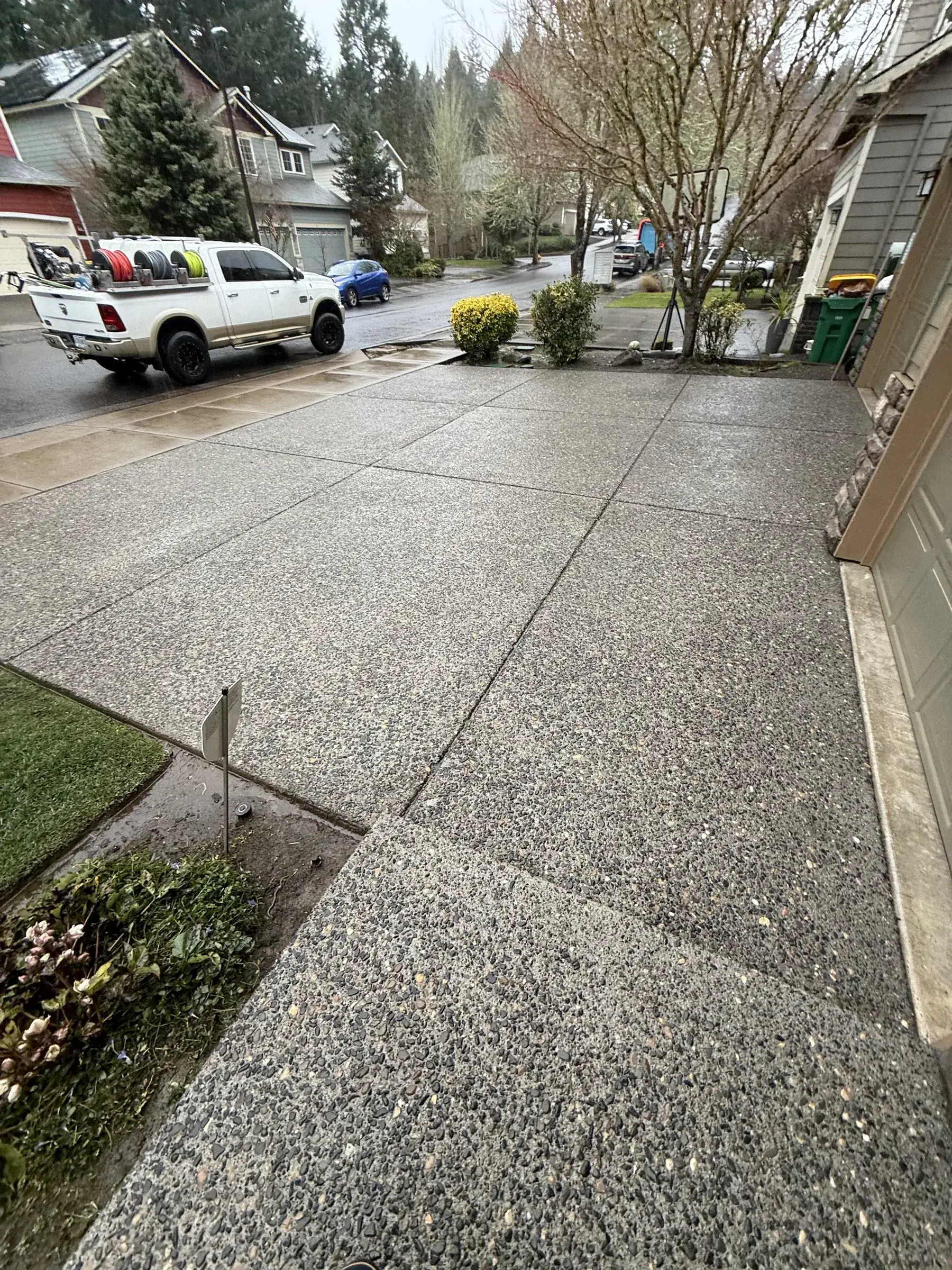
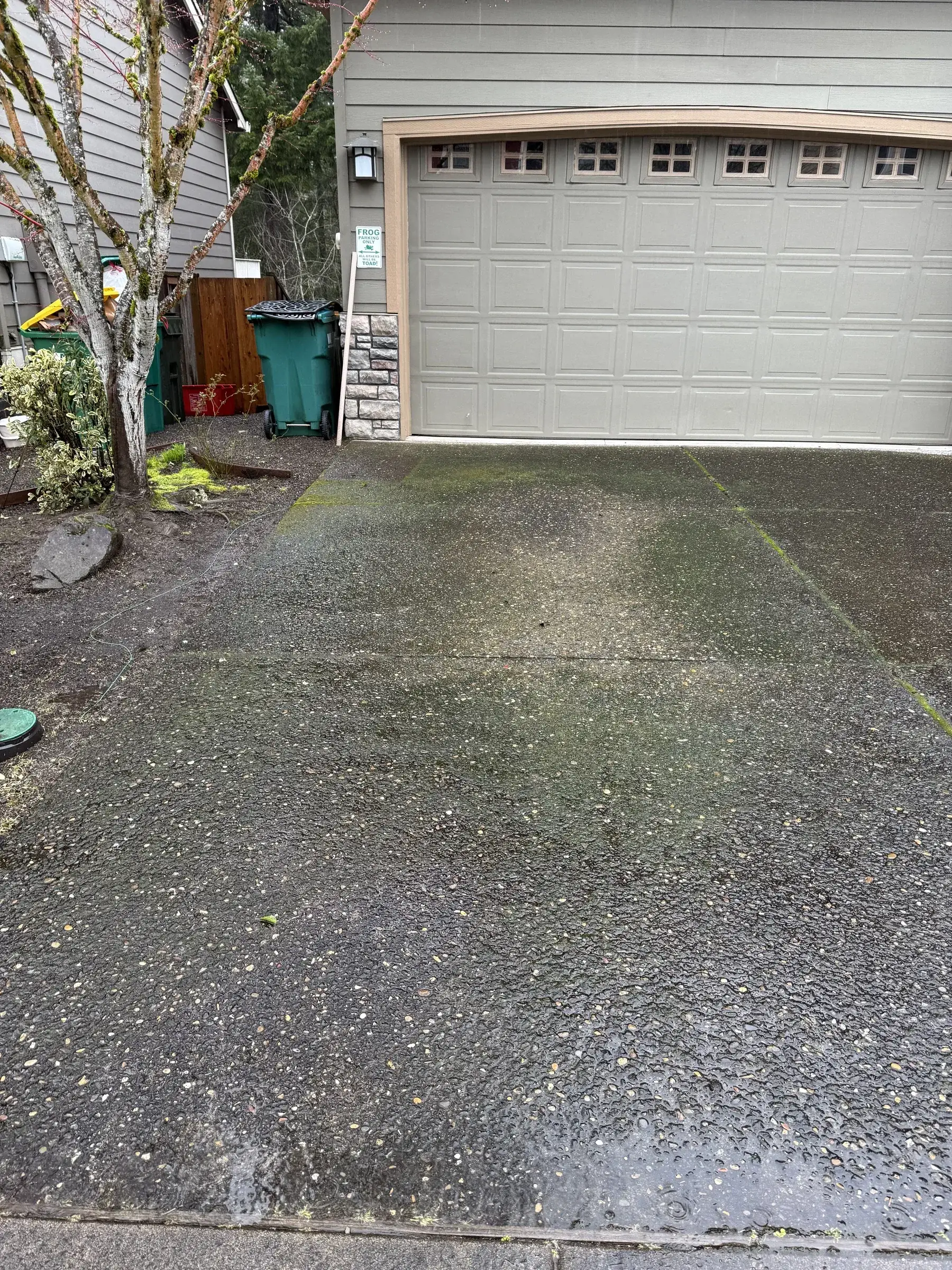
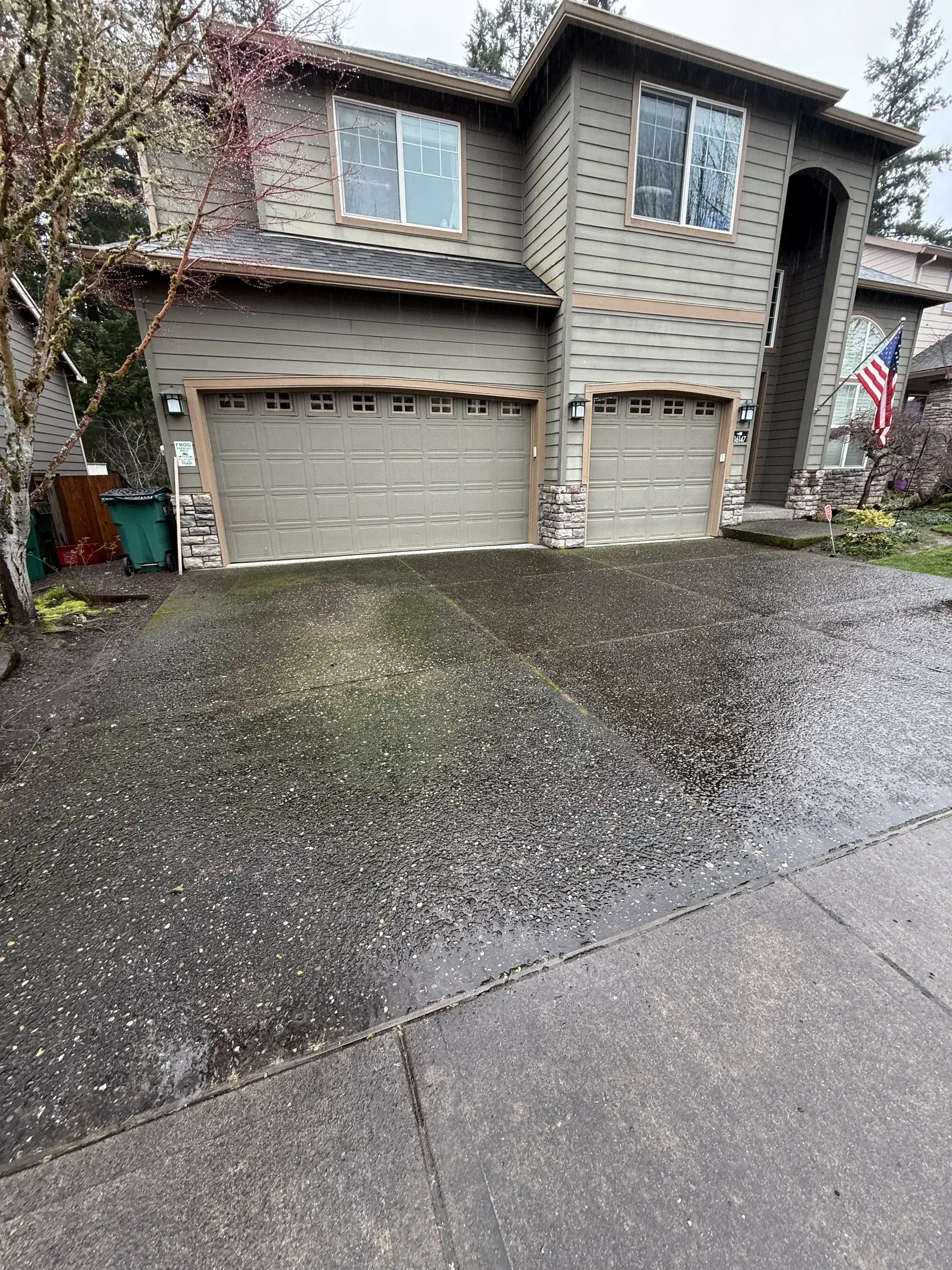
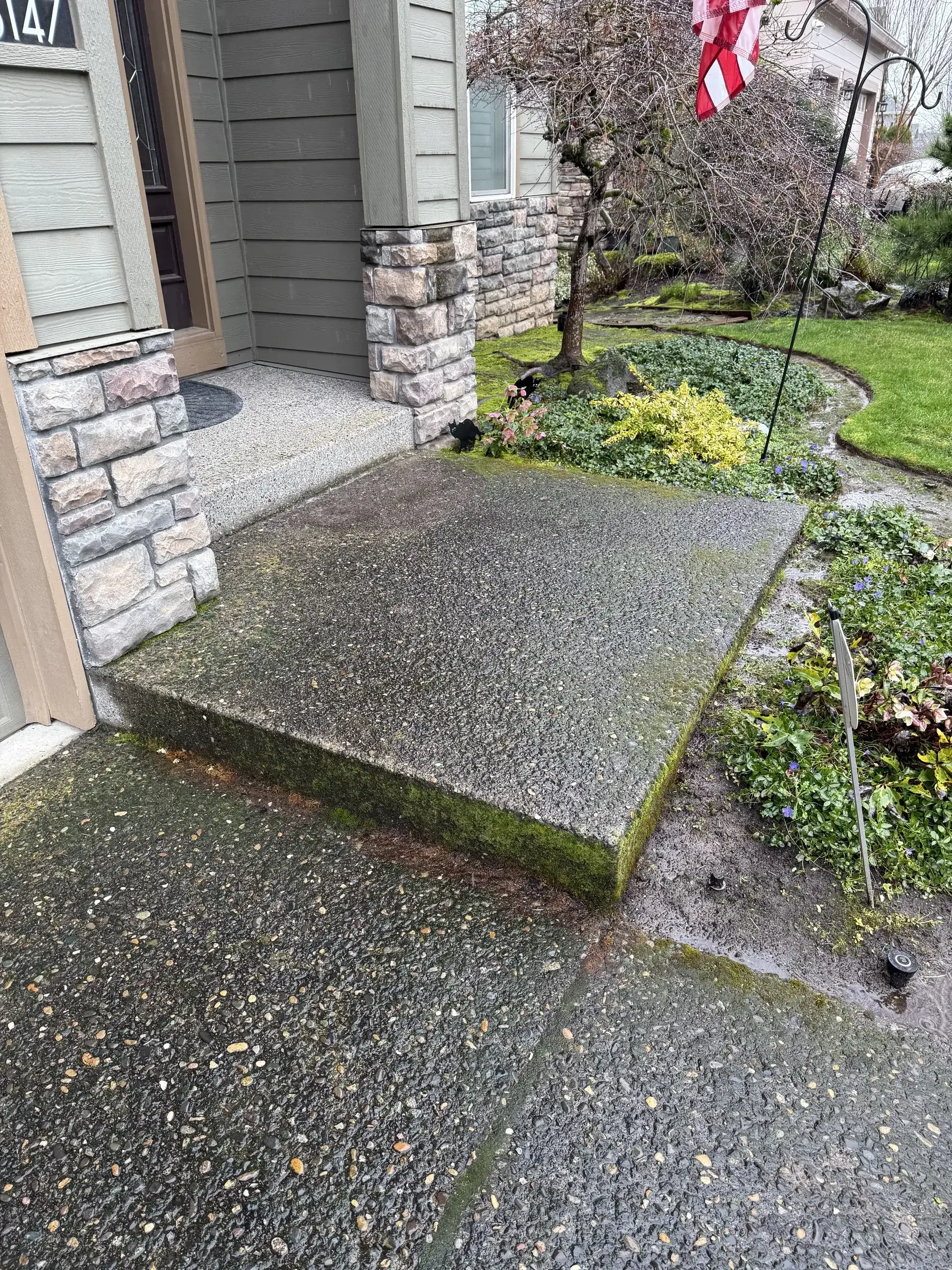
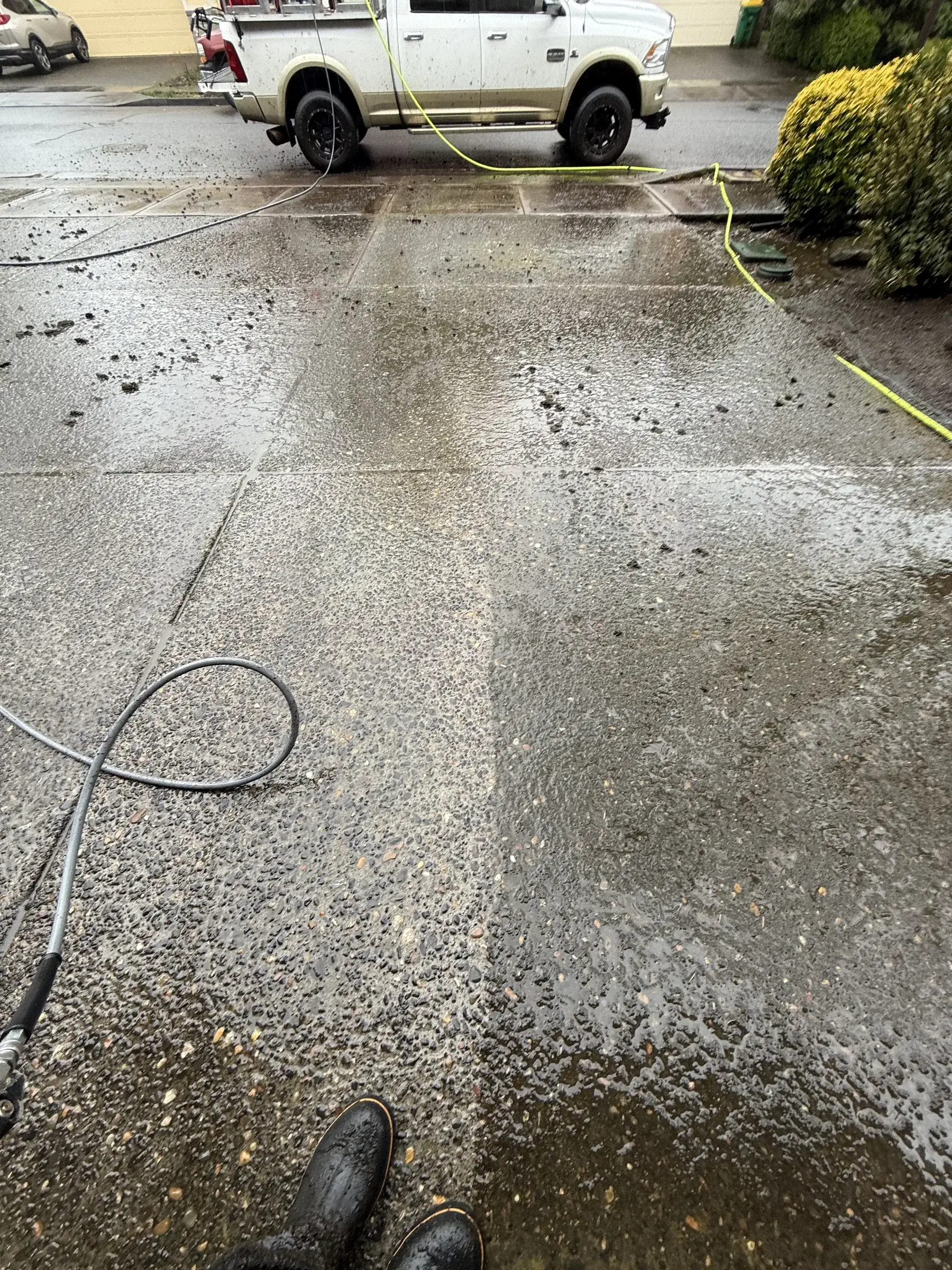
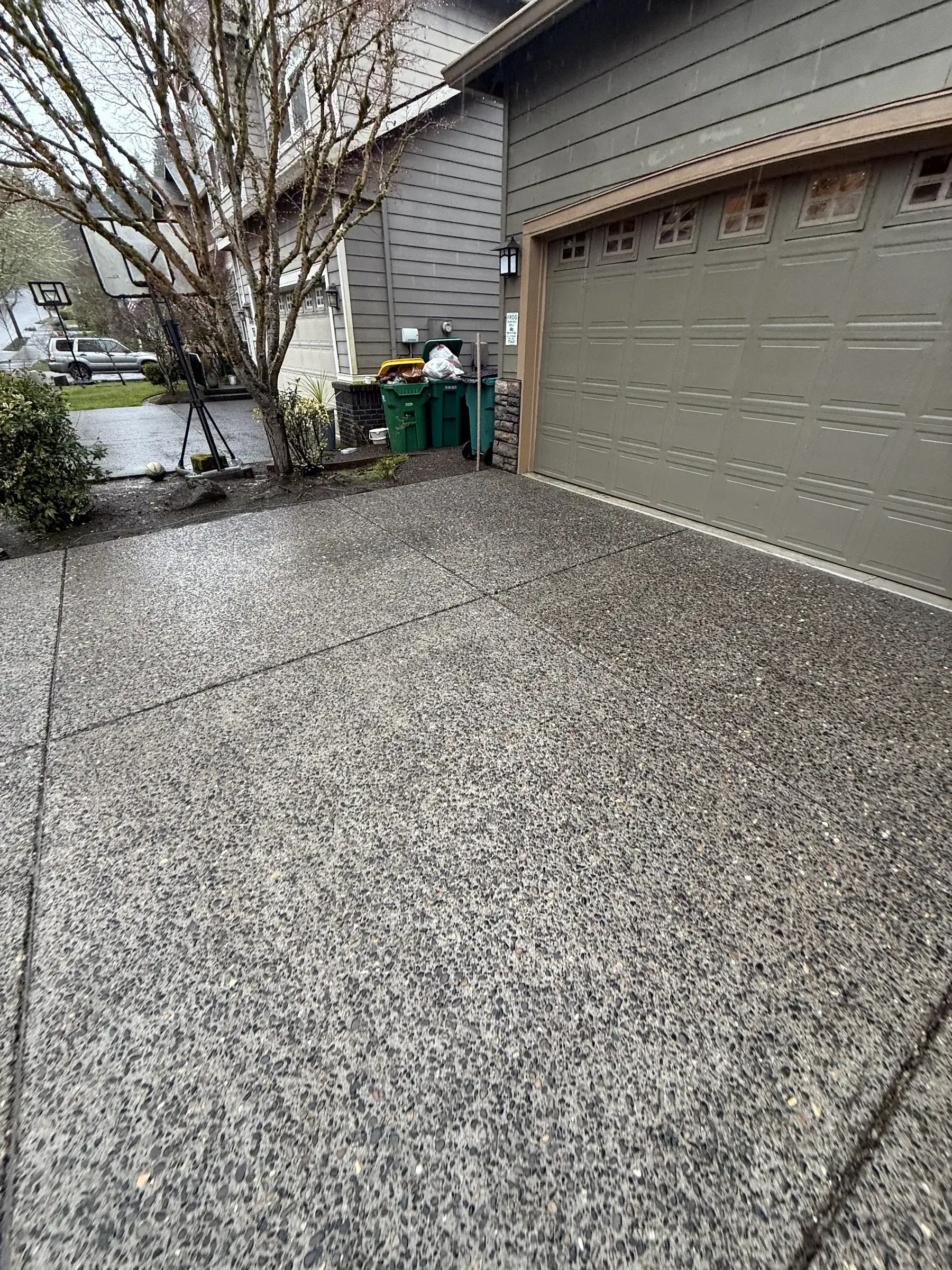
For this kind of driveway cleaning, the concrete needs to be cleaned evenly while the joints, borders, and driveway-to-sidewalk transitions get separate attention. The broad driveway panels were cleaned with a method suited to flatwork, then the edges and tighter areas were detailed so the moss did not remain where people step, turn, or walk toward the garage.
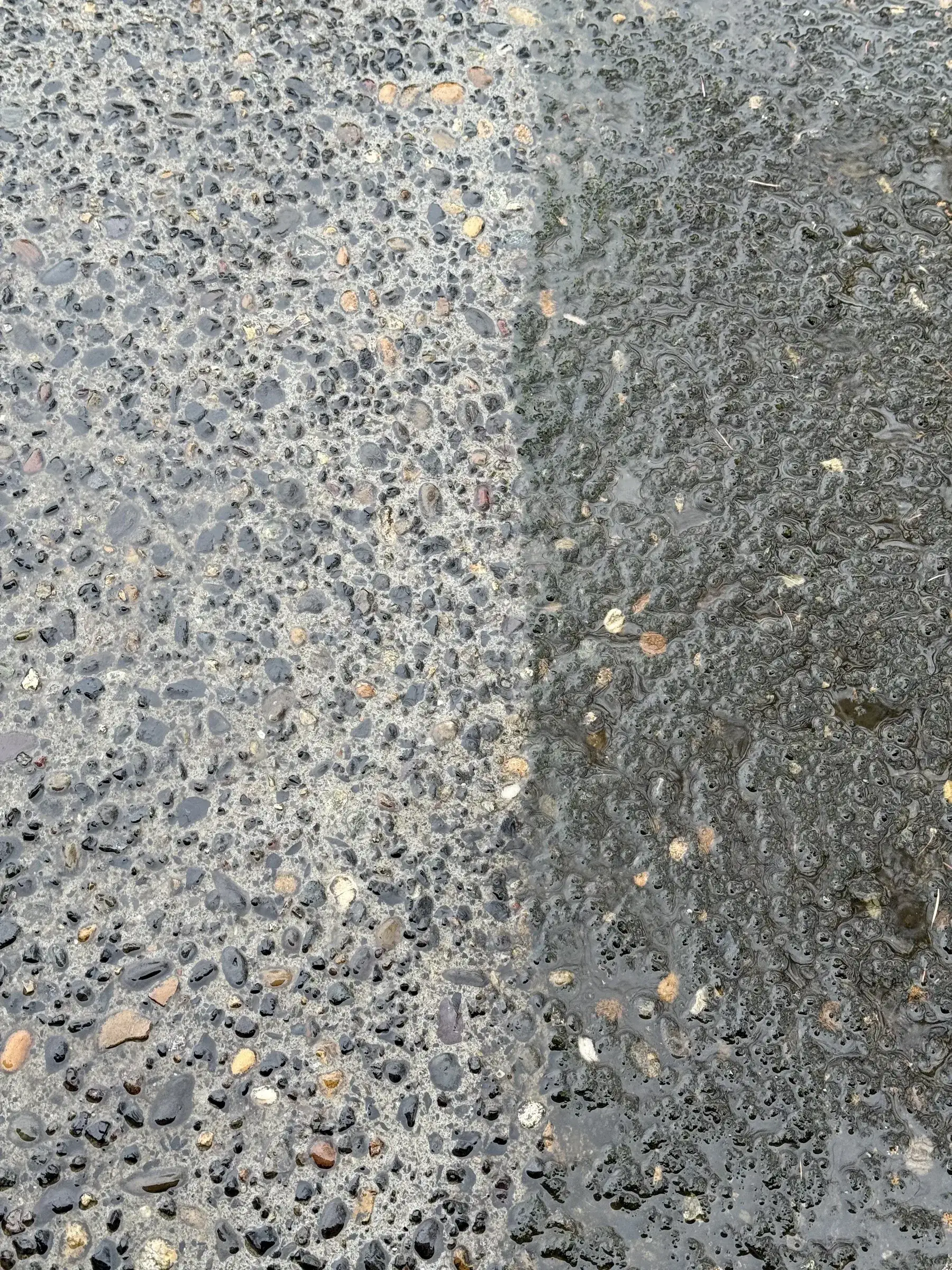
Because the surface was exposed aggregate, the work was aimed at removing moss and surface buildup without pretending the driveway would look like brand-new concrete. Older aggregate keeps its natural color variation, texture, and wear after cleaning. The useful change here was removing the slippery organic layer and brightening the approach from the street to the garage.
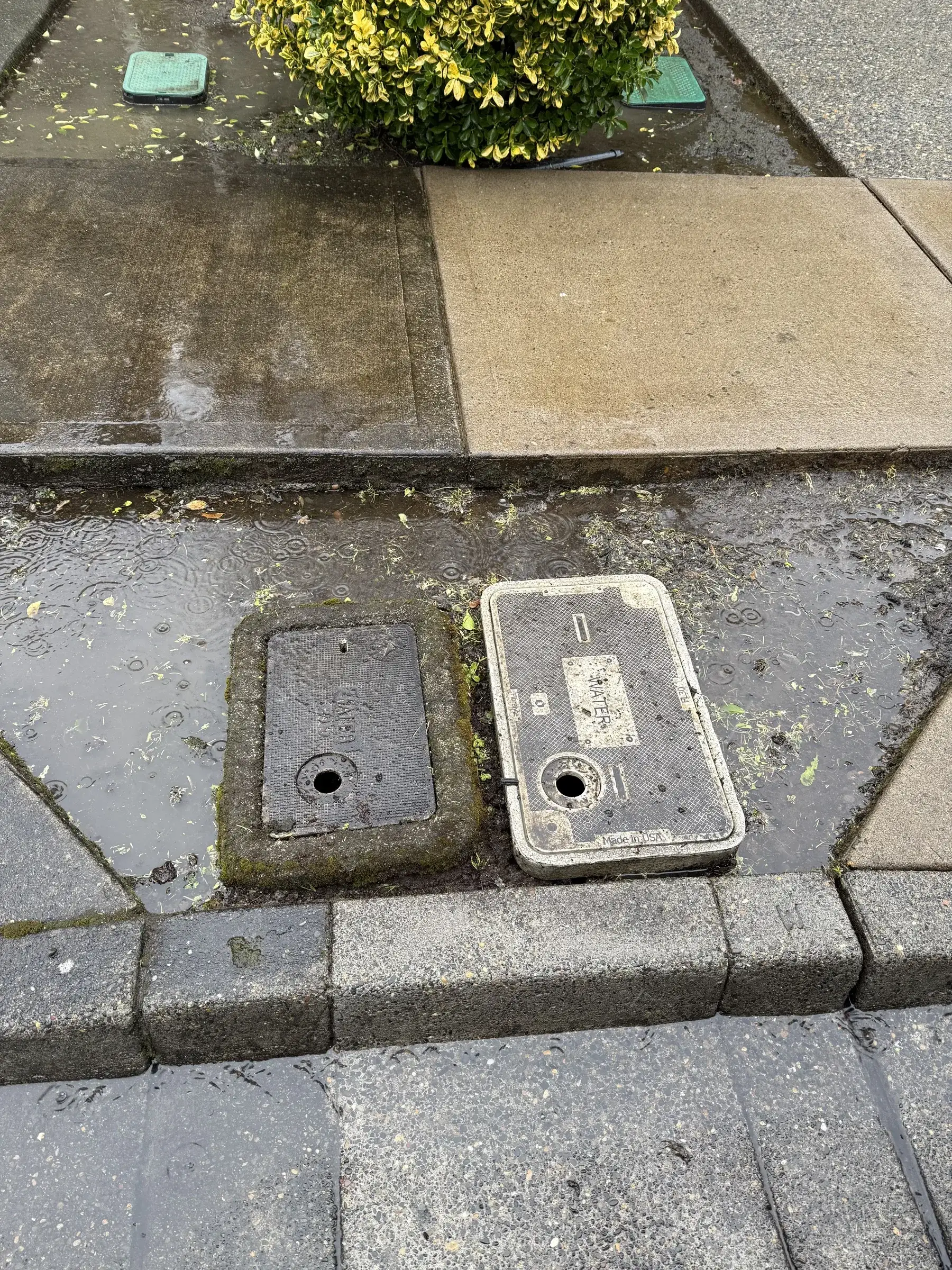
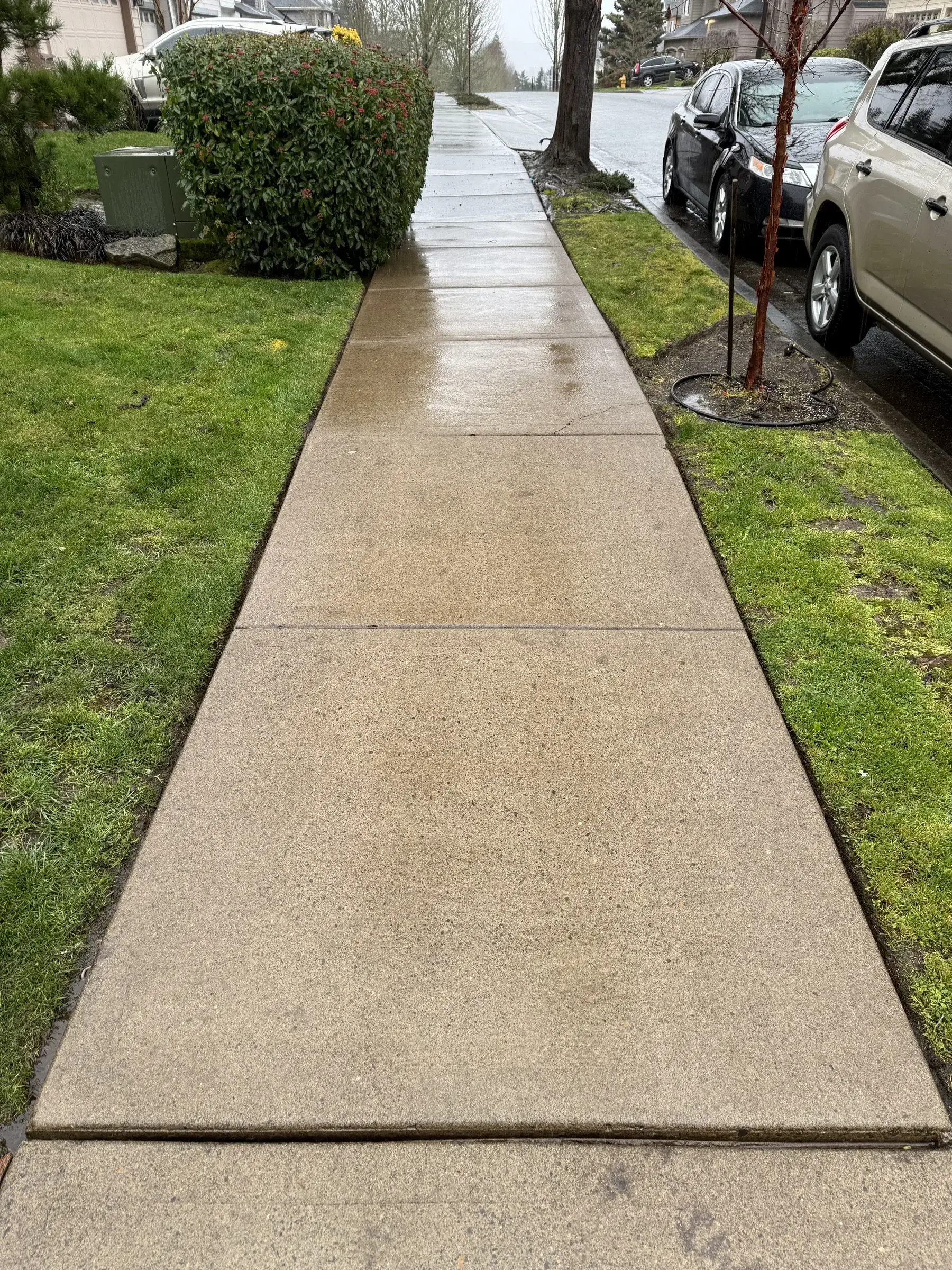
One thing that stood out on this project was how the moss followed the water path. The driveway panels had general darkening, but the heaviest growth sat in seams, along landscaped edges, and on the sidewalk strip that stayed wet beside the hedge. Those are the same spots a quick pass can miss, and they are also the places most likely to feel slick first during rain.
Local Context
South Beaverton Moisture Shows Up in the Concrete
South Beaverton neighborhoods near Sexton Mountain, Murrayhill, and the Neighbors Southwest area often have sloped streets, mature trees, hedges, and shaded garage approaches. That landscaping is part of what makes the area feel established, but it also means concrete can stay damp after rain.
This property showed that pattern clearly. The wet day did not create the moss by itself; it revealed where the driveway and sidewalk were already holding organic buildup. For homeowners comparing pressure washing options, that difference matters. The estimate should account for surface texture, moss level, drainage, and the walking route, not only square footage.