Cleaning Method
Pretreating, Surface Cleaning, and Post-Treating the Driveway
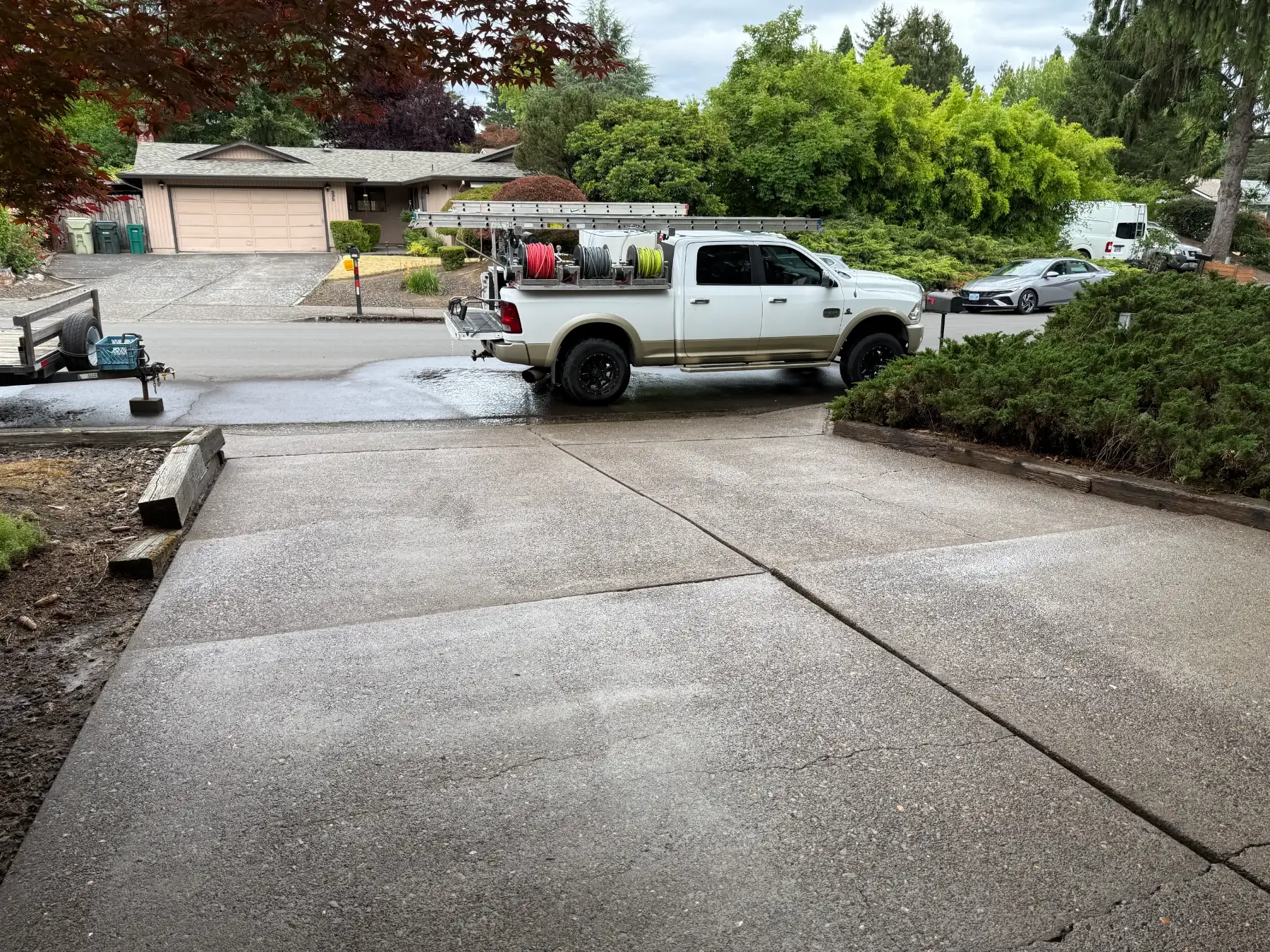
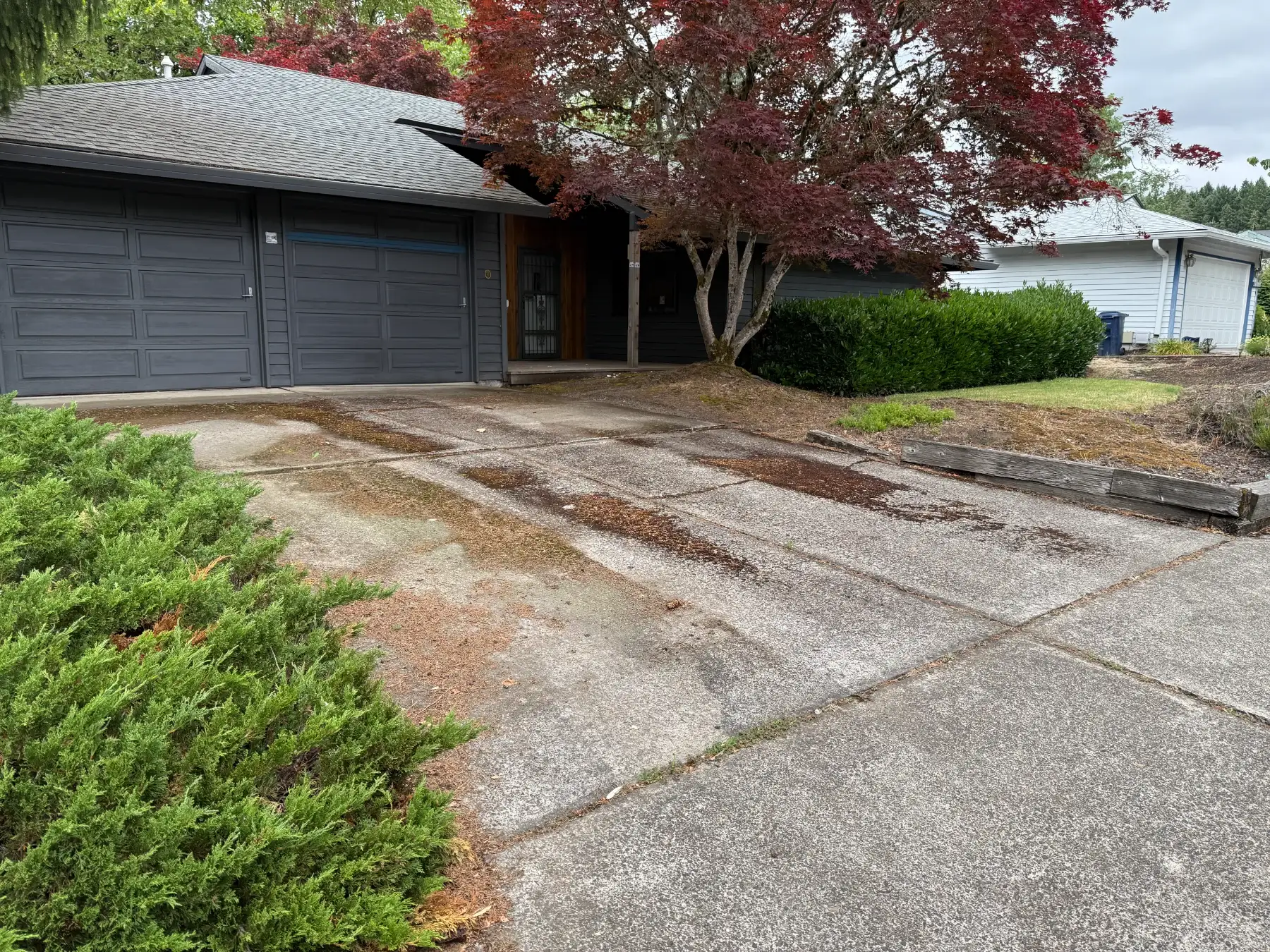
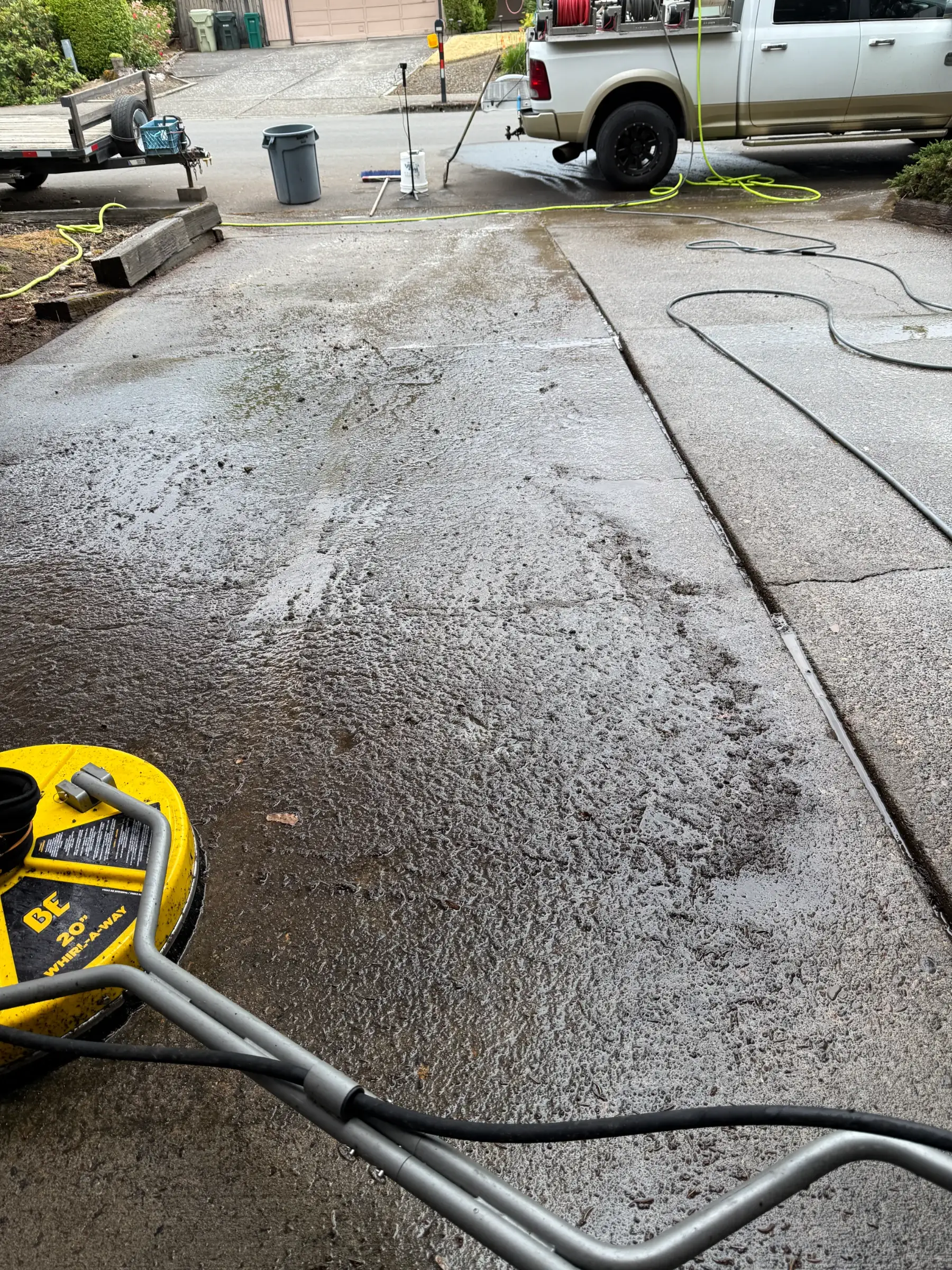
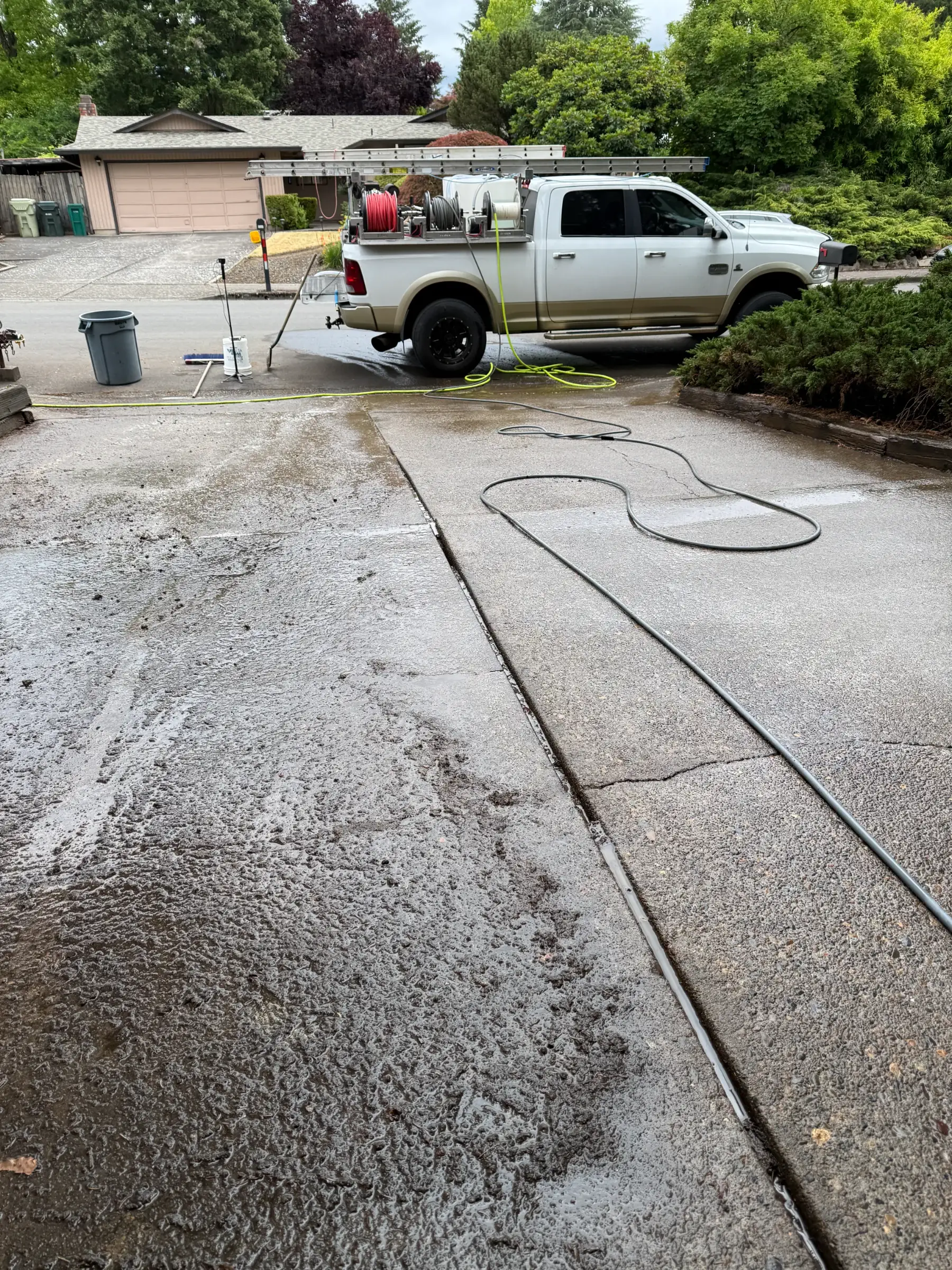
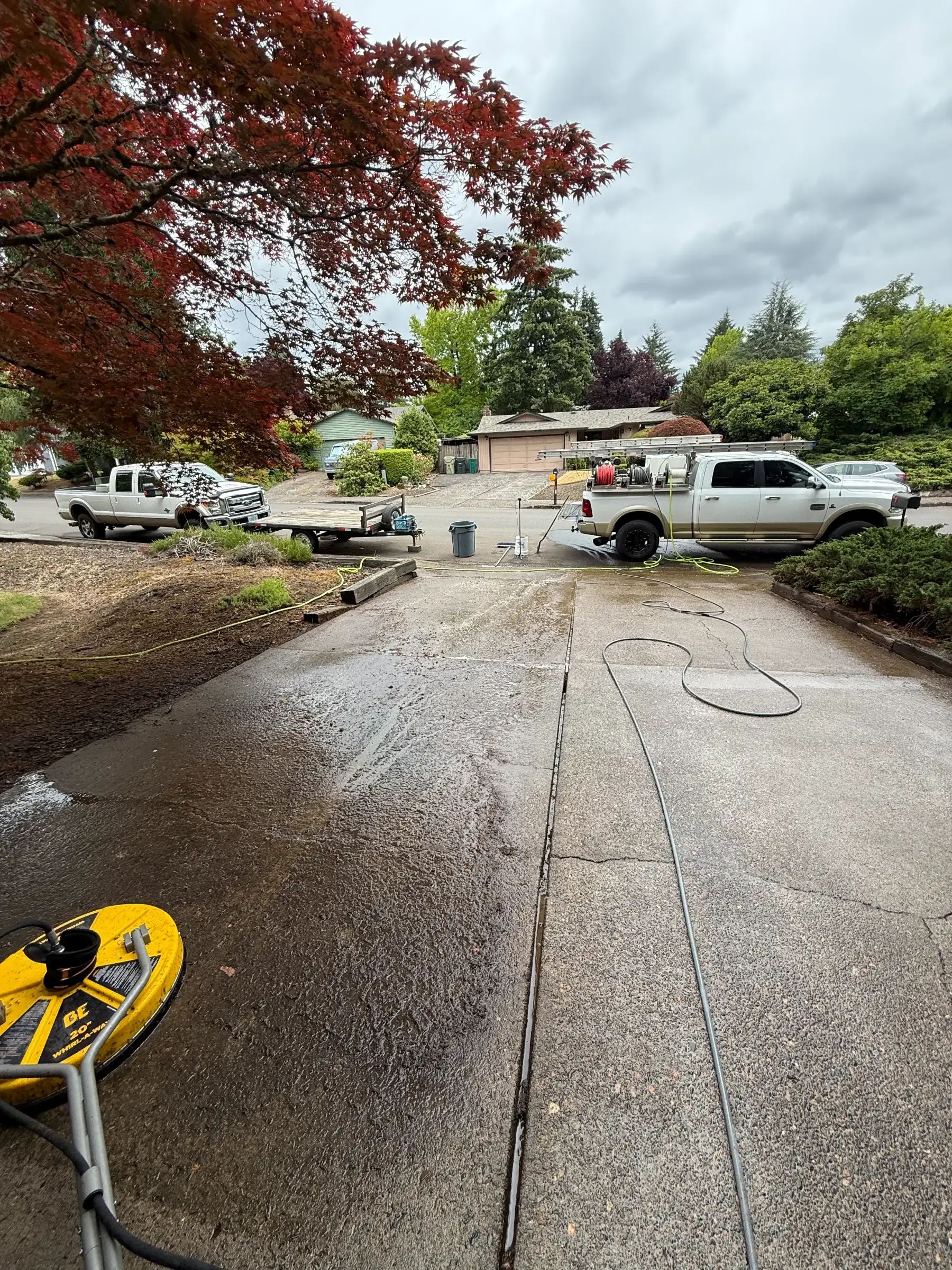
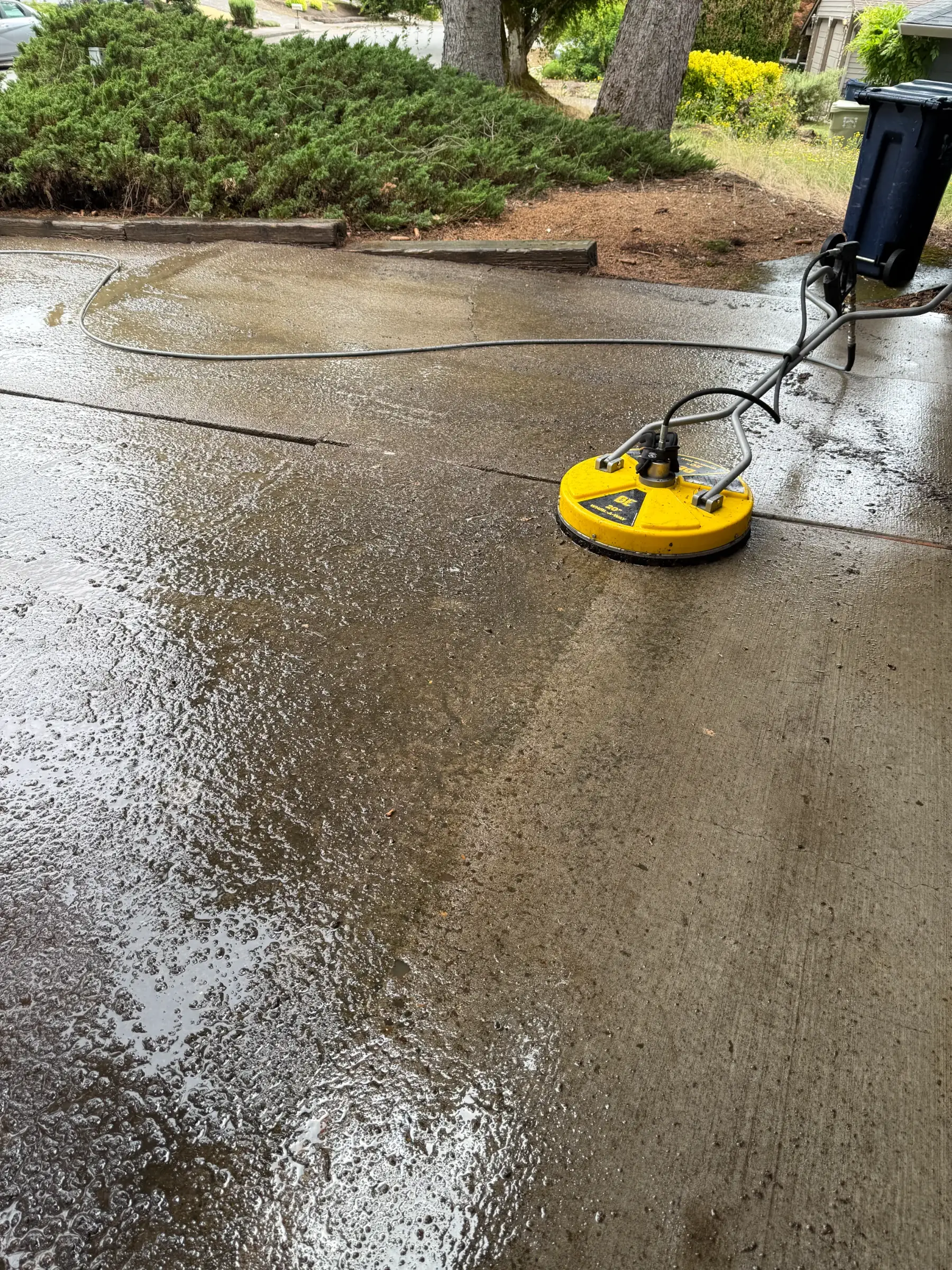
For heavy driveway moss like this, pretreatment helps break up the organic growth before the main pressure washing pass. The open driveway panels were cleaned with a surface cleaner so the concrete could be cleaned more evenly than it would be with wand-only passes.
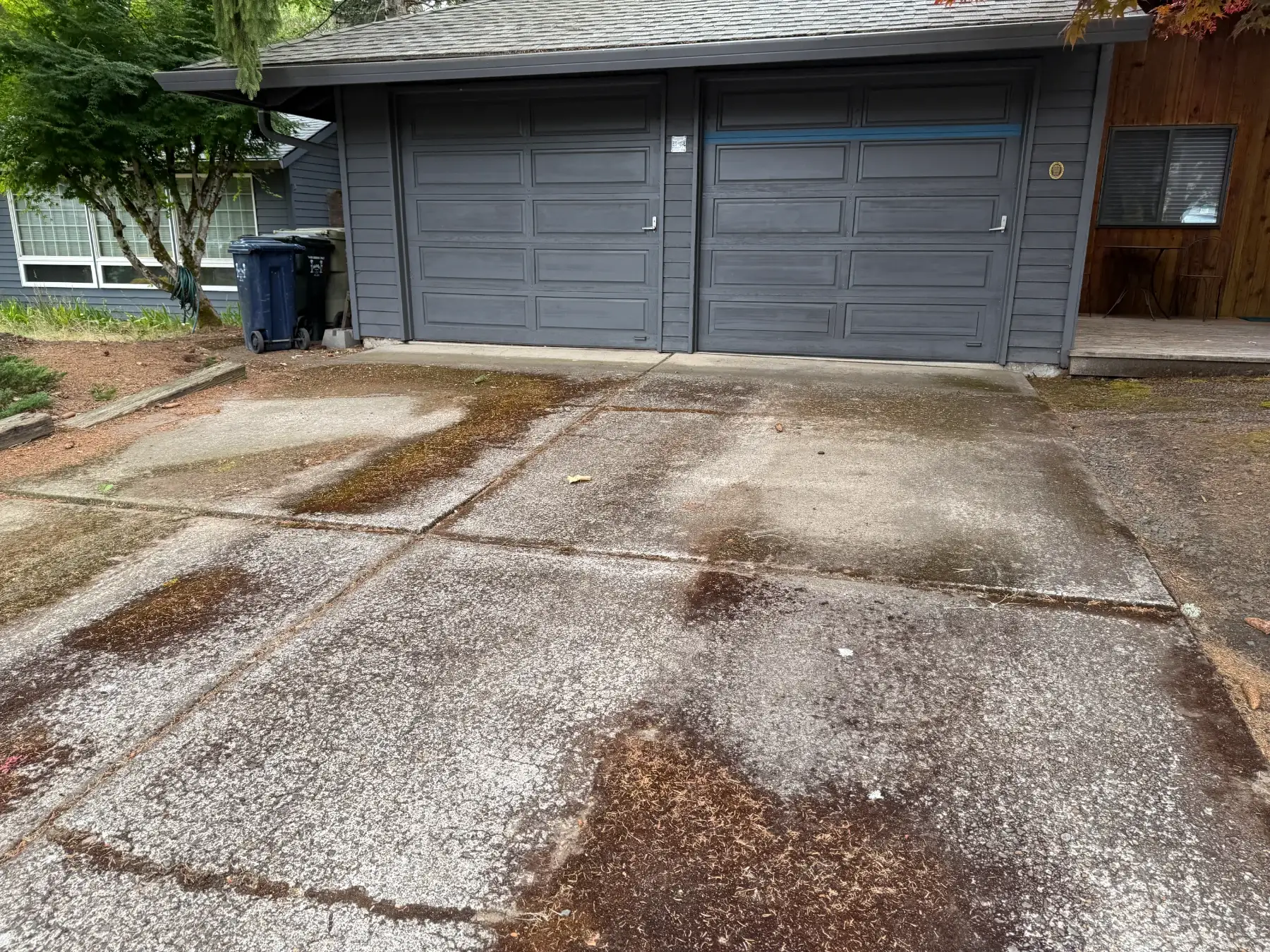
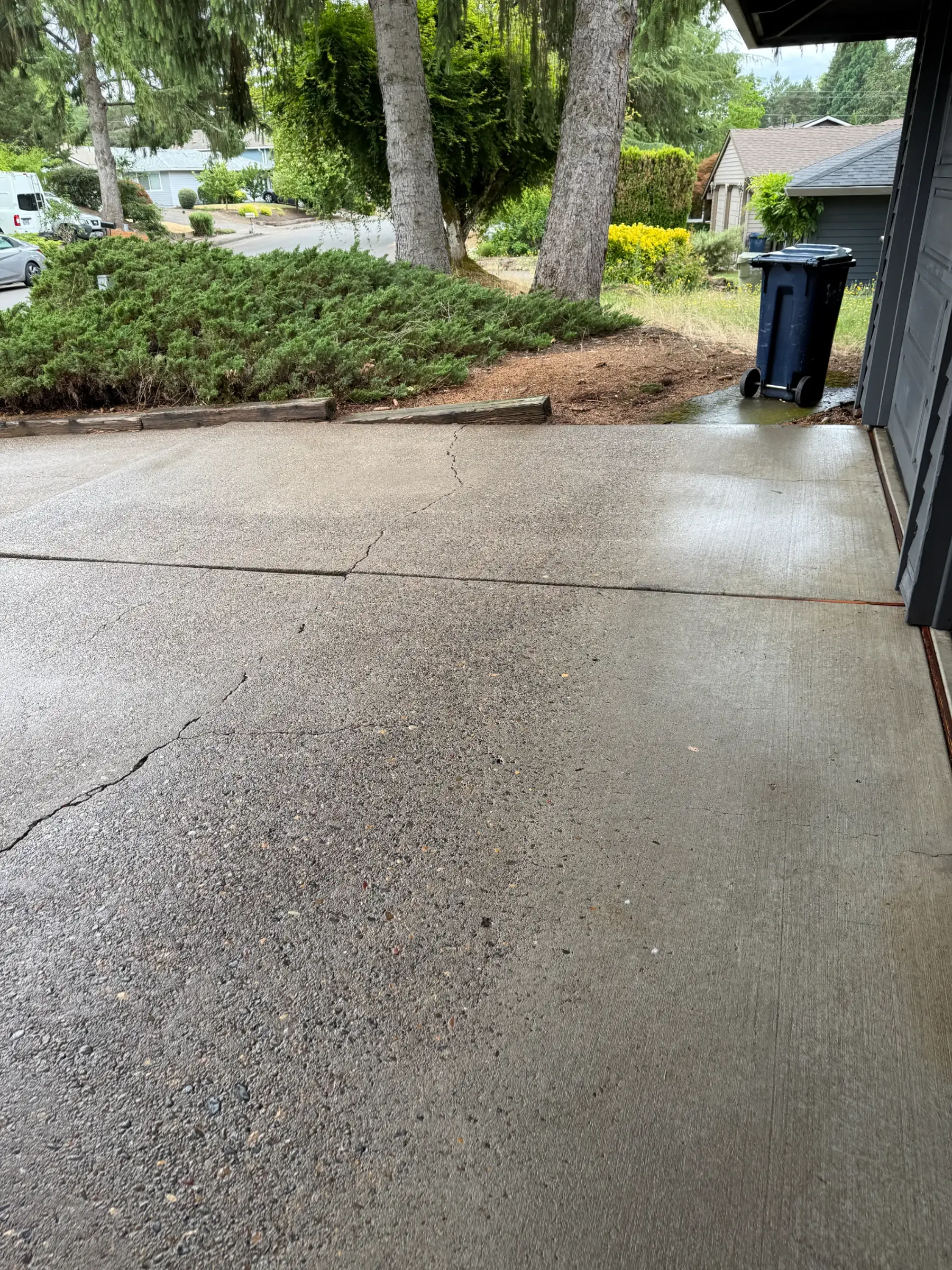
After the surface cleaner loosened the buildup, the driveway was rinsed and detailed along the seams, garage apron, and landscape borders. Those tight areas are usually where moss hangs on longest because they stay damp and collect needles, leaves, and soil.
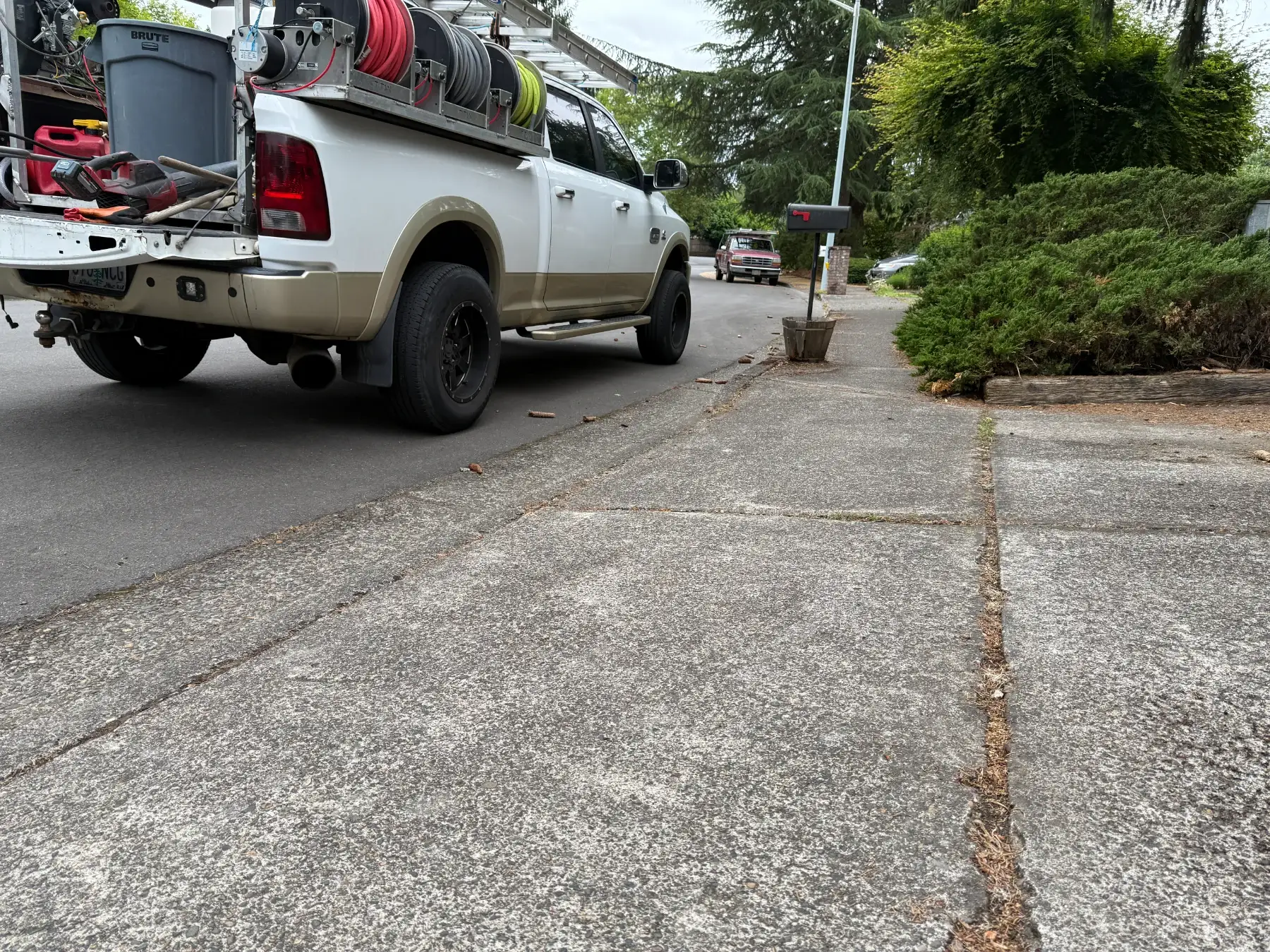
A detail that mattered here was the way the moss followed the shade pattern. The thickest buildup sat below trees and beside the timber landscape edges, while the more open sections had lighter discoloration. Treating the whole driveway as one flat slab would have missed why certain areas were so much more active than others.
Local Context
Why Aloha-Area Driveways Can Stay Wet
Aloha and west Beaverton neighborhoods often have mature trees, low shrubs, and older concrete that sees months of wet weather. Around areas near Tualatin Valley Highway, Farmington Road, and 185th Avenue, a driveway can dry unevenly because one side gets sun while another side stays under tree cover.
That was the pattern on this property. The driveway looked like it had gone a long time between cleanings, but the heaviest moss still told a more specific story: shade, organic debris, and damp seams were feeding the buildup.