Jobsite Story
Shaded Patio Concrete, Slab Joints, and a Garage Approach
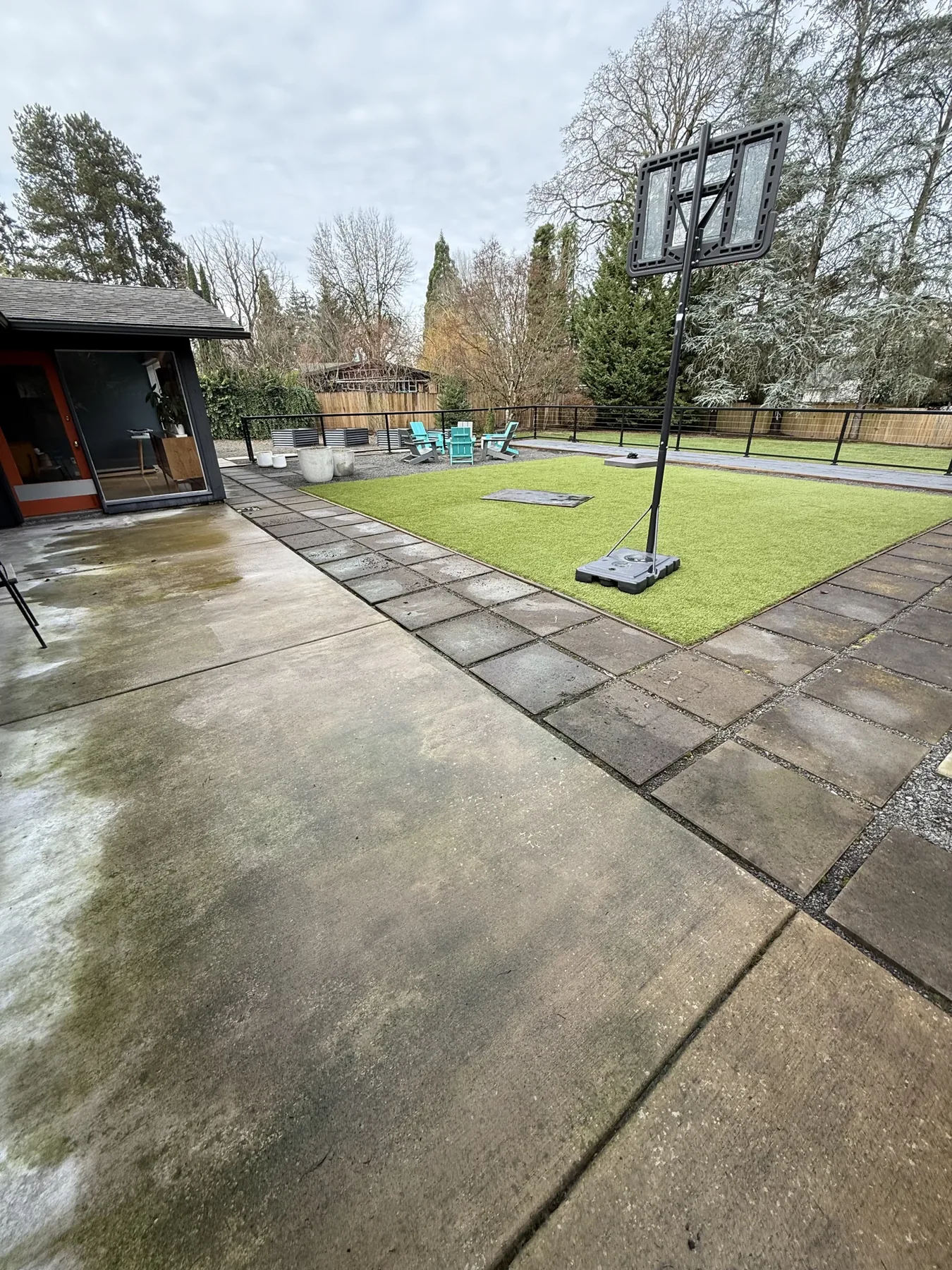
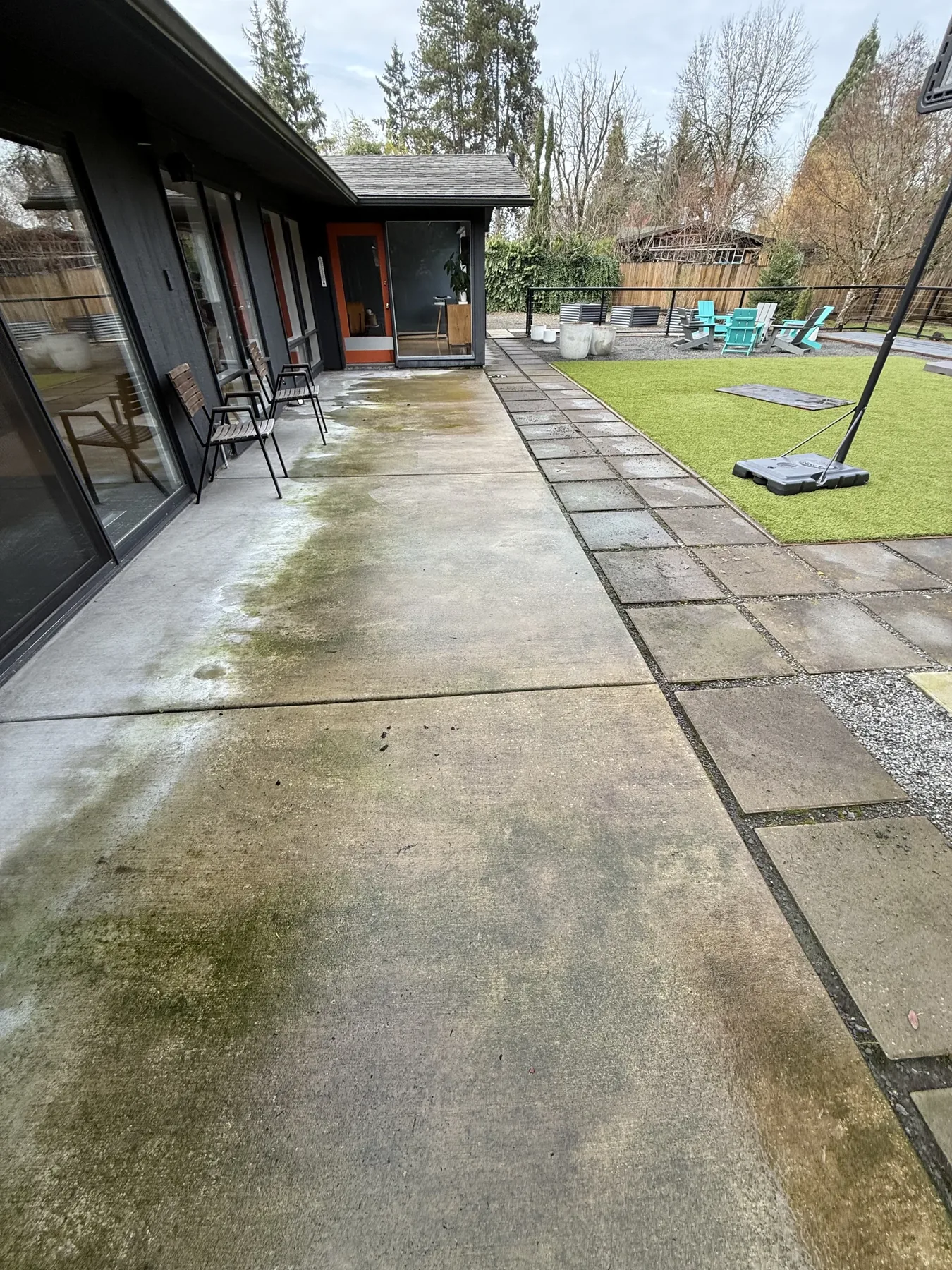
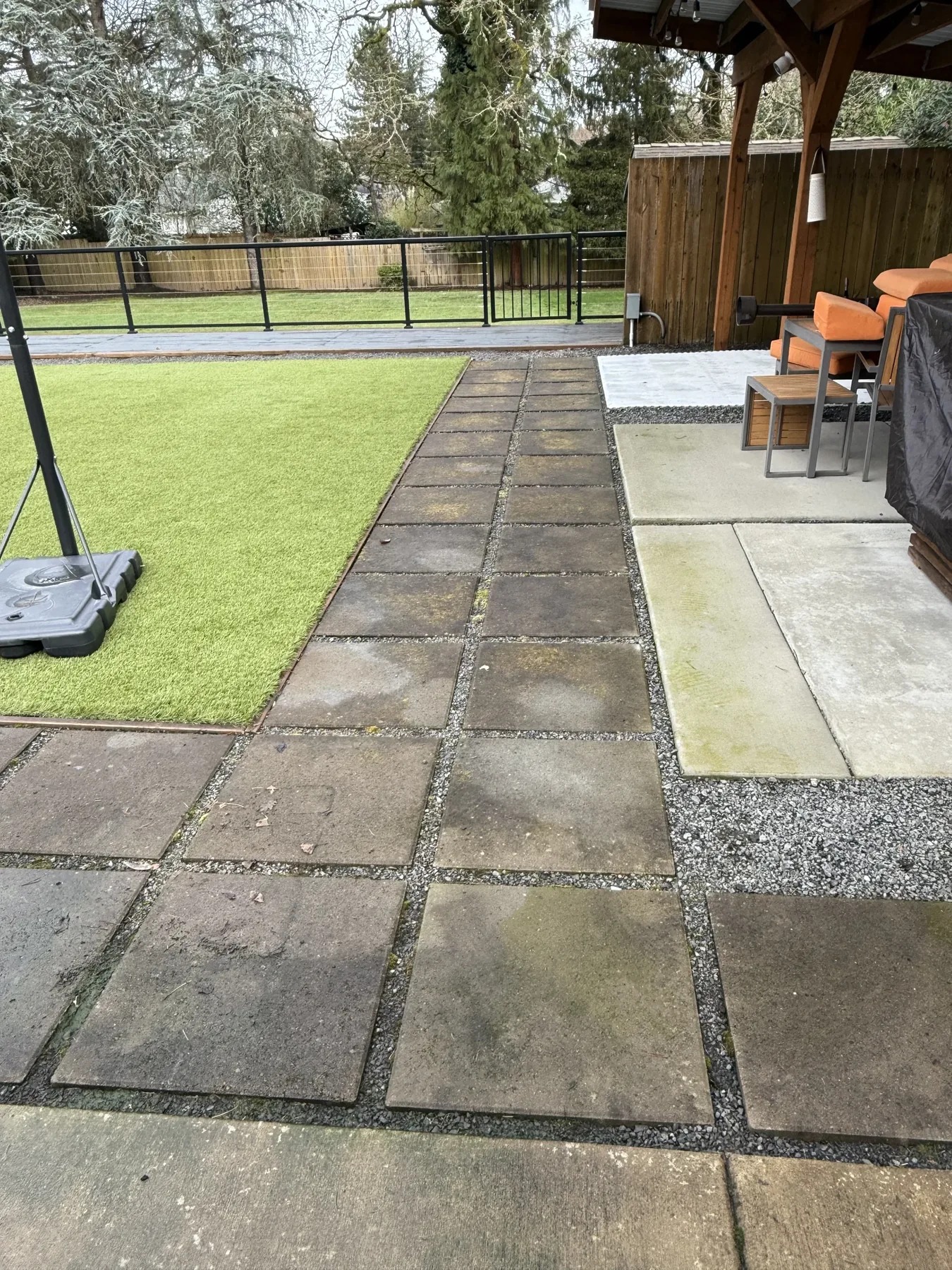
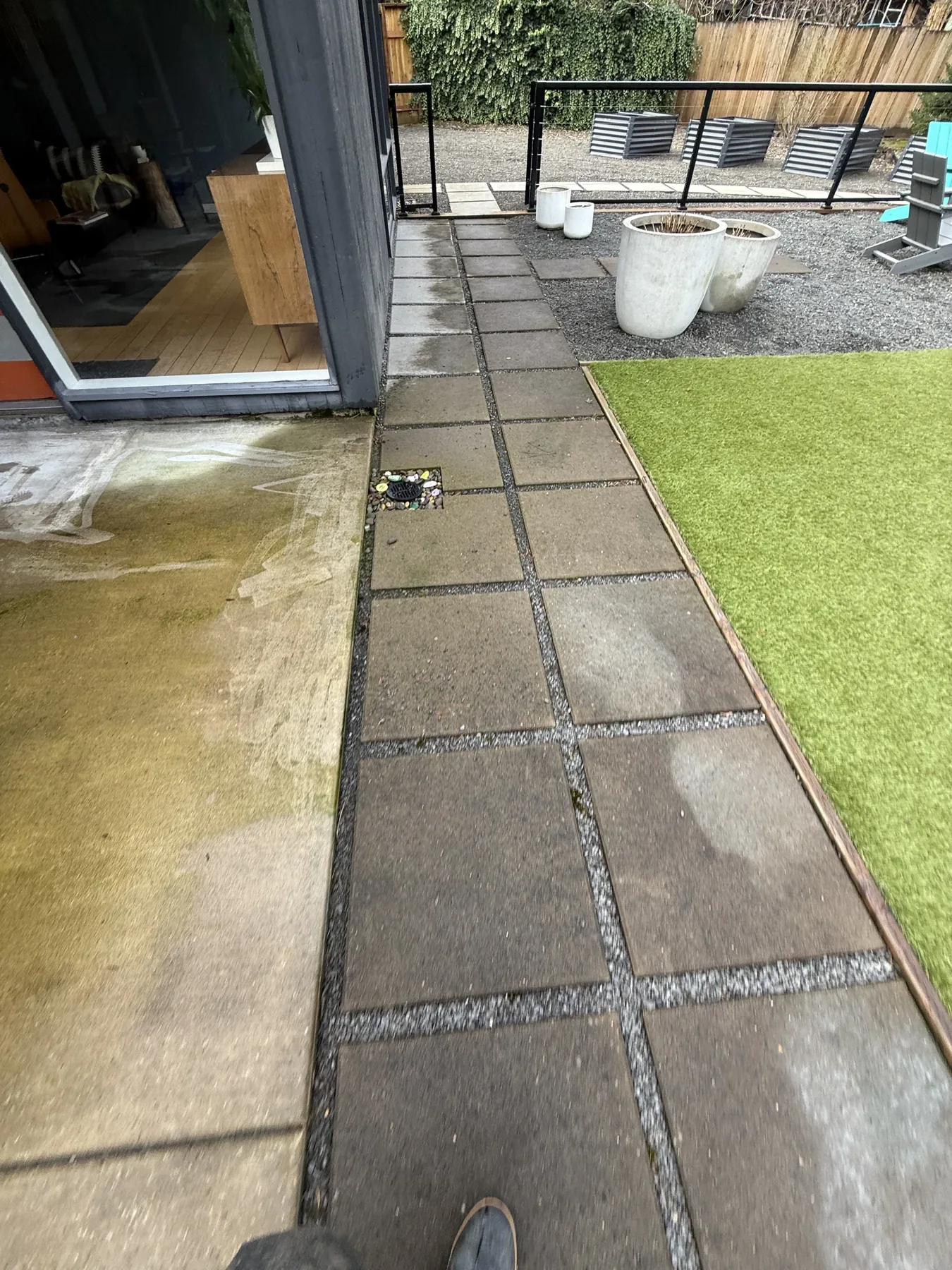
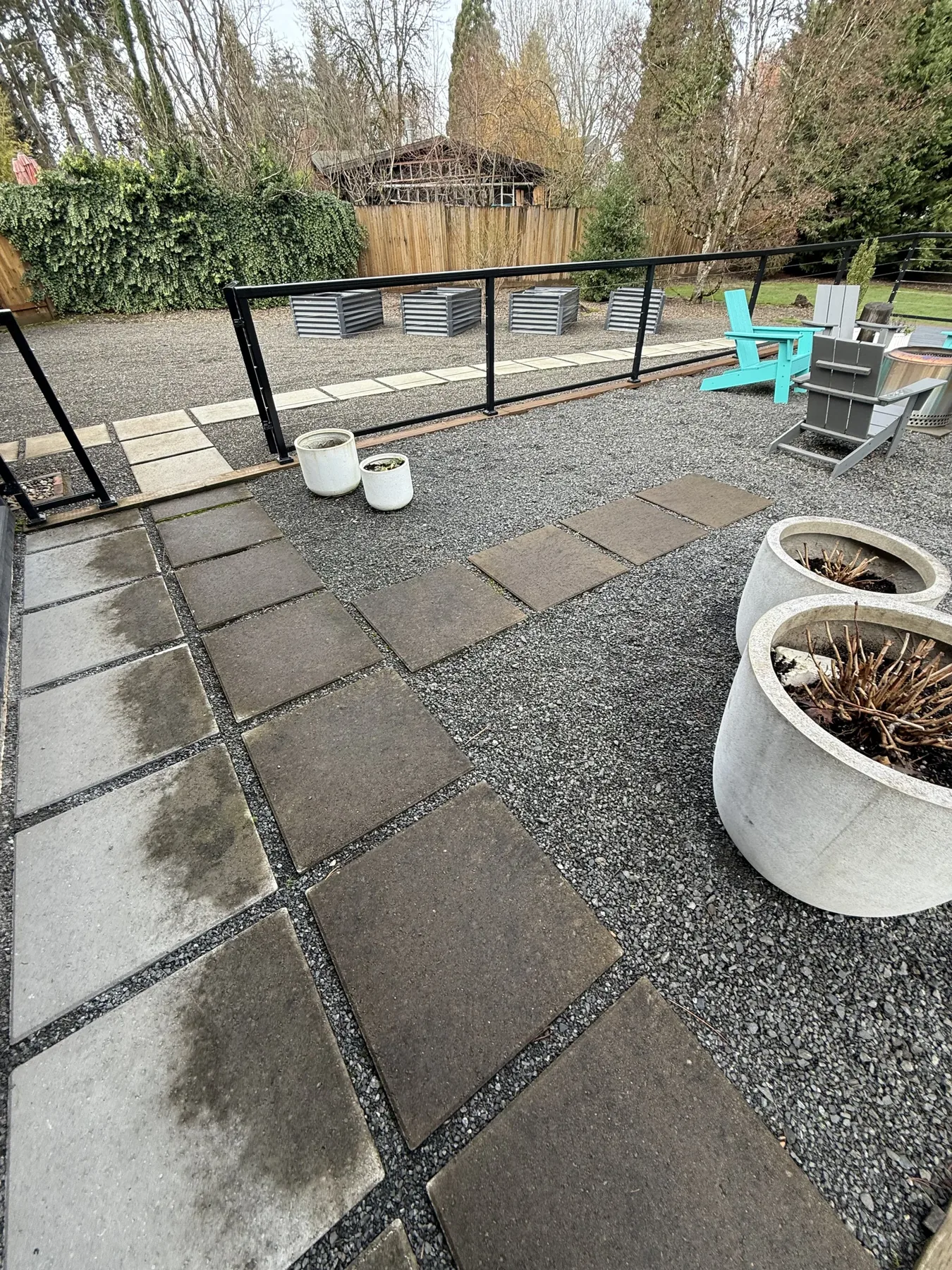
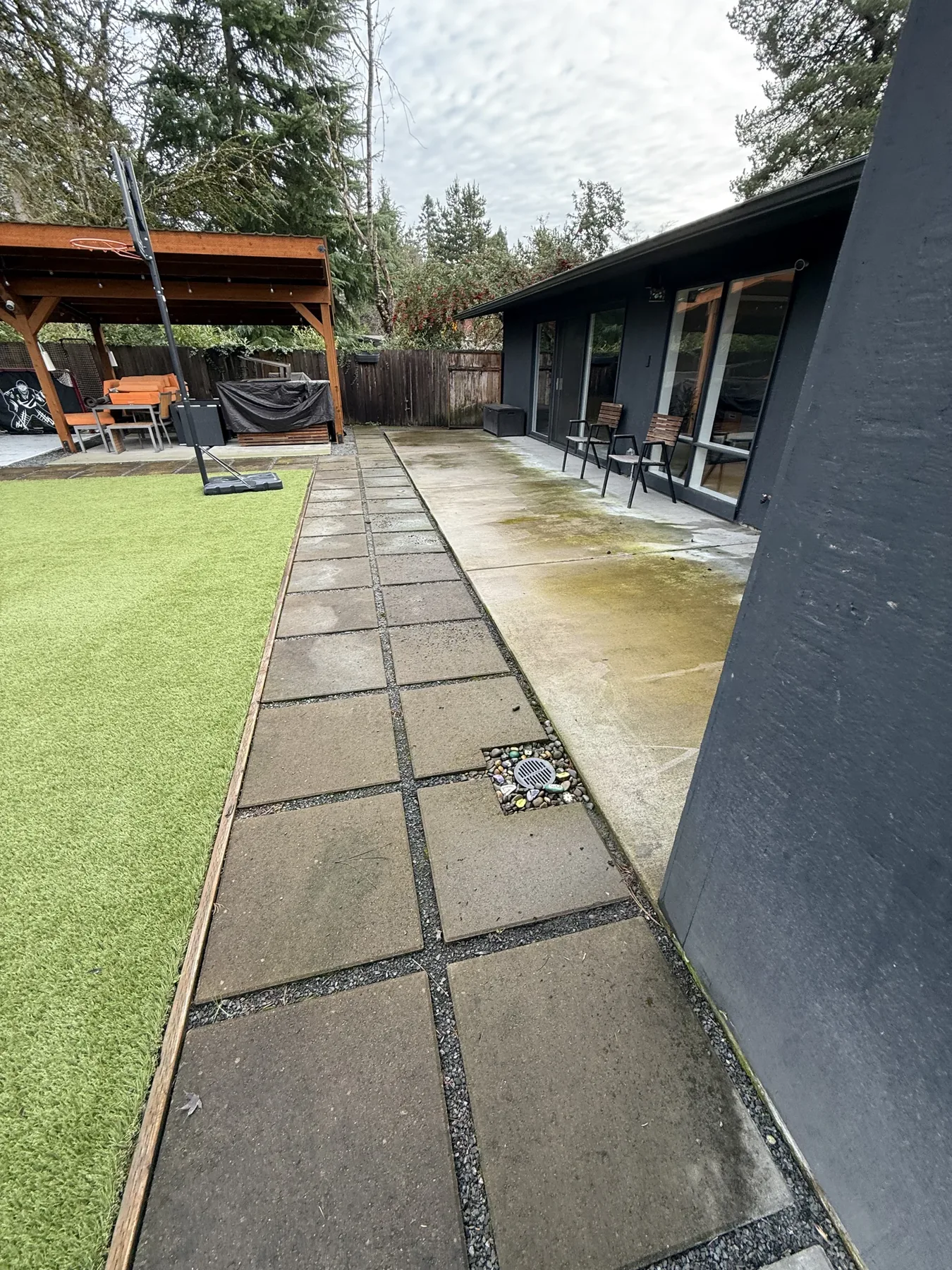
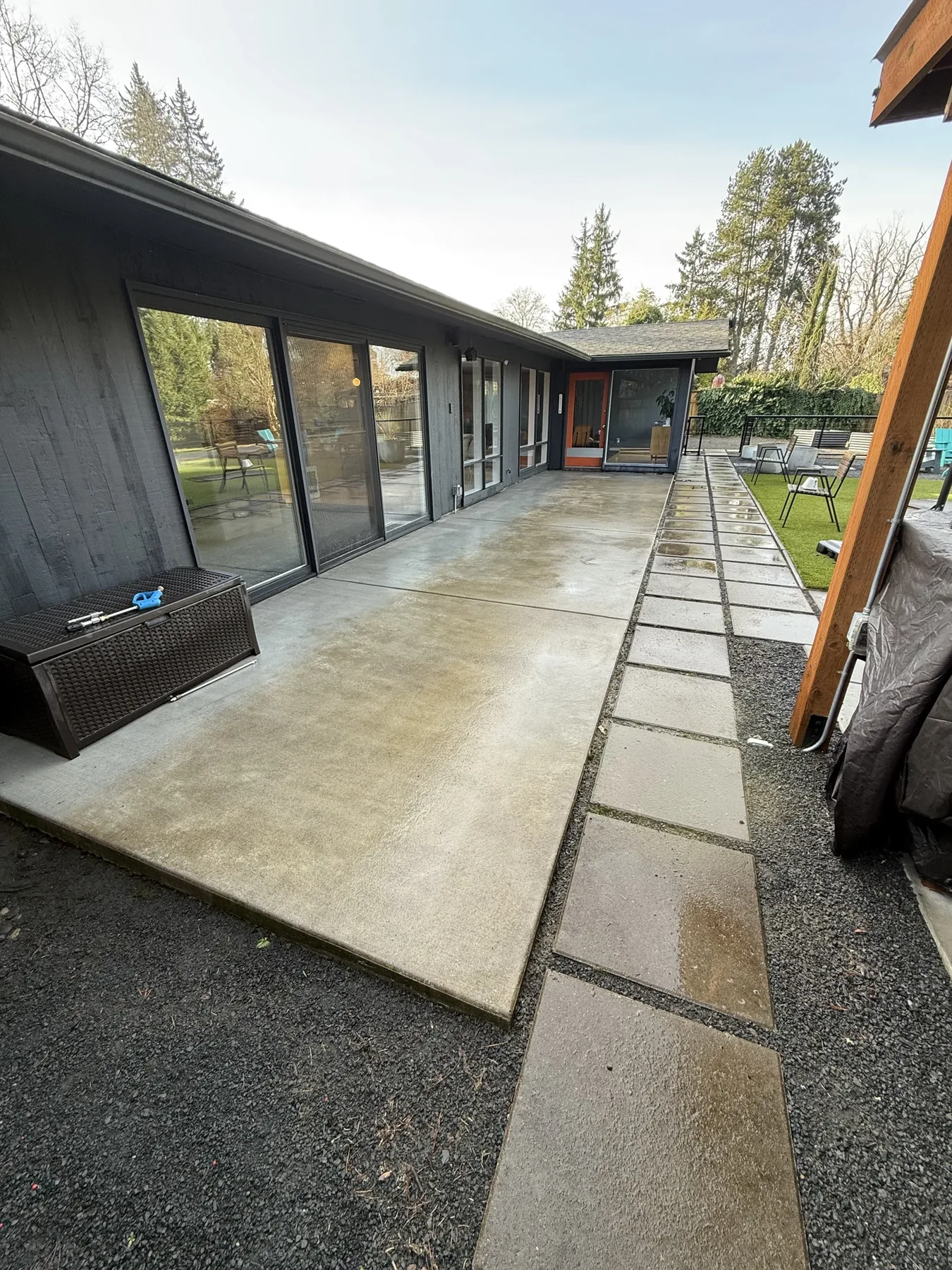
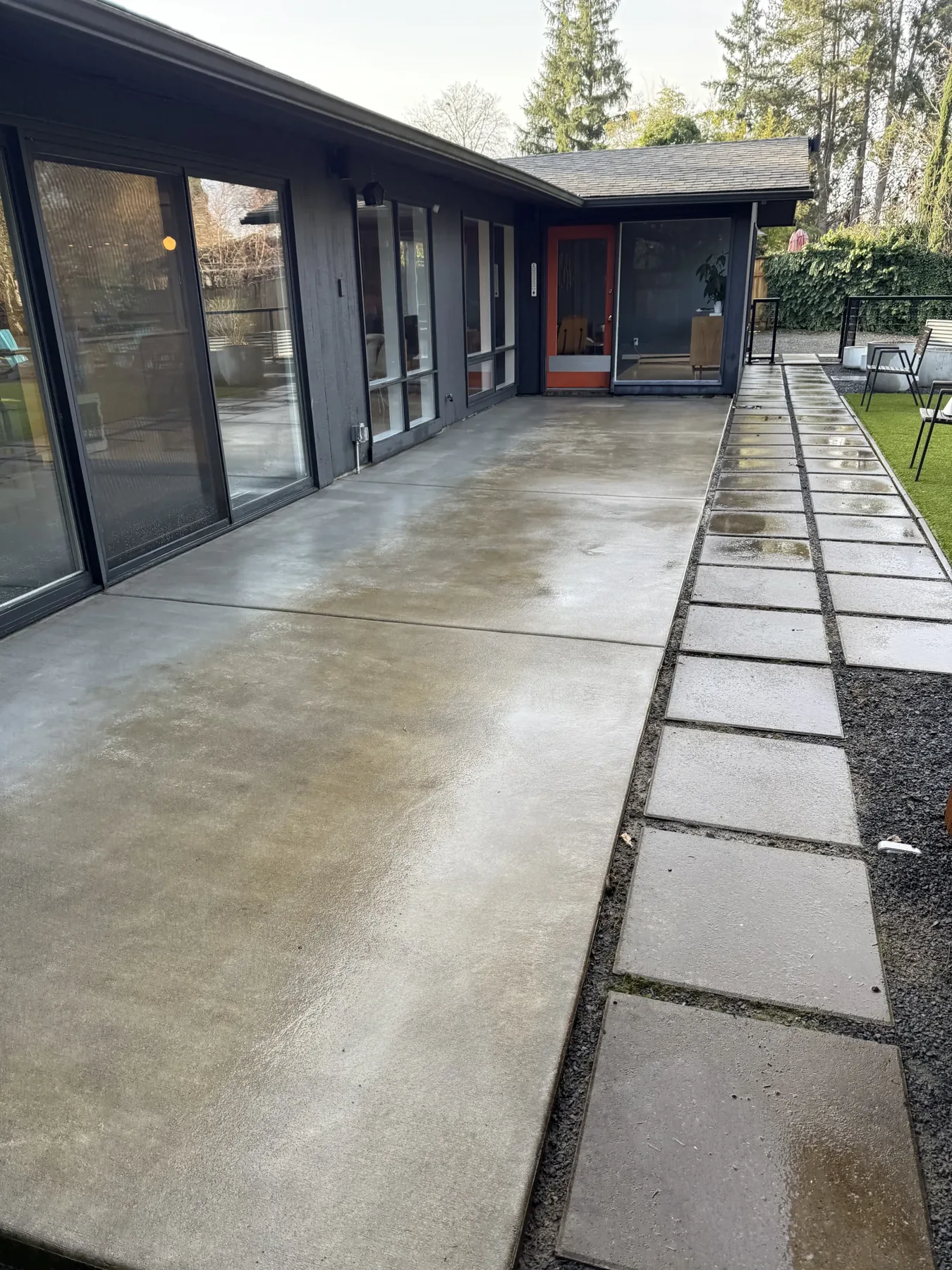
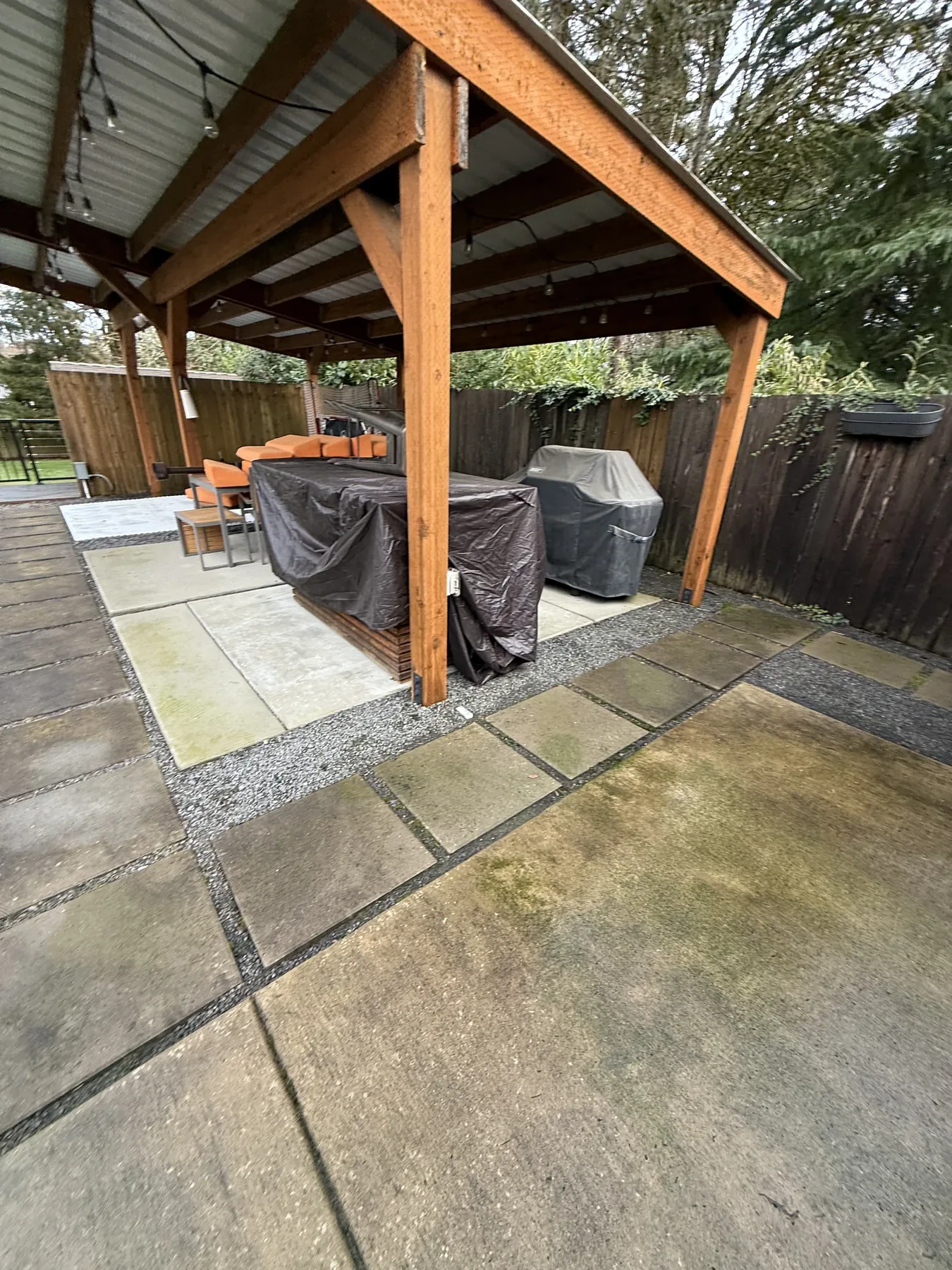
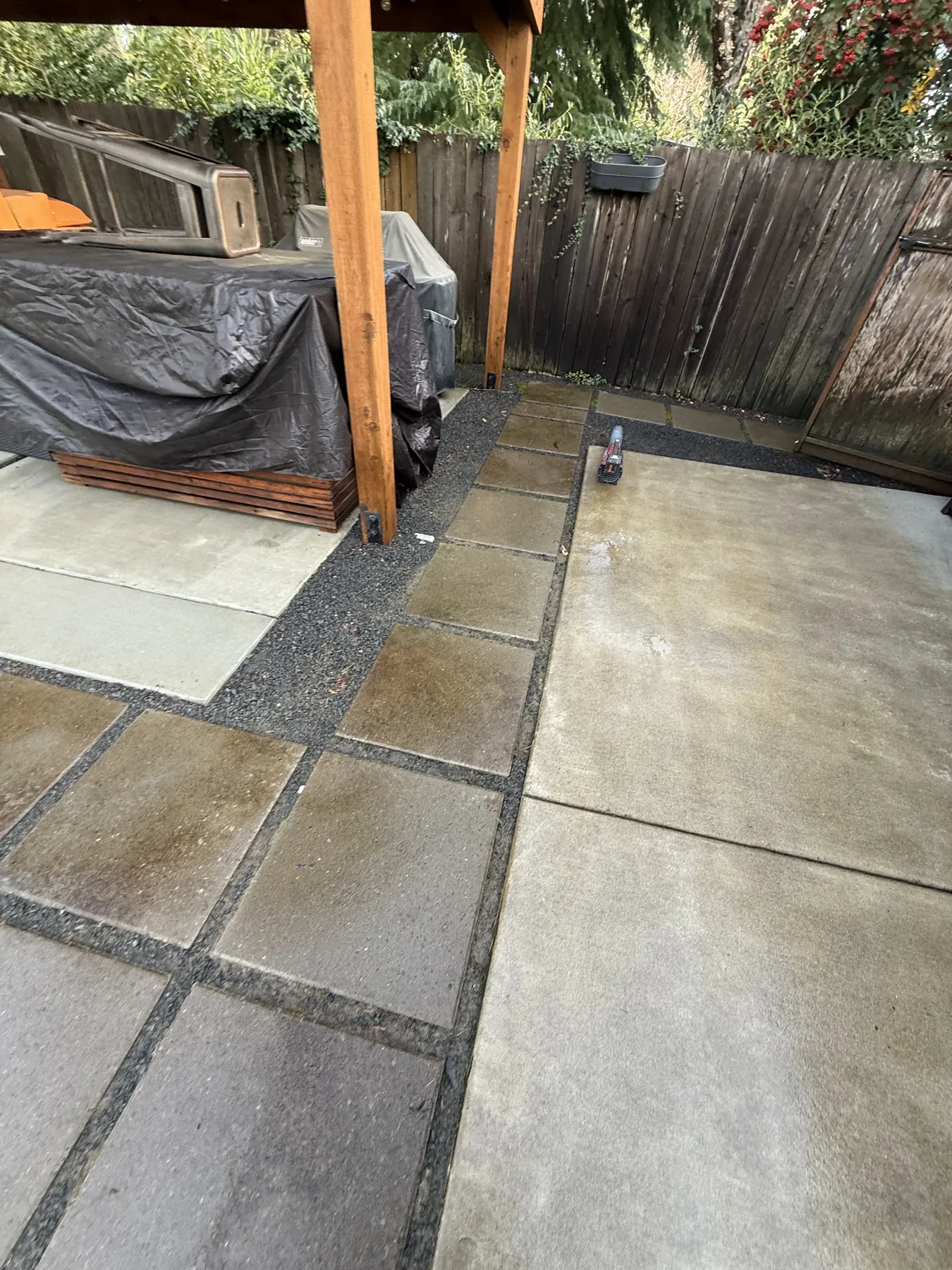
The back patio had several different concrete zones instead of one simple rectangle. Along the house, the long concrete run had darker wet-season buildup. Around the turf and planters, the square patio slabs had joints and edges that could hold dirt, moisture, and organic material. Under the covered area, the concrete changed again because it was partly protected from direct rain but still shaded.
A detail that mattered here was the way the patio changed from open concrete to slab joints, gravel borders, turf, a small drain, and covered seating areas in a short distance. That meant the cleaning passes had to stay controlled around edges instead of treating the entire backyard as one flat driveway.
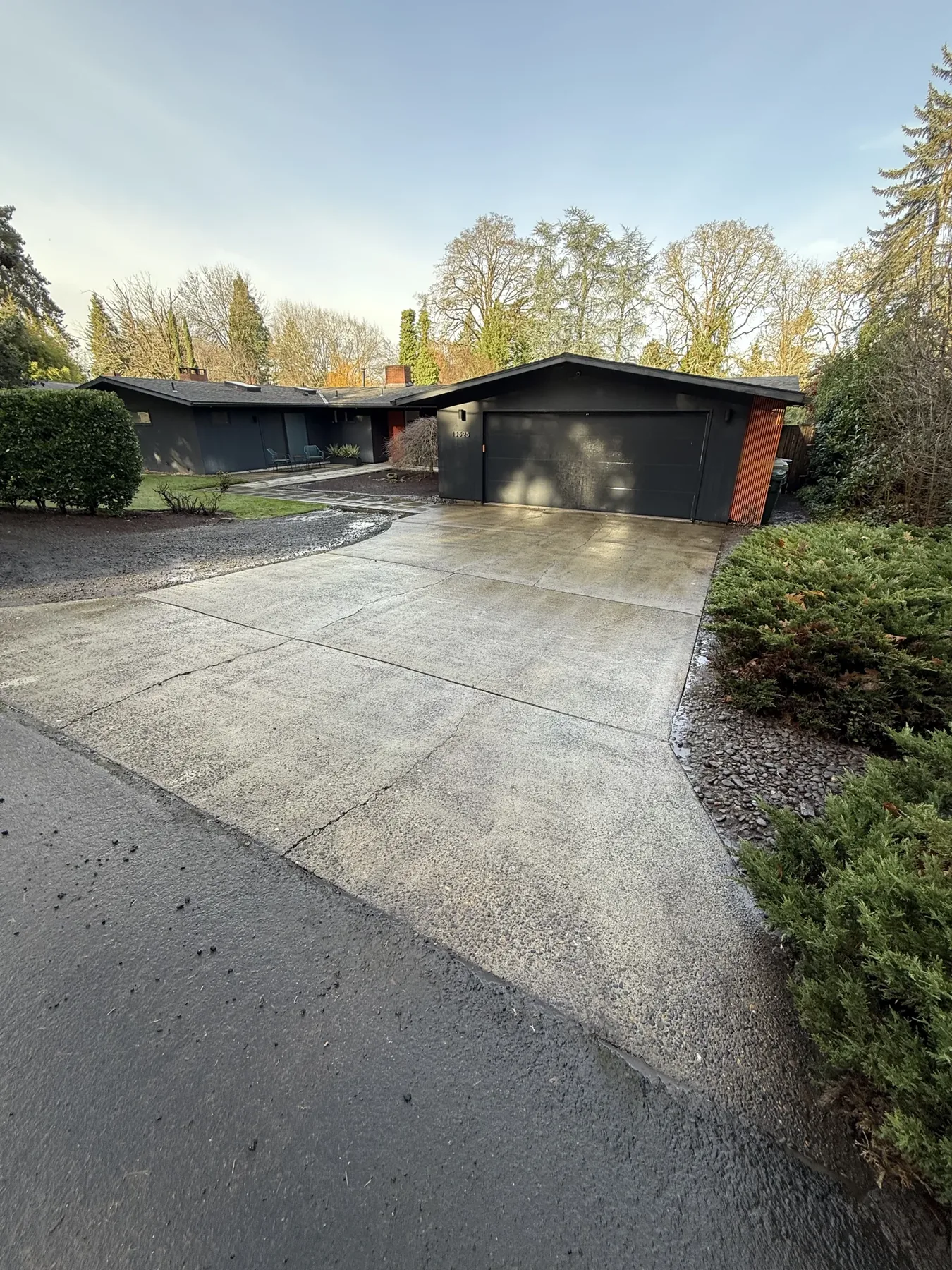
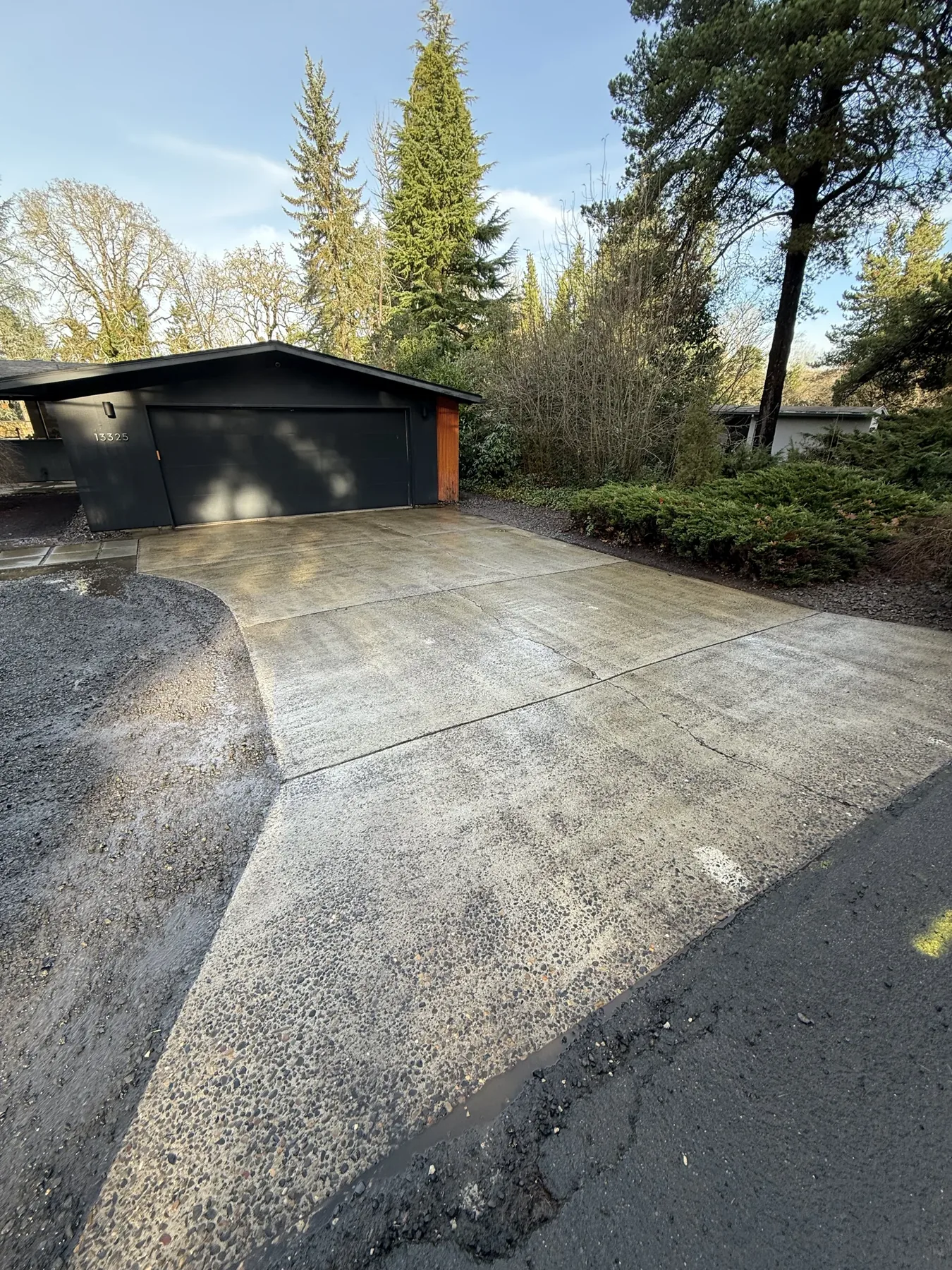
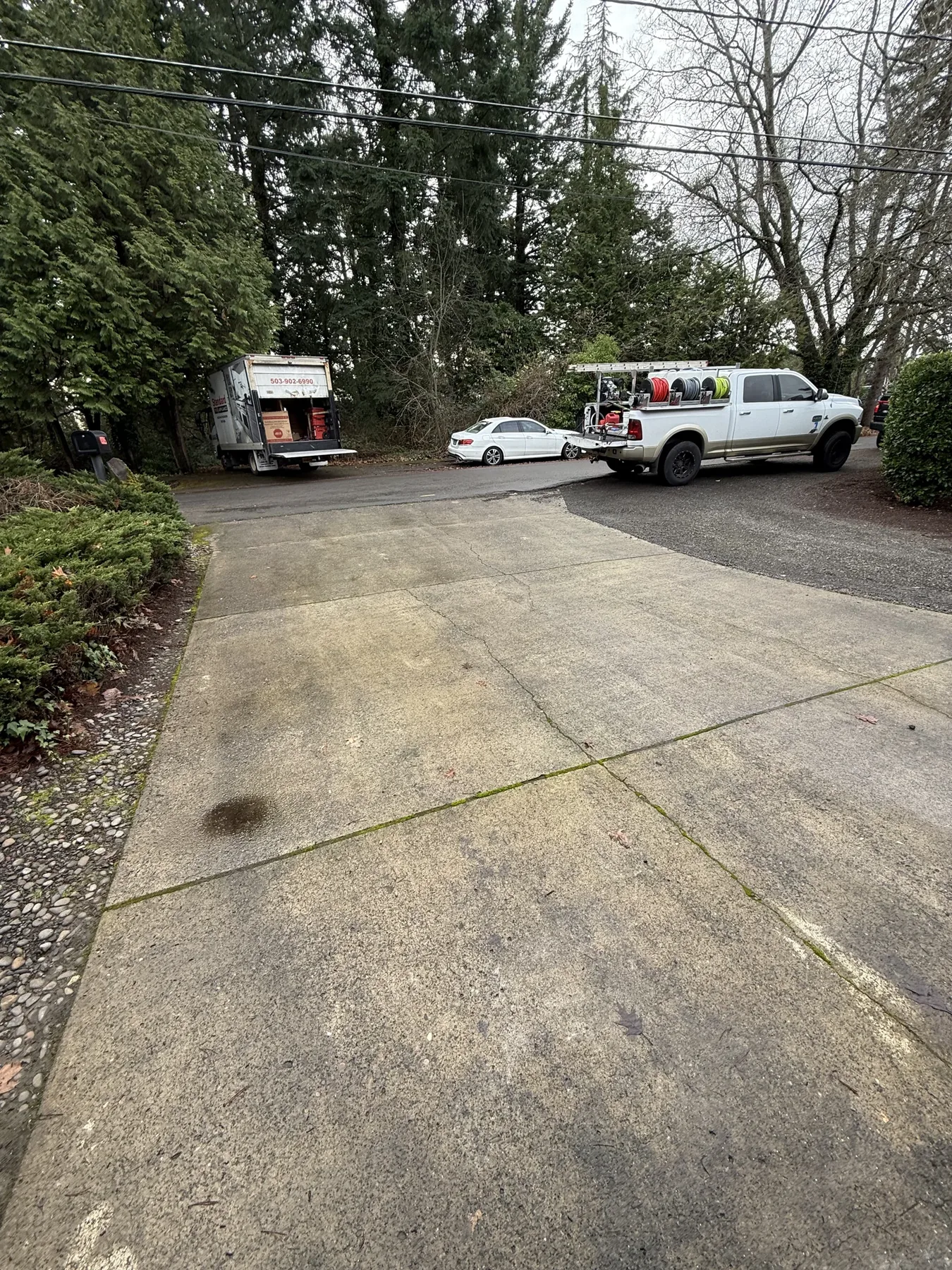
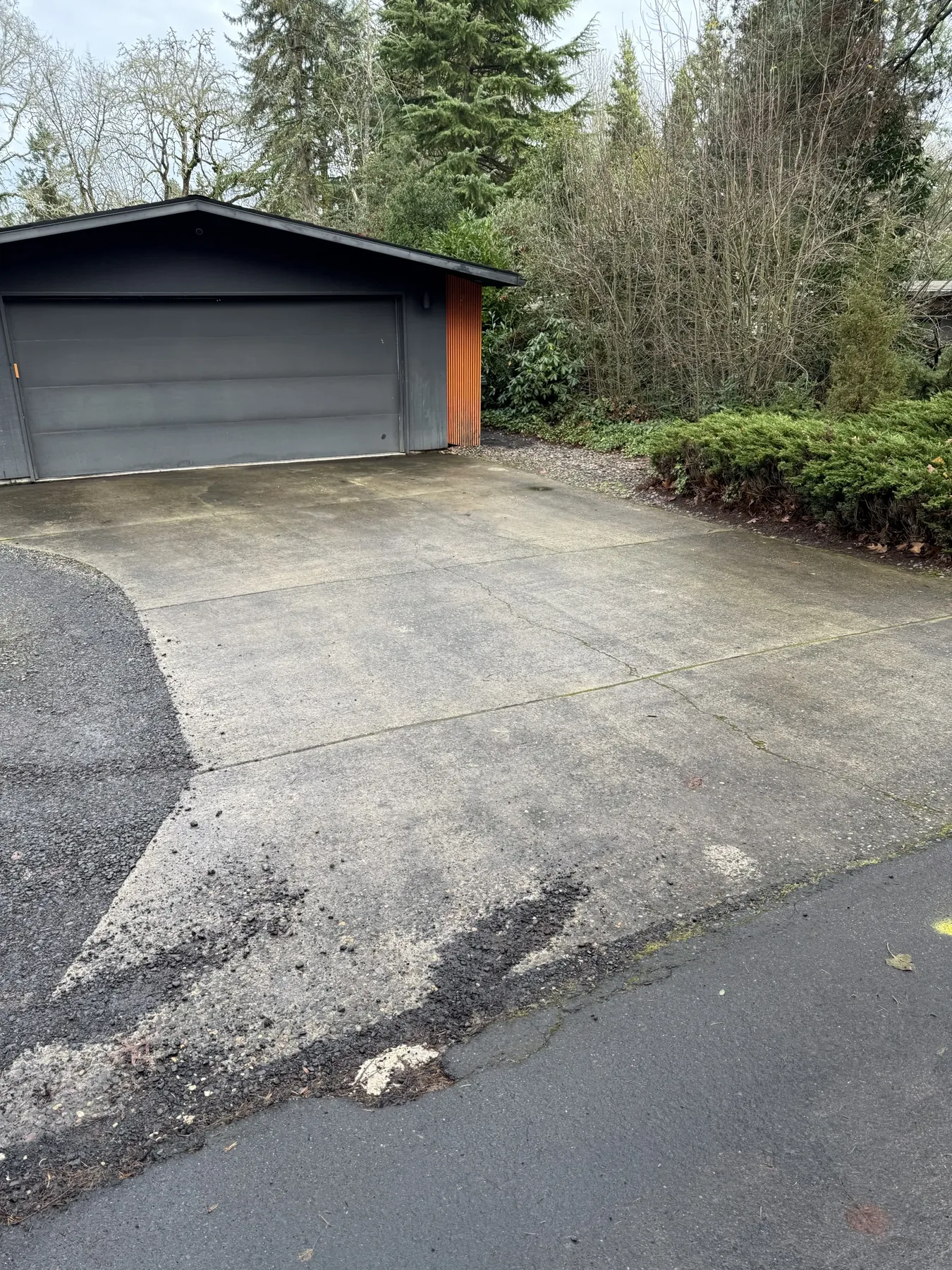
The driveway had a different layout and use. It served the detached garage approach, with shrubs and tall trees nearby. The cleaned driveway photos show brighter concrete and a clearer entrance to the garage area without making claims about stains or conditions that were not documented.
Local Notes
Why Cedar Mill Hardscape Gets Damp Quickly
Cedar Mill properties often sit among mature trees, fenced backyards, and shaded side yards. Around the Beaverton and Cedar Hills side of the west metro area, that shade is good for privacy but rough on patios and driveways during the wet season.
This backyard had the kind of compact outdoor layout common around Cedar Mill: turf, gravel, planters, raised beds, railings, sliding-door traffic, and covered patio space all meeting in one area. That local yard style creates plenty of edges where moisture can sit.
For surfaces like this, pressure washing works best when the driveway, patio slabs, edges, and covered areas are read separately. A driveway approach, a patio beside the house, and a covered seating area do not dry or collect buildup in exactly the same way.